
Annular Solar Eclipse to Cross South America in February 2027
A rare annular solar eclipse will be visible across parts of South America on February 6, 2027. During an annular eclipse, the Moon passes between the sun and Earth, but because the Moon is farther away in its orbit, it doesn’t completely cover the sun. This results in a brilliant ring of sunlight, often called a “ring of fire,” surrounding the Moon’s silhouette.
Where to See the “Ring of Fire”
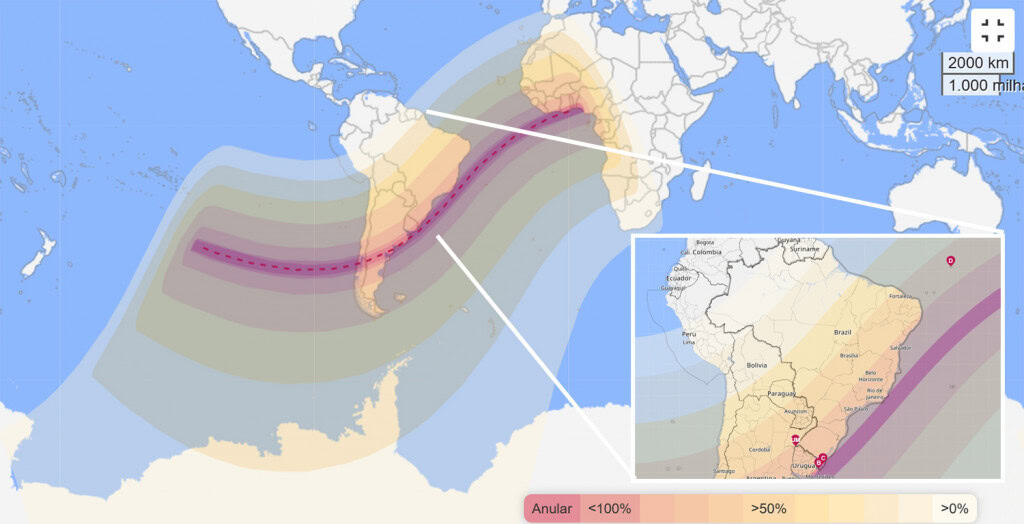
The path of annularity – where the full “ring of fire” effect will be visible – will stretch across a portion of South America. The countries with the best viewing opportunities include:
* Chile: The eclipse will be visible in a wide swath across the country, including regions like Antofagasta and Atacama.
* Argentina: The path of annularity will cross through several provinces, including Catamarca, La Rioja, and San Juan.
* Paraguay: A significant portion of the country will experience the annular eclipse.
* Brazil: The southern regions of Brazil will be prime viewing locations, including cities like Pato branco, Francisco Beltrão, and Palmas in the state of Paraná, as well as the extreme south of Santa Catarina state, encompassing municipalities such as Criciúma, araranguá, and sombrio.
Partial Eclipse Visibility
Outside the path of annularity, a partial solar eclipse will be visible across a wider area. In Brazil, some cities in the state of rio de Janeiro, including the capital, Niterói, and the Baixada fluminense region, will experience approximately 90% solar coverage. Roraima state is expected to have the lowest coverage, with approximately 7.7% of the Sun obscured by the Moon.
Eclipse Timings (Brasília Time)
Here are the approximate timings for the eclipse on February 6, 2027 (Brasília time):
* Partial eclipse begins: 10:53 AM
* annularity begins: 12:42 PM
* annularity ends: 12:49 PM
* Partial eclipse ends: 4:53 PM
These times may vary slightly depending on the specific location within the visibility zone.
Safety Information
Never look directly at the Sun during an eclipse without proper eye protection. Safe viewing methods include using certified solar viewing glasses (“eclipse glasses”) or projecting an image of the Sun onto a surface using a pinhole projector. Regular sunglasses are not sufficient protection. NASA provides detailed safety information on their eclipse website.
Source:
* ODCDN - Eclipse solar anular de 6 de Fevereiro de 2027: Onde Ver o ‘Anel de Fogo’
* NASA – safety
Keep reading