Slovakian authorities are enforcing stricter cash transaction limits and reporting requirements, with violations potentially resulting in administrative fines of up to €10,000. These regulations, designed to combat money laundering and terrorism financing, affect both business-to-business (B2B) transactions and high-value private sales, such as the purchase of vehicles.
The tightening of financial oversight aims to increase transparency within the Slovakian economy. By restricting the use of physical currency for large-scale transfers, regulators intend to create a digital paper trail that facilitates easier monitoring by the Financial Intelligence Unit (FIU). While cash remains legal tender, the legal threshold for its use in specific commercial and high-value contexts has become a focal point for compliance enforcement.
Understanding the Slovakian cash payment limits
The regulatory framework governing cash in Slovakia is primarily shaped by the Act on Certain Measures in the Field of Preventing Money Laundering and Terrorism Financing. Under these laws, “obligated entities”—which include banks, financial institutions, real estate agents, and certain high-value dealers—must adhere to strict identification and reporting protocols. When a transaction exceeds specific thresholds, these entities are legally required to verify the identity of the parties involved and, in some cases, report the transaction to the authorities.
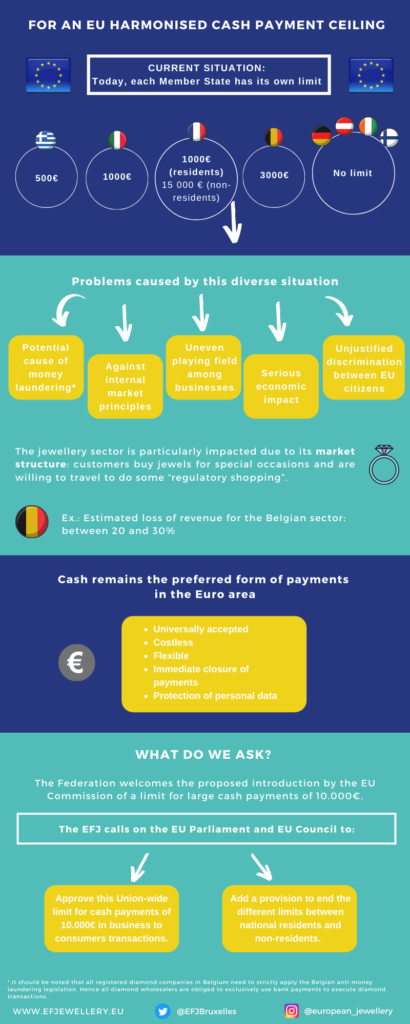
For businesses operating within Slovakia, the restrictions on cash are even more pronounced. Many commercial transactions are required to be settled via bank transfers to ensure tax compliance and to prevent the “shadow economy” from expanding. While the exact limit for a single cash payment can vary depending on the nature of the goods or services being sold, the trend in Slovakian financial policy is toward reducing the volume of unrecorded cash movements.
Legal experts note that a common misconception among the public is the distinction between the legality of holding cash and the legality of using it. While there is no specific law in Slovakia that dictates the amount of cash a private citizen may legally keep in their home, the Slovakia cash payment limits apply to how that money enters and exits the formal economy. Any attempt to use large sums of cash to bypass reporting requirements can trigger investigations into the source of the funds.
Why the €10,000 fine is being enforced
The potential €10,000 penalty is an administrative fine aimed at ensuring compliance with Anti-Money Laundering (AML) and Counter-Terrorism Financing (CTF) protocols. These fines are typically levied against businesses or “obligated entities” that fail to perform due diligence or fail to report suspicious transactions. According to Slovak financial regulations, the severity of the fine often correlates with the scale of the non-compliance and the potential risk the transaction posed to the national financial system.

Regulators use these heavy penalties to enforce several key objectives:
- Verification of Origin: Ensuring that large sums of money used in transactions are derived from legitimate, taxed sources.
- Transaction Tracking: Creating a digital record of high-value movements to prevent the layering of funds in money laundering schemes.
- Tax Compliance: Reducing the ability of businesses to underreport income by accepting untraceable cash payments.
For an individual, the risk of a fine usually arises when they act as a party to a transaction that a business is required to report. If a dealer or service provider accepts a cash payment that violates statutory limits and fails to document it correctly, both the entity and, in certain legal contexts, the parties involved may face scrutiny from the tax authorities and the FIU.
Impact on high-value private sales
One of the most significant areas of concern for the public involves the sale of high-value assets, such as automobiles. In many instances, private citizens attempt to settle large purchases, such as a used car, using cash to avoid the perceived bureaucracy of bank transfers. However, if the seller is a professional dealer, they are bound by much stricter AML rules than a private individual.
If a car dealership accepts a cash payment that exceeds the established legal thresholds without following proper identity verification and reporting procedures, they risk the aforementioned €10,000 fine. Furthermore, the transaction may be flagged for investigation, potentially leading to the freezing of assets while the source of the funds is verified. This creates a secondary risk for the buyer, whose funds may be tied up in legal proceedings if the transaction is deemed suspicious.
While private-to-private sales (where neither party is a professional “obligated entity”) face different levels of scrutiny, the authorities maintain the right to investigate any large movement of wealth that appears inconsistent with a person’s known income or tax filings. This means that even in private sales, the “paper trail” remains a critical component of financial stability.
Compliance for businesses and individuals
To mitigate the risk of significant fines, both businesses and consumers are encouraged to adopt more transparent payment methods. For businesses, this means implementing robust “Know Your Customer” (KYC) protocols and ensuring that all staff are trained to recognize the legal limits for cash acceptance.

For individuals, the following practices can help avoid legal complications:
- Prioritize Bank Transfers: Using SEPA or other verified bank transfers provides an automatic, legal record of the transaction.
- Document the Source: If a large cash amount must be used, ensure you have documented evidence of where that money originated (e.g., a bank withdrawal slip or proof of sale of another asset).
- Verify the Seller: When making a large purchase, confirm with the seller what their legal limits for cash payments are to avoid a transaction being rejected or flagged.
The shift toward a “cashless” or “low-cash” economy is part of a broader European Union trend toward financial digitalization. As the EU continues to update its AML directives, the thresholds for reporting and the severity of penalties are expected to remain a high priority for Slovakian regulators.
Frequently Asked Questions
Is it illegal to have large amounts of cash at home in Slovakia?
No, there is no law that restricts the amount of cash an individual can personally possess. However, using that cash for large transactions is subject to strict limits and reporting requirements.
Who is most at risk of the €10,000 fine?
The fine is primarily targeted at “obligated entities,” such as businesses, dealers, and financial institutions, that fail to comply with AML reporting and verification laws.
Does this apply to buying a car from a private individual?
The rules are strictest when buying from a professional dealer. While private sales are subject to different rules, large, unexplained cash movements can still trigger investigations by tax and financial authorities.
How can I ensure my transaction is legal?
The safest method is to use traceable electronic payments, such as bank transfers, which provide an immediate and legal record for both parties.
The Slovakian Financial Intelligence Unit continues to monitor transaction patterns to identify potential non-compliance. Further updates regarding specific threshold adjustments are expected as part of the ongoing implementation of EU-wide financial transparency mandates.
What are your thoughts on these increasing cash restrictions? Do you feel they are necessary for security, or do they infringe too much on privacy? Let us know in the comments below and share this article with anyone making large purchases soon.
Worth a look