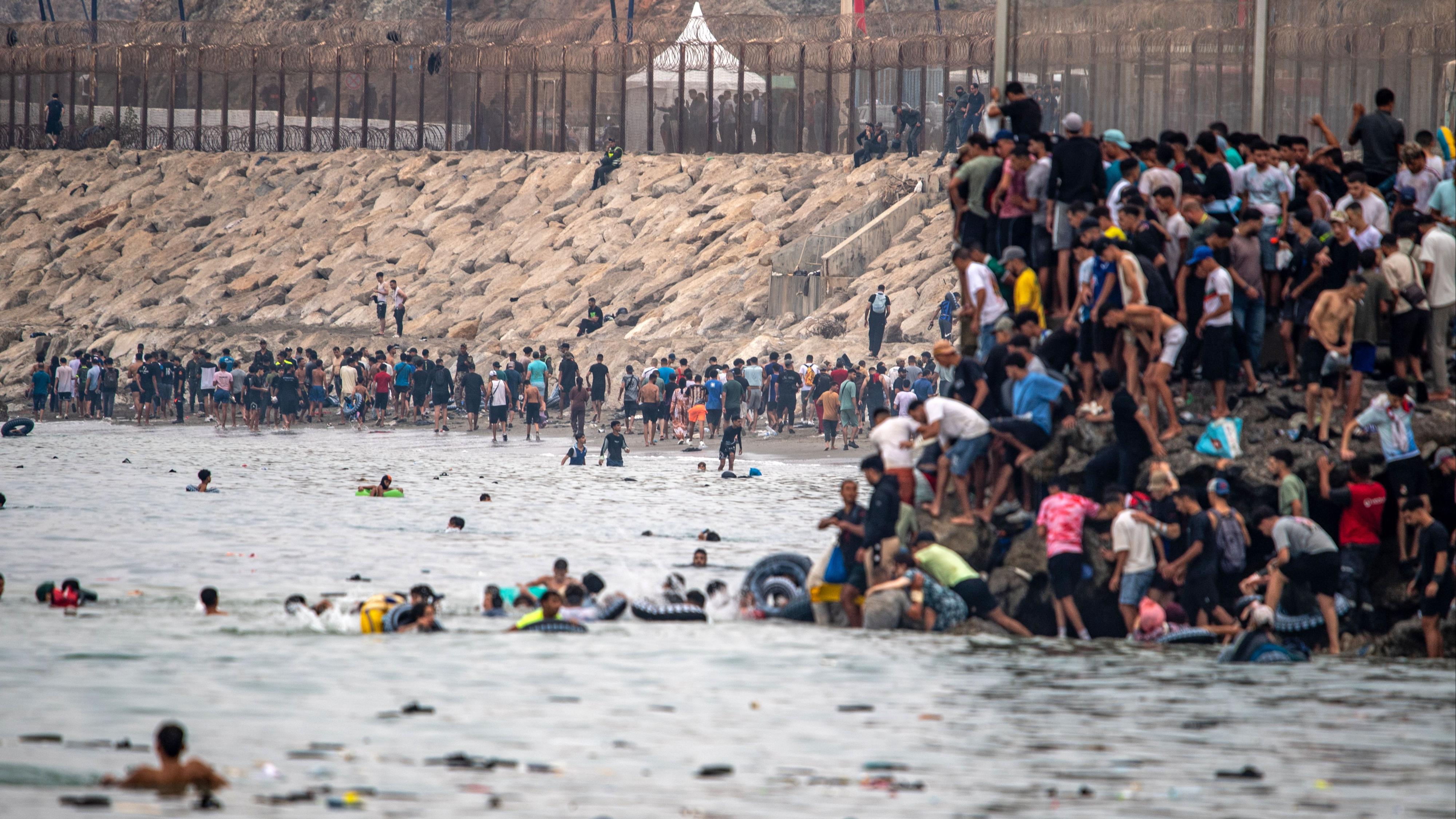
The migrant crisis in Ceuta has escalated significantly following the unauthorized entry of more than 60,000 individuals into the Spanish autonomous city, with local authorities confirming a rising death toll. According to reports from the region, the number of migrant fatalities associated with the emergency has reached 34. The surge in arrivals has overwhelmed local infrastructure, left thousands wandering the streets, and prompted high-level political condemnation from Madrid regarding territorial integrity and human trafficking networks.
Prime Minister Pedro Sánchez formally addressed the crisis, characterizing the mass crossings as a direct violation of Spain’s territorial boundaries. Speaking on the situation, Sánchez placed the blame on international smuggling networks that exploit vulnerable populations for financial gain.
Political Fallout and Territorial Security
The Spanish government responded to the emergency by deploying security forces to manage the border and stabilize the autonomous enclave. Interior Ministry officials released updates detailing the operational response in Ceuta, where thousands of individuals continue to navigate the urban landscape amid severe logistical strains. According to statements issued by the Ministry of Interior, state security apparatuses remain mobilized to restore public order and process arrivals in accordance with national and international law.
Prime Minister Sánchez emphasized that Spain’s territorial sovereignty is non-negotiable and announced intensified law enforcement measures targeting the criminal networks operating on both sides of the Strait of Gibraltar.
Humanitarian Realities on the Ground
Beyond the geopolitical disputes, the human cost of the crisis remains visible across Ceuta. Displaced individuals navigating the city have described harrowing journeys to reach Spanish soil. Many migrants reported sleeping rough in wooded areas surrounding the urban zones. Speaking to reporters from the field, individuals recounted experiences of hostility during their transit, with one migrant noting, “I’ve slept in the bush because people were driving us out with stones and pistols,” as documented by El País.

Thousands of others have gathered in public spaces across the city, expressing a singular objective. Amid the chaos and uncertainty of temporary shelters, individuals have voiced straightforward aspirations, with many stating, “We want a better life than in Morocco,” according to reporting by RTVE.
Institutional Response and Official Updates
The Ministry of Interior continues to issue operational bulletins regarding border security and the management of reception centers in Ceuta. The government has stressed that migration management will adhere strictly to legal frameworks, balancing humanitarian obligations with rigorous border enforcement.
Official advisories and updates regarding the administrative and legal status of the border will be published directly through the Ministerio del Interior as administrative and security reviews proceed. Readers seeking further information on European migration policy and official institutional updates can consult government releases for ongoing developments.
Worth a look