## Navigating US-China Economic Relations: A Deep Dive into the “America First” Agenda
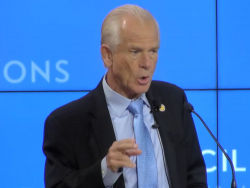
The evolving economic relationship between the United States and China remains a central focus for policymakers and businesses alike. On October 17, 2025, former White House senior trade and manufacturing advisor, Peter Navarro, addressed the Council on Foreign Relations (CFR), offering insights into the previous governance’s America First
economic policies and its approach to navigating trade tensions wiht China. His presentation and the subsequent discussion illuminated the core tenets of this strategy,the underlying anxieties regarding tariffs,and the significant ideological divide between the CFR and proponents of the “America First” doctrine. This article provides a thorough analysis of navarro’s remarks, contextualizing them within the current geopolitical landscape and offering a forward-looking perspective on US-China economic interactions.
### The “America First” Policy: A Retrospective Analysis
Navarro’s appearance before the CFR underscored the essential differences in economic philosophies. The America First
agenda, championed by the previous administration, prioritized domestic manufacturing, reduced trade deficits, and a more assertive stance towards perceived unfair trade practices, notably those attributed to China. This approach represented a significant departure from decades of promoting global free trade agreements.
The core of the strategy involved leveraging tariffs as a negotiating tactic, aiming to compel China to address issues such as intellectual property theft, forced technology transfer, and state subsidies to domestic industries. Navarro articulated that these measures were not intended as permanent trade barriers but rather as tools to level the playing field and encourage fairer trade practices. However, the implementation of these tariffs sparked considerable debate, with critics arguing they harmed American consumers and businesses by increasing import costs and disrupting supply chains. Recent data from the US Bureau of Economic Analysis (September 2025) indicates that while some sectors experienced growth due to reshoring initiatives, overall consumer prices saw a moderate increase following the implementation of significant tariffs.
### Bridging the Divide: CFR vs. “Trumpworld”
Navarro openly acknowledged the ideological chasm between the CFR, a traditionally establishment foreign policy think tank, and the “Trumpworld” perspective. He characterized the CFR as representing a more conventional, globalist worldview, while the “America First” approach prioritized national interests and a more skeptical view of international institutions. This divergence in viewpoints was evident throughout the discussion, with CFR members challenging Navarro on the economic rationale behind certain policies and questioning the long-term sustainability of a protectionist trade strategy.
“There is a fundamental disagreement on the role of government in the economy and the benefits of globalization. We believe in putting American workers and businesses first, while many here believe in a more interconnected and interdependent world.”
The exchange highlighted a broader debate within US foreign policy circles regarding the optimal approach to engaging with China. Some advocate for continued engagement and cooperation on areas of mutual interest, while others favor a more competitive and confrontational stance.
### Economic Fears and the Tariff Debate: A Current Assessment
A central theme of Navarro’s presentation was the administration’s concern over the potential economic consequences of escalating trade tensions. While tariffs were intended to protect American industries, there were anxieties about potential retaliatory measures from China and the broader impact on global economic growth.
comparative advantage. Even if a country can produce all goods more efficiently than another, specializing in the production of goods where it has the greatest advantage leads to overall economic gains.
The debate over tariffs continues to be relevant in 2025. While some tariffs remain in place,there have been calls for their reduction or removal to alleviate inflationary pressures and boost economic growth. A recent report by the Brookings Institution (October 2025) suggests that eliminating the remaining tariffs on Chinese goods could lower consumer prices by as much as 0.5% and increase real GDP by 0.3%. Though, proponents of maintaining tariffs argue that they are still necessary to protect American industries and ensure a level playing field.Here’s a quick comparison of arguments for and against tariffs: