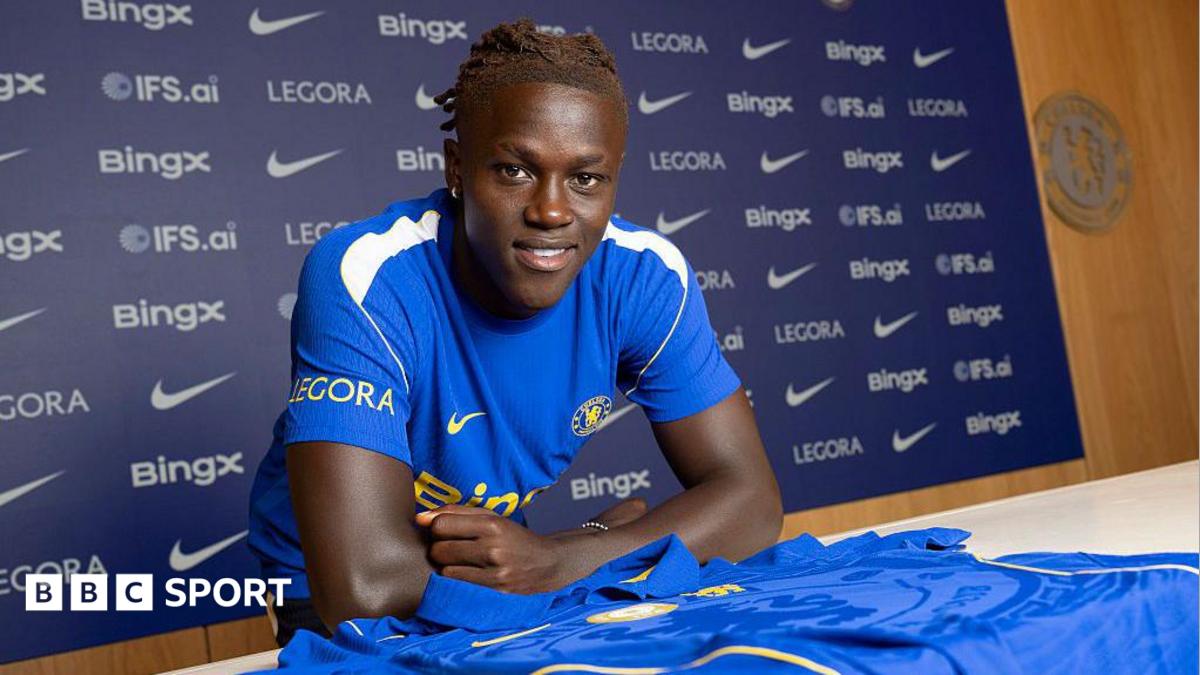
Geovany Quenda, a 17-year-old standout winger at Sporting CP, has emerged as a primary target for several Premier League clubs, including Chelsea, amid reports of high valuations and scouting interest. The Portuguese youth international is regarded as one of Europe’s most promising attacking talents, drawing tactical comparisons to Bukayo Saka and citing Cristiano Ronaldo as a professional inspiration as he navigates his rise through the Sporting academy.
The pursuit of Quenda reflects a broader trend of English clubs targeting the Sporting CP pipeline, a system that previously produced global icons like Cristiano Ronaldo and Luís Figo. While various reports have circulated regarding a potential £40 million valuation, no official transfer agreement has been announced by Chelsea or Sporting CP. Quenda remains a key part of Sporting’s developmental project, having already broken into the first-team squad at a remarkably young age.
According to data from Transfermarkt, Quenda’s rapid ascent through the ranks has made him a focal point for scouts monitoring the Primeira Liga. His ability to operate as an inverted winger on the right flank has positioned him as a strategic asset for teams seeking a dynamic, high-ceiling replacement or complement to their current attacking rotations.
The Sporting CP Pedigree and First-Team Integration
Geovany Quenda’s trajectory is defined by an accelerated path to professional football. Unlike many academy prospects who spend years in reserve leagues, Quenda has seen meaningful minutes in the Sporting CP first team during the 2023-24 and 2024-25 campaigns. This early exposure to senior football is a hallmark of Sporting’s current philosophy, which prioritizes the integration of teenagers into competitive environments to maximize their market value and sporting growth.

Technical analysts point to Quenda’s composure in possession and his willingness to take on defenders as his primary strengths. In the Primeira Liga, he has demonstrated a capacity to maintain ball retention under pressure, a trait that typically takes years for teenage wingers to develop. This maturity has not gone unnoticed by the Portuguese national team setup, where he has been integrated into the youth ranks to further his international experience.
The Sporting academy continues to be a goldmine for Premier League recruitment. The club’s ability to refine raw technical ability into tactical discipline makes their graduates highly compatible with the high-intensity demands of English football. Quenda represents the next generation of this export model, combining traditional Portuguese flair with the physicality required for the modern game.
Tactical Profile: The Saka Comparison
The comparison between Geovany Quenda and Arsenal’s Bukayo Saka is rooted in their shared tactical role as inverted right-wingers. Both players possess the ability to cut inside from the flank to create shooting opportunities or slide through-balls into the center of the penalty area. This “inside-out” playing style is currently the most coveted profile for wingers in the Premier League, as it disrupts traditional defensive blocks.

Quenda’s game is built on explosive acceleration and a low center of gravity, allowing him to change direction rapidly. According to match analysis of his outings for Sporting, his efficiency in one-on-one situations is a primary driver of his valuation. He does not rely solely on pace but utilizes deceptive body feints to create space, a characteristic that mirrors Saka’s approach to breaking down compact defenses.
Beyond the dribbling, Quenda has shown an increasing awareness of his defensive responsibilities. Modern wingers are expected to contribute to the press and track back during transitions; Quenda’s work rate in the Sporting system suggests he possesses the tactical discipline necessary to survive the transition to a league as physically demanding as the Premier League.
Premier League Interest and the £40 Million Valuation
While Chelsea has been heavily linked with the player, they are not alone in their interest. Reports indicate that other English giants, including Manchester City and Arsenal, have monitored Quenda’s progress. The mention of a £40 million figure in various sports media outlets often refers to the projected market value or the perceived threshold Sporting CP would require to sanction a sale of a player so central to their future plans.
Chelsea’s recruitment strategy under their current leadership has leaned heavily toward “young-talent” acquisition, focusing on players under the age of 21 with high resale potential and long-term ceilings. Quenda fits this profile precisely. By securing a talent like Quenda, Chelsea would be following a blueprint of investing in raw potential before the player reaches their peak market valuation.
However, Sporting CP is known for protecting its assets with significant release clauses. The club’s recent history shows a reluctance to sell top academy products cheaply, often holding out for fees that reflect the player’s potential rather than their current statistics. Any move to London would likely require a structured deal involving a significant upfront payment and performance-related add-ons.
The Influence of Cristiano Ronaldo
For any young winger emerging from the Sporting academy, Cristiano Ronaldo is the ultimate blueprint. Quenda has openly acknowledged the influence of Ronaldo, not only in terms of technical execution but in the mental approach to the game. The path from the Alvalade stadium to the Premier League is a trajectory Quenda views as a viable route to global elite status.
Ronaldo’s early years at Sporting were characterized by the same fearless attacking nature that Quenda displays today. The psychological drive to move to a more competitive league at a young age is a recurring theme among Portugal’s top exports. By targeting the Premier League, Quenda is seeking the “challenge and exposure” that defined Ronaldo’s move to Manchester United in 2003.
This ambition is coupled with a rigorous training ethic. Sources close to the Sporting academy highlight Quenda’s dedication to strength and conditioning, recognizing that the jump from the Portuguese league to England requires a significant increase in physical power and endurance.
What This Means for the Premier League Landscape
The potential arrival of Geovany Quenda in England would signal another shift in how Premier League clubs approach the winger position. There is a decreasing reliance on established stars in their late 20s and an increasing preference for “project players” who can be molded to a specific tactical system over a five-to-seven-year contract.

If Chelsea or another club successfully secures Quenda, the immediate impact may be limited as the player acclimates to the speed of the English game. However, the long-term strategic gain is the acquisition of a player who can dictate the tempo of an attack from the wide areas. His versatility also allows him to slot into different formations, whether as a traditional winger in a 4-3-3 or as a more advanced attacking threat in a 3-4-3.
The competition for Quenda’s signature also highlights the ongoing “arms race” for South American and Iberian talent. With the Premier League possessing the financial muscle to outbid most European rivals, the battle for the next “wonderkid” has become as much about sporting projects and playing time guarantees as it is about transfer fees.
The next confirmed checkpoint for Quenda’s career will be his continued involvement in Sporting CP’s first-team fixtures and his progression within the Portuguese national youth setup. Official updates regarding any transfer negotiations will be released via the clubs’ respective communication channels.
Do you think Geovany Quenda is the right profile for the current Chelsea squad? Share your thoughts in the comments below.