
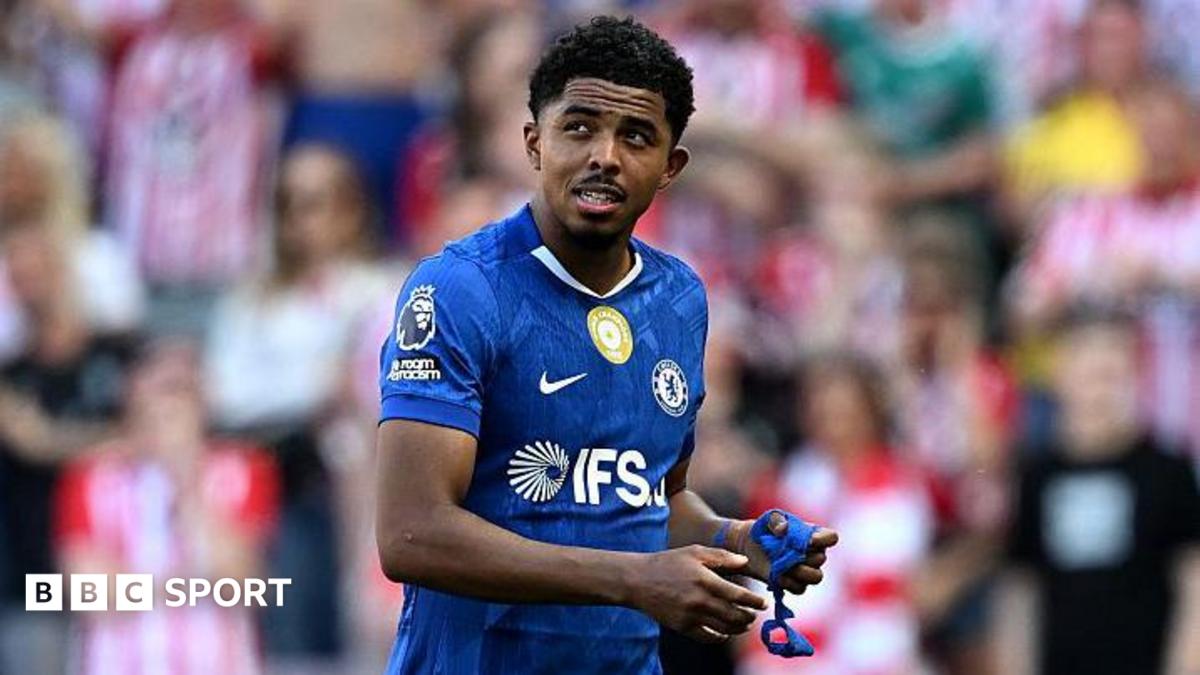
Wesley Fofana faces a critical period at Chelsea FC as he works to establish himself as a consistent starter following his high-profile transfer. Since joining the club from Leicester City in August 2022 for a reported fee of £70 million, the French defender has struggled with a series of significant injuries that have limited his availability and on-pitch impact for the Premier League side, according to BBC Sport.
As the club navigates a congested defensive roster, questions persist regarding how Fofana fits into the long-term tactical plans at Stamford Bridge. While his talent is widely acknowledged within the game, his ability to maintain fitness remains the primary hurdle for the 23-year-old center-back. With the Premier League season in full swing, the coaching staff faces the ongoing challenge of balancing rotation with the need for defensive stability.
The Financial and Physical Context of the Signing
Chelsea secured Fofana’s signature on a seven-year contract in 2022, a deal that underscored his status as one of Europe’s most promising defensive prospects, as documented by The Guardian. The transfer fee, which reached £70 million plus add-ons, placed significant pressure on the player to perform immediately. However, his tenure has been marked by long-term setbacks, most notably an anterior cruciate ligament (ACL) injury that forced him to miss the entirety of the 2023-2024 campaign.
The financial investment reflects the club’s strategy under its current ownership to acquire young, high-potential talent. Yet, the reality of Fofana’s availability has forced the club to rely on other options. According to official Premier League statistics, the defender has had to prove his fitness repeatedly, with his current form being monitored closely by both the club’s medical staff and the coaching team led by Enzo Maresca.
Tactical Competition in the Chelsea Defense
Chelsea’s squad depth in the defensive third is significant, creating a competitive environment where no position is guaranteed. The arrival of new signings and the development of academy graduates have added layers of complexity to the defensive rotation. Players such as Levi Colwill, Axel Disasi, and Tosin Adarabioyo provide alternative options that force Fofana to demonstrate a higher level of consistency to retain his place in the starting XI.
Tactical flexibility is a hallmark of the current Chelsea setup. The coaching staff often rotates center-backs based on the opponent’s style of play and the tactical demands of specific matches. For Fofana, this means that every appearance is an opportunity to prove his recovery is complete and that he can handle the physical intensity of the Premier League over a sustained period.
What Lies Ahead for Fofana
The immediate objective for Fofana is to secure a regular run of games without further injury interruptions. Developing a consistent partnership at the heart of the defense is essential for any center-back, and the current season offers the necessary minutes for him to regain his rhythm. Performance metrics, including aerial duels won and passing accuracy, will be the primary indicators of his progress as he aims to justify his significant transfer valuation.
The club has not issued any public statements regarding a potential exit or loan, suggesting that Fofana remains part of the long-term vision at Stamford Bridge. Fans and analysts continue to track his progress, with the next significant checkpoint being the upcoming winter transfer window and the subsequent progression of the league campaign, where his fitness status will be updated via official match-day squad announcements. Readers are encouraged to share their thoughts on his defensive performance in the comments section below.