
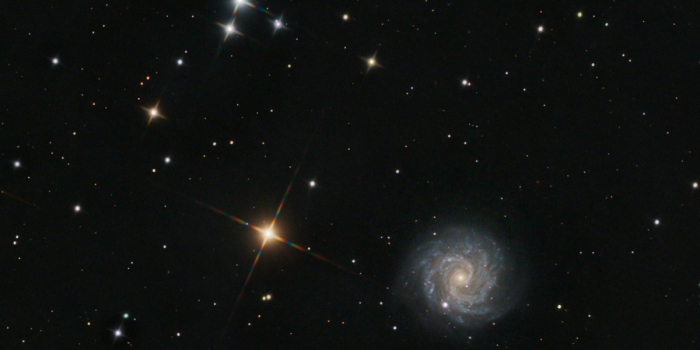
A groundbreaking study led by a Chilean astronomer is challenging long-held scientific beliefs about how galaxies evolve and transform across the universe. The research suggests that the most critical changes in galactic structure occur not within dense galaxy clusters, but along the vast, sprawling structures known as cosmic filaments.
For years, the prevailing consensus in astronomy was that the most significant transformations of galaxies took place within galaxy clusters. However, modern evidence presented by Carolina Dulcien, a researcher at the Núcleo Milenio MINGAL and the Universidad de Concepción (UdeC), indicates that these pivotal changes happen much earlier in a galaxy’s journey, whereas they are still traveling through the “cosmic highways” that lead to those clusters via BioBioChile.
This discovery regarding galactic evolution and cosmic filaments provides a new lens through which scientists can understand the lifecycle of galaxies. By identifying where these interactions occur, researchers can better comprehend the mechanisms that alter a galaxy’s shape, modify its gas composition, and drive its overall evolutionary trajectory via Universidad de Concepción.
The Role of ‘Cosmic Highways’ in Galactic Fusion
Galaxies are not distributed randomly throughout the vacuum of space. Instead, they are organized into a complex web. The study led by Dulcien highlights the importance of cosmic filaments—massive strands of matter that act as conduits for galaxies. These filaments serve as “cosmic highways” that galaxies traverse before they eventually arrive at larger galaxy clusters via BioBioChile.
The research reveals that the fusion of galaxies—a process that can fundamentally reshape them—often begins during this transit phase. This finding is significant because it shifts the timeline of galactic transformation. Rather than waiting to enter the high-density environment of a cluster to undergo change, galaxies are already evolving and merging as they move along these filaments.
According to the findings, these mergers are critical because they can change the physical form of the galaxies involved and affect the gas they contain, which in turn influences their ability to form new stars and evolve via Universidad de Concepción.
Leveraging Artificial Intelligence for Deep Space Discovery
Identifying galaxies in the process of fusion is a complex task, given the vast distances and the subtle visual cues involved. To overcome these challenges, Dulcien and her team employed advanced artificial intelligence (AI) tools. These AI systems were specifically used to identify galaxies currently undergoing the fusion process, allowing the researchers to pinpoint exactly where these interactions were occurring via BioBioChile.
The integration of AI into this astronomical study demonstrates a growing trend in the field where machine learning is used to process massive datasets that would be impossible for human researchers to analyze manually. In this instance, the technology was instrumental in proving that transformations were happening in the filaments rather than the clusters.
Key Takeaways from the Study
- Shift in Location: Galactic transformations primarily occur in cosmic filaments (cosmic highways) rather than in galaxy clusters.
- Timeline of Evolution: Galaxies undergo key changes and mergers before they reach the dense environment of a cluster.
- Impact of Fusion: These mergers are responsible for modifying the shape and gas levels of galaxies.
- Technological Driver: Artificial intelligence was essential in identifying galaxies in the process of fusion.
- Leadership: The research was led by Chilean astronomer Carolina Dulcien of the Núcleo Milenio MINGAL and the Universidad de Concepción.
Implications for Modern Astronomy
This discovery challenges the previous scientific proposals regarding the origin of galaxy fusion. By proving that the “roads” to the clusters are just as active as the destinations themselves, the study opens new avenues for observing the early stages of galactic interaction.

The work of Carolina Dulcien and her team underscores the importance of international scientific collaboration and the use of cutting-edge technology to rewrite our understanding of the cosmos. As the scientific community digests these findings, the focus may shift toward mapping these cosmic filaments more accurately to notice how they influence the distribution of matter across the universe via Cooperativa Ciencia.
While further research will likely be needed to determine the exact frequency and scale of these filament-based mergers, the current evidence suggests a fundamental rethink of the cosmic web’s role in galactic evolution.
There are currently no further scheduled announcements regarding this study, but the findings are expected to be integrated into broader models of galactic development.
Do you think AI will eventually replace traditional observation in astronomy, or will it always remain a supportive tool? Share your thoughts in the comments below or share this article with your network.