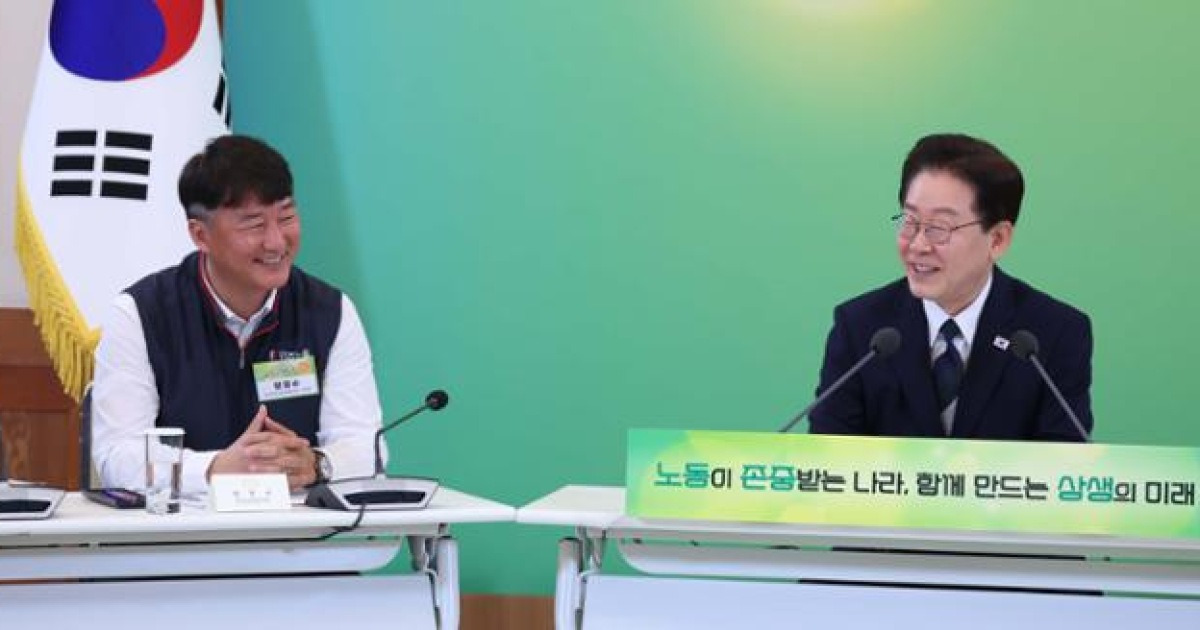
In a significant move toward addressing the evolving challenges of the modern workforce and the lingering effects of the global health crisis, South Korean President Lee Jae-myung held a high-level meeting with the leadership of the Korean Confederation of Trade Unions (KCTU) on Friday, April 10, 2026. The discussions, held at the Blue House, centered on a broad spectrum of labor rights, from the immediate financial stability of healthcare providers to the long-term systemic risks posed by artificial intelligence.
A primary point of contention and request during the meeting was the demand to review the compensation status of COVID-19 designated hospitals. The labor delegation emphasized that the financial burdens borne by these institutions during the pandemic must be fully addressed to ensure the continued stability of the national healthcare infrastructure. This request highlights a critical intersection of public health policy and labor welfare, as the frontline facilities that managed the crisis continue to seek equitable restitution for their operational losses.
Beyond healthcare, the dialogue shifted toward the disruptive potential of technology. Yang Kyung-soo, the Chairperson of the KCTU, urged the administration to implement a mandatory “labor impact assessment” before the widespread adoption of AI in the workplace. This proposal aims to treat the introduction of AI similarly to environmental impact assessments, requiring the government to evaluate how automation will affect employment levels, working conditions, and the overall stability of the labor market.
The meeting marks one of the first direct engagements between President Lee and the KCTU since his inauguration, signaling a potential shift toward a more collaborative approach to labor relations. The discussions touched upon several core pillars of the current labor struggle, including the demand for significant increases in the minimum wage, the resolution of irregular employment in the public sector, and the improvement of job quality for the youth population.
Addressing the Financial Aftermath of the Pandemic
The request to check the compensation status of COVID-19 designated hospitals is not merely a financial query but a matter of systemic healthcare resilience. During the height of the pandemic, many hospitals were designated as specialized centers to handle COVID-19 patients, often at the expense of their general medical services and revenue streams. The KCTU’s push for a comprehensive review suggests that existing compensation mechanisms may have been insufficient or inconsistently applied.
From a public health perspective, the failure to adequately compensate these institutions can lead to a degradation of medical services and a reluctance among providers to step forward during future health emergencies. By calling for a formal review, the labor union is advocating for a transparent accounting of the losses incurred by these facilities and a commitment from the government to ensure that no healthcare provider is left financially vulnerable due to its service during the national crisis.
The Rise of AI and the Demand for Labor Impact Assessments
The most forward-looking element of the meeting was the proposal for a mandatory labor impact assessment regarding AI. Chairperson Yang Kyung-soo noted that while AI can alleviate dangerous or difficult tasks and night shifts, the historical experience of automation has often led to the loss of jobs rather than the improvement of work.
Yang specifically highlighted the threat of “Physical AI,” arguing that its introduction does not simply change the nature of jobs but can lead to their complete disappearance. Because of this, he argued that the government’s response must differ from previous technological transitions. He proposed that just as the government conducts environmental impact assessments for major policy decisions, it should be legally required to conduct a labor impact assessment to evaluate the effects on employment and working conditions according to reports from the Kyunghyang Shinmun.
This proposal is already gaining traction at the sectoral level. For instance, the Korean Metal Workers’ Union, an affiliate of the KCTU, included labor impact assessment requirements in its wage and collective bargaining demands last month. Their specific proposal requires that before a company introduces AI technology, a joint labor-management assessment must be conducted to evaluate the impact on employment and working conditions, and agreements must be reached on employment guarantees, education and training, labor safety, human rights, and personal information protection as detailed in the KCTU’s recent initiatives.
Key Concerns Regarding AI Integration
- Job Displacement: The fear that “Physical AI” will lead to the total extinction of certain roles rather than a transition to new types of work.
- Working Conditions: Concerns over how AI monitoring and management might affect the mental health and autonomy of workers.
- Skill Gaps: The urgent need for government-led education and retraining programs to prevent a permanent class of unemployed workers.
- Data Privacy: The necessity for strict protections regarding the personal information of workers in an AI-driven environment.
Broader Labor Agenda: Wages and Employment Quality
While AI and healthcare compensation were central, the KCTU utilized the meeting to push for a wider overhaul of labor policies. Chairperson Yang called for a “substantial increase” in the minimum wage to keep pace with the cost of living and to ensure a basic standard of dignity for all workers as reported by Straight News.
The issue of irregular employment, particularly within the public sector, was likewise a major point of discussion. The union urged the government to act as a “model employer” by implementing practical and swift measures to convert irregular positions into stable, permanent roles. This is seen as a critical step in reducing the precariousness of employment in South Korea.
Regarding youth employment, the KCTU argued that the government should stop focusing on lowering the numerical unemployment rate and instead focus on increasing the “quality” of the jobs being created. This involves moving away from short-term, low-paying contracts and toward sustainable careers that provide long-term security and growth opportunities.
Government Response and the Path Forward
President Lee Jae-myung’s response to these diverse demands appeared open and conciliatory. In response to the proposal for labor impact assessments for AI, the President indicated that the government would continue to discuss the matter while conducting the necessary research and evaluations according to KCTU officials.

The atmosphere of the meeting, described as an effort to create a “society where labor is respected,” suggests a desire for a new social contract between the state and the workforce. However, the KCTU remains cautious. Chairperson Yang noted that while the government’s intentions may be present, the “warmth” of these policies has not yet reached the workers on the ground, calling for greater execution and tangible results.
Summary of Key Demands and Government Stance
| Issue | KCTU Demand | President Lee’s Initial Response |
|---|---|---|
| AI Integration | Mandatory Labor Impact Assessments | Agreed to further research and evaluation |
| COVID-19 Hospitals | Review and compensation of losses | Included in the agenda for review |
| Minimum Wage | Substantial increase | Discussed as part of labor policy |
| Public Sector Jobs | Elimination of irregular employment | Urged cooperation for labor respect |
As the government begins to process these requests, the next critical checkpoint will be the detailed results of the research into AI labor impacts and the official audit of the COVID-19 hospital compensation status. These actions will determine whether the dialogue at the Blue House translates into legislative change or remains a symbolic gesture of cooperation.
We invite our readers to share their thoughts on the balance between AI automation and job security in the comments section below.
Worth a look