

China has officially blocked Meta’s $2 billion acquisition of Manus, a Singapore-based artificial intelligence startup with deep Chinese roots, marking a significant escalation in the ongoing technological tug-of-war between Washington and Beijing. The decision, announced Monday, April 27, 2026, forces the American tech giant to unwind a transaction that was intended to accelerate its deployment of general-purpose AI agents across its global platforms according to reports from CNBC.
The move by Beijing is more than a simple regulatory hurdle. It’s a calculated signal to the global AI community. By vetoing the deal, China is asserting strict control over “critical technology” and discouraging its homegrown talent from relocating offshore to bypass domestic scrutiny—a trend known among venture capitalists as “Singapore-washing.” For Meta, the block represents a costly strategic setback in a race for AI dominance against rivals like Google and OpenAI.
The order comes from China’s National Development and Reform Commission (NDRC), the country’s powerful state planner, which demanded that both Meta and Manus withdraw from the acquisition transaction. The NDRC stated that the decision to prohibit the foreign investment was made in accordance with existing laws and regulations as detailed by the commission’s brief statement. This concludes a probe that Beijing launched in January, shortly after Meta announced its $2 billion takeover plan in December.
The NDRC Order and the Complexity of ‘Unwinding’
The mandate to “unwind” the deal is particularly challenging because the acquisition was not merely a paper agreement. Following the December announcement, Meta had already begun integrating Manus into its internal systems, and several executives from the startup had already transitioned into roles within the American company as reported by CNN. Separating these integrated assets and personnel will likely be a complex legal and operational process.

In response to the block, a spokesperson for Meta maintained that the transaction “complied fully with applicable law” and stated that the company anticipates an “appropriate resolution to the inquiry” according to a statement provided to CNN. But, with the NDRC’s directive being a formal prohibition of the investment, the path to a resolution appears narrow.
The $2 billion valuation of Manus reflects the immense value the industry now places on “AI agents”—systems that do not simply generate text or images but can autonomously execute complex, multi-step tasks. Manus had garnered significant attention after launching its first general AI agent in March of last year, capable of performing market research, coding, and sophisticated data analysis. The startup’s capabilities had led some industry observers to describe it as the “next DeepSeek,” signaling a leap in efficiency and utility over traditional LLMs.
The ‘Singapore-Washing’ Model Under Fire
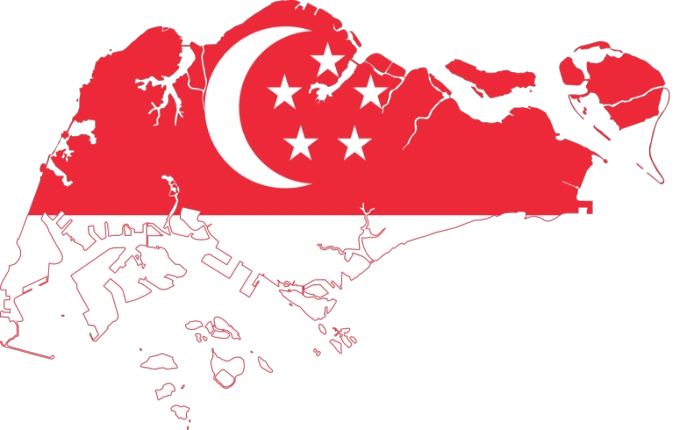
The Manus case highlights a growing friction point in the venture capital landscape: the “Singapore-washing” model. This strategy involves Chinese founders relocating their headquarters and legal registration to Singapore to create a buffer between their operations and the regulatory environments of both Beijing and Washington. By operating out of the city-state, startups hope to attract Western capital and avoid the stringent prohibitions the U.S. Has placed on American investors backing Chinese AI firms directly.

Beijing’s intervention in the Meta-Manus deal suggests that relocating a company’s headquarters is no longer a sufficient shield if the “roots” of the technology and the talent remain Chinese. The Chinese government has increased efforts to discourage founders from moving business offshore, viewing the export of cutting-edge AI as a threat to national security and technological sovereignty.
For the broader ecosystem of AI startups, this decision serves as a chilling warning. Founders who believed they could bridge the gap between the two superpowers by shifting their legal domicile may now find themselves caught in a geopolitical vice, where neither the U.S. Nor China is willing to concede control over the intellectual property that will define the next decade of computing.
Geopolitical Stakes: The AI Cold War
The timing of the block is almost certainly not coincidental. The decision arrives just weeks before a highly anticipated summit in Beijing between U.S. President Donald Trump and Chinese leader Xi Jinping. The two leaders are expected to negotiate disputes over trade and technology controls, and the Manus veto provides Beijing with a clear demonstration of its willingness to protect its tech assets before entering those talks according to CNN’s analysis.
This event underscores the “bifurcation” of global technology. We are seeing the emergence of two distinct tech spheres—one centered around U.S. Standards and capital, and another around Chinese mandates. In critical sectors like semiconductors and artificial intelligence, the “middle ground” offered by hubs like Singapore is shrinking.
The U.S. Government has similarly tightened its grip, prohibiting American investors from direct backing of Chinese AI companies to prevent the transfer of dual-use technology that could have military applications. When a company like Manus attempts to move from one sphere to the other via acquisition, it becomes a lightning rod for these competing national security interests.
Strategic Implications for Meta’s AI Roadmap
For Meta, the loss of Manus is more than a financial write-down; it is a missed opportunity to strengthen its competitive position. Mark Zuckerberg has pivoted the company heavily toward the “Agentic AI” era, where AI assistants can handle end-to-end workflows for users and businesses. Integrating Manus’s general-purpose agents would have allowed Meta to scale these capabilities across Facebook, Instagram, and WhatsApp with far greater speed.
Without Manus, Meta must either accelerate its internal development or seek other acquisition targets—though the latter is becoming increasingly tough given the heightened scrutiny from regulators in both the U.S. And abroad. The block emphasizes the vulnerability of tech giants who rely on external acquisitions to fill critical gaps in their AI stacks.
The market’s immediate reaction was muted, with Meta’s stock trading slightly up in morning trading following the news according to CNBC. However, the long-term impact may be felt in the company’s ability to deploy autonomous agents that can compete with the rapid iterations seen from OpenAI and Google.
Key Takeaways of the Meta-Manus Block
- Regulatory Veto: China’s NDRC has formally prohibited Meta’s $2 billion acquisition of AI startup Manus.
- Technological Asset: Manus specializes in general-purpose AI agents capable of autonomous coding and data analysis.
- Geopolitical Signal: The move targets “Singapore-washing,” where Chinese firms relocate to Singapore to avoid regulatory scrutiny.
- Operational Hurdle: Meta must now “unwind” a deal where the startup had already been partially integrated into its internal systems.
- Strategic Context: The decision precedes a high-stakes summit between President Trump and President Xi Jinping.
The next critical checkpoint for this story will be the upcoming summit between the U.S. And Chinese leadership in Beijing. Whether the Manus acquisition is raised as a specific point of contention—or used as a bargaining chip in broader trade and tech control negotiations—will reveal much about the future of cross-border AI investment. Until then, the “Singapore-washing” model appears to be a failing strategy for those hoping to escape the gravitational pull of Beijing’s tech sovereignty.
Do you believe the era of cross-border AI acquisitions is coming to an end? Share your thoughts in the comments below or join the discussion on our professional networks.