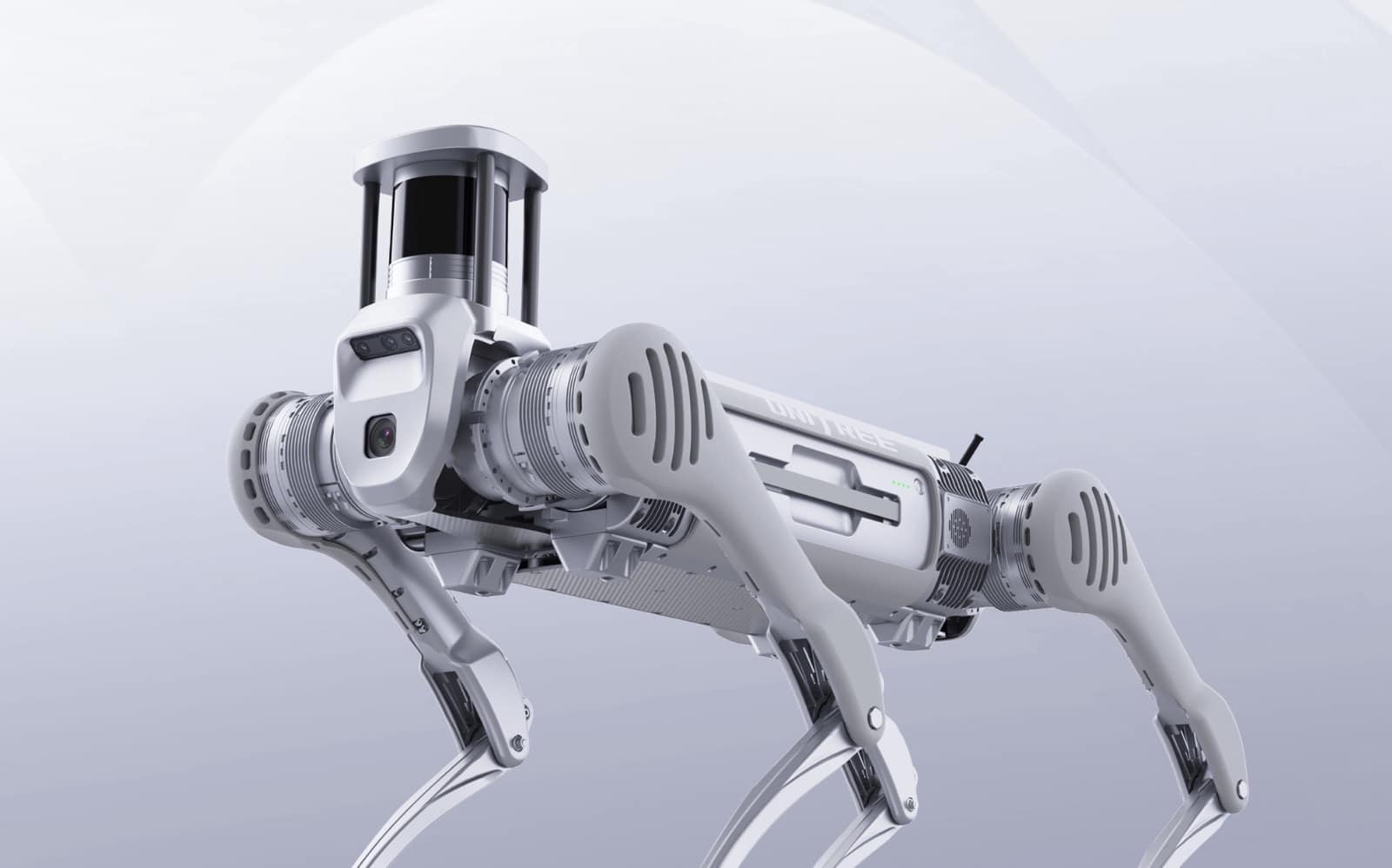
China has deployed a coordinated fleet of robot dogs, drones, and humanoid assistants across its Hefei metro system to assist with passenger services and infrastructure inspections during peak travel periods. This initiative, described by officials as China’s first full-space “robot cluster” for rail transit, integrates autonomous machines into station environments, vehicle maintenance areas, and underground tunnels. The system was activated during one of the year’s busiest travel windows, aiming to support human staff while improving inspection efficiency and operational safety.
The deployment centers on three core operational zones: intelligent service within stations, vehicle inspection, and tunnel inspection. Humanoid robots assist passengers with directions and transfer information at station levels, while four-legged robotic dogs patrol platforms to monitor safety conditions. In tunnels and beneath trains, autonomous inspection robots navigate 1.5-metre-deep maintenance trenches, using high-definition cameras and ultrasonic sensors to scan wheels, bolts, and other mechanical components for faults. Any detected issues are flagged immediately, significantly reducing the time required for manual checks.
Dai Rong, director of the Science and Education Center at Hefei Rail Transit, explained the system’s purpose in an interview with Euronews: “The full-space robot intelligent dispatching platform mainly operates in three areas: intelligent service within stations, vehicle inspection, and tunnel inspection. We hope it can assist human staff, improve our work efficiency, and reduce work intensity to empower Hefei’s rail transit operations through technology.” The initiative was rolled out during the Spring Festival travel rush, a period marked by exceptionally high passenger volumes across China’s transportation networks.
This robotic integration reflects broader efforts to modernize urban rail infrastructure through AI-driven automation. By deploying machines capable of operating in confined or hazardous environments—such as deep maintenance trenches or crowded platforms—transit authorities aim to minimize human exposure to repetitive or risky tasks while maintaining consistent inspection standards. The Hefei metro’s approach emphasizes augmentation over replacement, positioning robots as tools to support existing workforce capabilities rather than substitutes for human labor.
The system operates under an intelligent dispatching platform that coordinates the activities of humanoids, robodogs, and drones across different zones of the rail network. This centralized control allows for real-time task allocation based on passenger flow, inspection schedules, and environmental conditions. During deployment, drones have been used to scan tunnel ceilings and upper infrastructure from above, complementing ground-based inspections conducted by wheeled and legged robots.
Officials have noted that the technology is still in a testing phase, with performance data being collected to evaluate reliability, maintenance needs, and passenger interaction outcomes. Feedback from both staff and commuters is being monitored to refine robot behaviors, navigation protocols, and interface designs. No official timeline has been announced for expanding the system beyond Hefei, though similar trials are being considered in other major Chinese cities as part of national smart transportation initiatives.
The deployment draws on advancements in robotics, sensor fusion, and AI-powered navigation, enabling machines to adapt to dynamic environments without constant human oversight. For example, inspection robots use simultaneous localization and mapping (SLAM) techniques to navigate trenches while avoiding obstacles, while humanoid assistants employ natural language processing to understand and respond to passenger inquiries in real time. These capabilities are supported by onboard computing units and wireless connectivity to central control systems.
While the Hefei metro project represents a significant step in applying robotics to public transit, it too raises questions about long-term scalability, cybersecurity safeguards, and public acceptance of autonomous machines in shared spaces. Experts emphasize that successful integration depends not only on technical performance but also on transparent communication with passengers and staff about how the technology functions and what data it collects. As of now, no incidents involving robot malfunction or public safety concerns have been reported during the trial period.
Looking ahead, the next confirmed checkpoint for this initiative will be the official evaluation report expected from Hefei Rail Transit following the conclusion of the Spring Festival travel period assessment. This review will determine whether the robot cluster meets predefined efficiency and safety benchmarks for potential wider adoption. For updates on the Hefei metro’s robotic deployment and related smart transit developments, readers can follow official announcements from the Anhui Provincial Department of Transportation and Hefei Rail Transit’s public information channels.
If you’ve seen similar uses of robotics in public transportation or have thoughts on how automation might shape the future of urban mobility, we welcome your comments below. Share this article with others interested in technology’s role in modernizing essential infrastructure.
Related reading