
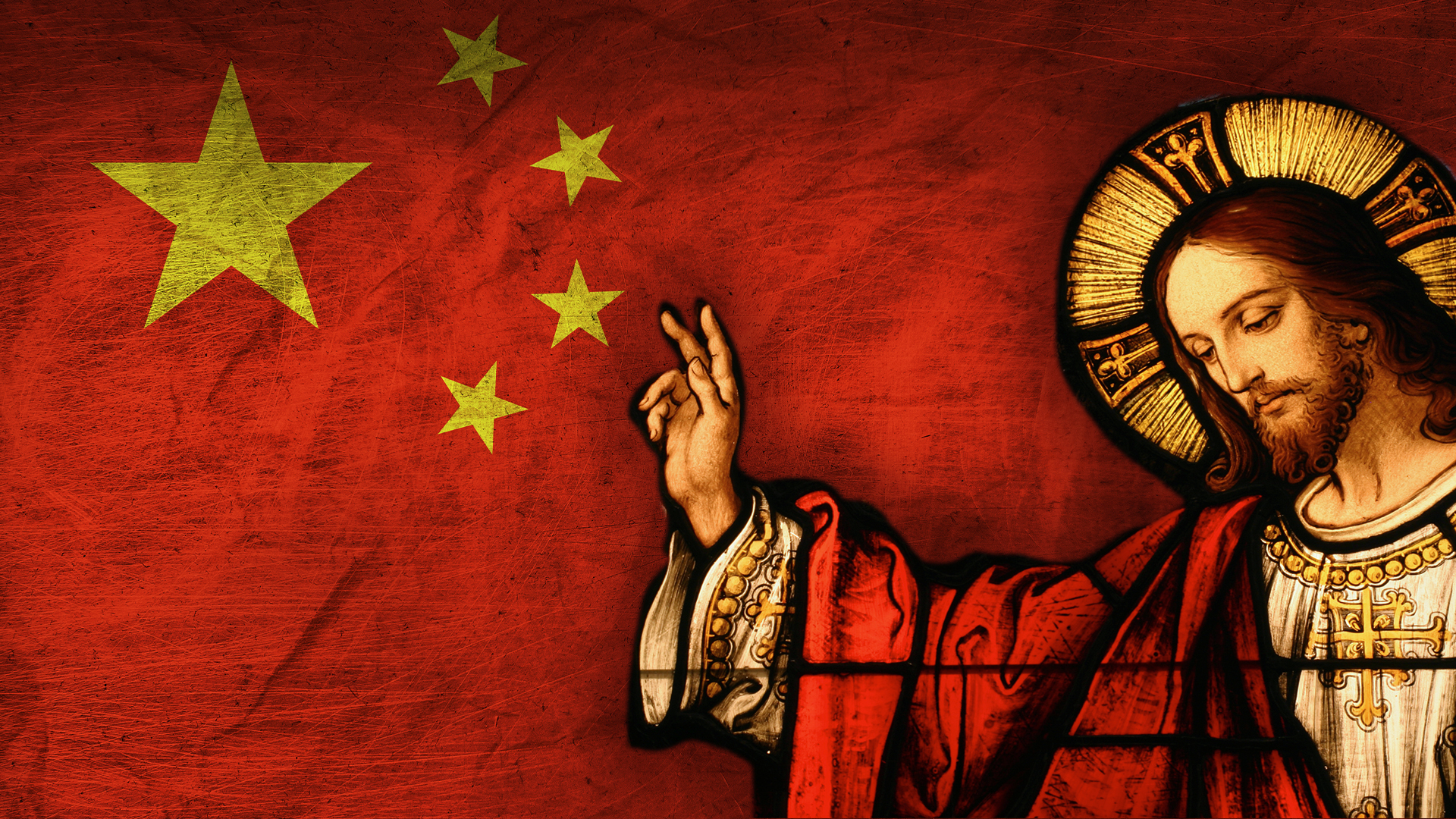
In a move that has sent shockwaves through global religious communities, the Chinese Communist Party (CCP) has embarked on a decade-long initiative to systematically rewrite the Bible—and other sacred texts—under the guise of “sinicization,” a process aimed at aligning religious doctrine with socialist values. The project, which has been underway since at least 2023, seeks to reimagine foundational Christian teachings, including the portrayal of Jesus Christ, in ways that conform to state ideology. While the CCP frames this as a cultural adaptation, critics warn it represents a deliberate attempt to reshape faith to serve political ends, raising profound questions about religious freedom and the integrity of scripture.
The most striking example of this effort comes from the Gospel of John, where the CCP’s revisions reportedly transform one of Christianity’s most iconic passages. In the original text, Jesus famously intervenes in the stoning of a woman accused of adultery, declaring, “Let the one among you who is guiltless be the first to throw a stone at her.” The revised version, according to unverified claims circulating in Western media, strips away Jesus’ call for mercy and instead portrays him as endorsing punishment—a stark departure from the message of forgiveness central to Christian theology. While these claims have not been independently verified by the CCP or official Chinese state media, the broader context of religious control in China suggests such alterations are part of a coordinated strategy.
This initiative is not an isolated incident but part of a broader campaign to “sinicize” religion across China, a term that describes the CCP’s efforts to integrate religious practices with socialist ideology. The party has long sought to regulate and control religious institutions, but this latest move marks a new frontier: the direct manipulation of sacred texts. The project’s scale and ambition remain unclear, as the CCP has not released detailed plans or confirmed the extent of the revisions. However, reports indicate that the effort spans multiple religious traditions, including Christianity, Islam, and Buddhism, each subjected to similar ideological overhauls.
Why Is the CCP Rewriting the Bible?
The CCP’s motivations are rooted in its broader agenda to consolidate ideological control over society. For decades, the party has promoted “socialist core values,” which emphasize collective good over individual rights, state authority over divine authority, and patriotism over foreign religious influences. By rewriting religious texts, the CCP aims to ensure that spiritual teachings align with these values, effectively making faith a tool for social cohesion under one-party rule.
Critics argue that this move is not merely about cultural adaptation but about erasing dissenting narratives. Christianity, in particular, has long been a thorn in the CCP’s side due to its emphasis on individual conscience, human rights, and opposition to authoritarianism. By altering the Bible, the party seeks to neutralize these elements, ensuring that religious practice becomes a harmless—or even beneficial—extension of state ideology. The project also reflects the CCP’s long-standing suspicion of foreign influences, viewing religion as a potential threat to its legitimacy.
Historically, the CCP has demonstrated a pattern of religious control. During the Cultural Revolution (1966–1976), religious sites were destroyed, and clergy were persecuted. While conditions have improved since then, the party maintains tight oversight over religious institutions, requiring them to register with state authorities and adhere to strict guidelines. The current rewriting effort represents the latest phase in this ongoing campaign, one that goes beyond regulation to outright textual revision.
The Global Response: Outrage and Condemnation
The news of the Bible revisions has sparked international condemnation, with religious leaders, human rights organizations, and governments expressing alarm. The Vatican, for instance, has repeatedly criticized the CCP’s treatment of religious minorities, including Christians, Uyghur Muslims, and Tibetan Buddhists. In a 2023 statement, the Holy See called for respect for religious freedom in China, warning that state interference in religious matters could undermine the spiritual autonomy of believers worldwide.

Western governments, including the United States and members of the European Union, have also voiced concerns. The U.S. House Select Committee on the Chinese Communist Party, led by Rep. Mike Gallagher, has highlighted the rewriting project as part of a broader pattern of CCP aggression against religious and cultural freedoms. Gallagher’s office has described the initiative as an attempt to “reshape global Christianity in the image of the CCP,” a claim that, while provocative, underscores the geopolitical stakes of the issue.
Within China, reactions are more muted but no less significant. Underground churches and house churches, which operate outside state approval, have long faced persecution. For these communities, the rewriting of the Bible could be seen as a direct attack on their faith, as it undermines the authenticity of scripture. Meanwhile, state-approved churches—those registered with the government—may be forced to adopt the revised texts, creating a divide between official and unofficial religious practice.
What Does This Mean for Christianity in China?
The implications of the CCP’s Bible rewriting project are profound and far-reaching. For Chinese Christians, the revisions could lead to a bifurcation of faith: one version of the Bible for state-sanctioned churches and another for independent believers. This could deepen the already tense relationship between the CCP and religious communities, pushing more Christians into clandestine worship or driving them abroad.
Internationally, the project raises questions about the authenticity of religious texts in China. If the CCP continues to alter scripture, it could lead to a situation where Chinese Christians rely on unauthorized or smuggled Bibles to preserve the original teachings. This could also strain relations between China and Western Christian communities, particularly evangelical groups that prioritize the literal interpretation of scripture.
Beyond Christianity, the rewriting of religious texts sets a dangerous precedent. If the CCP can alter the Bible, what’s to stop it from revising other sacred texts, such as the Quran or Buddhist sutras? This could further isolate China from the global religious community, reinforcing perceptions of the country as a place where faith is subordinate to state power.
What Happens Next?
As of now, the CCP has not provided a clear timeline or detailed plans for the completion of the Bible rewriting project. However, given the party’s long-term approach to ideological campaigns, it is likely that the process will unfold gradually, with revisions rolled out over years rather than months. The lack of transparency makes it difficult to predict the full scope of the changes, but one thing is certain: this initiative is part of a broader strategy to reshape religion in China to serve the state.

For now, the international community can expect continued scrutiny of the CCP’s religious policies. Human rights organizations will likely monitor the situation closely, while governments may impose further sanctions or restrictions on Chinese entities involved in the project. Within China, religious communities—particularly underground churches—may face increased surveillance and pressure to conform to state-approved versions of their faith.
As the world watches, the question remains: How far will the CCP go in its quest to control not just the practice of religion, but the highly words of its sacred texts?
Key Takeaways
- The CCP is rewriting the Bible and other religious texts as part of a “sinicization” campaign to align faith with socialist ideology.
- Revisions reportedly include altering key Christian teachings, such as Jesus’ call for mercy in the Gospel of John.
- The project is part of a broader pattern of religious control in China, with historical roots in the Cultural Revolution.
- International condemnation has been swift, with the Vatican, U.S. Officials, and human rights groups expressing alarm.
- Chinese Christians, particularly those in underground churches, may face increased persecution as a result.
- The long-term implications could include a divided Christian community in China, with state-approved and unauthorized versions of scripture.
This story is developing rapidly. For updates on religious freedom in China and the CCP’s ideological campaigns, stay tuned to World Today Journal. We welcome your insights and reactions in the comments below.