
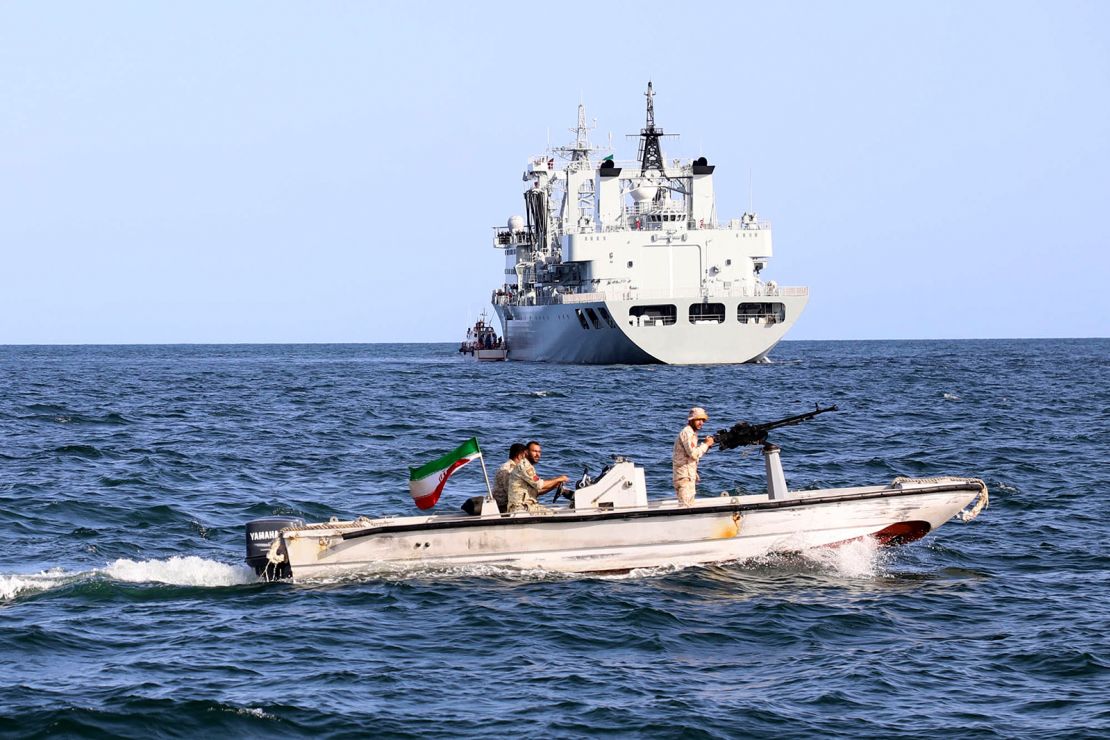
On April 21, 2026, the U.S. Military announced the seizure of an Iranian-linked oil tanker in the Indian Ocean, marking a significant expansion of American maritime interdiction efforts beyond the Strait of Hormuz. The vessel, identified as the TIFFANY, was intercepted while allegedly transporting Iranian crude oil in violation of international sanctions. U.S. Defense Department officials released video footage showing special operations forces boarding the ship via helicopter and conducting a search of its cargo hold.
The operation follows a similar incident on April 19, when U.S. Forces in the Persian Gulf fired upon and captured an Iranian-flagged vessel near the Strait of Hormuz. Together, these actions signal a broadening of Washington’s naval enforcement campaign targeting ships suspected of evading sanctions on Iran’s oil exports. The U.S. Central Command emphasized that such interdiction efforts would continue globally, stating that international waters are not a sanctuary for sanctioned vessels.
During a press briefing, Chairman of the Joint Chiefs of Staff General C.Q. Brown Jr. Confirmed that similar operations could extend into the Pacific Ocean, noting that vessels departing the Middle East region remain subject to tracking and interception. “We are conducting similar maritime security operations in the Pacific theater for ships that have left the area of responsibility,” Brown said, adding that the mission aims to disrupt material support to Iran regardless of location.
President Donald Trump weighed in on the seizure, suggesting the cargo might contain more than just oil. “The ship with the disappointing stuff… could be a gift from China,” Trump remarked, implying that the TIFFANY might be carrying prohibited items destined for Iran under the guise of humanitarian or commercial shipments. His comments introduced speculation about potential dual-use goods or military components being transported alongside the crude oil, though no evidence was presented to substantiate the claim.
The U.S. Navy’s Fifth Fleet, based in Bahrain, oversees operations in the Middle East and parts of the Indian Ocean, while the Third Fleet, headquartered in San Diego, manages Pacific theater activities. The coordination between these commands reflects a strategic shift toward globalized sanctions enforcement, particularly as Iran continues to rely on complex ship-to-ship transfers and deceptive routing to bypass export restrictions.
Analysts note that the timing of these interdictions coincides with heightened tensions over Iran’s nuclear program and regional influence. In recent months, the International Atomic Energy Agency has reported increased uranium enrichment activities by Tehran, prompting renewed diplomatic pressure from Western nations. Meanwhile, China has maintained its position as a key economic partner for Iran, importing significant volumes of Iranian oil despite U.S. Secondary sanctions, often through opaque financial and logistical channels.
The TIFFANY’s flag state and ownership structure have not been independently verified in open-source registries as of this reporting. Maritime tracking data indicates the vessel had last transmitted its location from the western Indian Ocean before going dark, a common tactic used by sanctions-evading ships to avoid detection. Re-identification efforts typically rely on satellite imagery and port call analysis, though such methods are not always conclusive.
Under U.S. Executive orders and sanctions regimes, including those issued under the International Emergency Economic Powers Act (IEEPA), the government has broad authority to intercept vessels suspected of violating restrictions on Iran’s petroleum and petrochemical sectors. Penalties for violations can include asset freezes, travel bans on individuals and restrictions on access to the U.S. Financial system.
No injuries were reported during the boarding of the TIFFANY, and the crew was reportedly treated in accordance with international maritime law. The vessel has since been diverted to an undisclosed location for further inspection, a standard procedure following suspected sanction breaches. The outcome of the cargo examination will determine whether formal legal proceedings are initiated against the ship’s operators or charterers.
As of April 22, 2026, neither the U.S. Department of Defense nor the State Department has released a detailed inventory of the TIFFANY’s cargo. Officials have declined to confirm whether any items beyond crude oil were discovered, citing operational security. The absence of verifiable details has led to divergent interpretations in media coverage, with some outlets emphasizing the strategic message of global reach, while others focus on the unproven allegations involving China.
The next expected development in this matter is a scheduled briefing by the Pentagon’s Press Secretary, slated for later in the week, where additional information about the seizure may be disclosed. Until then, the status of the TIFFANY and its cargo remains under active investigation.
For ongoing updates on U.S. Maritime sanctions enforcement and related geopolitical developments, readers are encouraged to consult official statements from the Department of Defense and the Treasury Department’s Office of Foreign Assets Control (OFAC).
We invite our global audience to share perspectives and insights in the comments section below. If you found this report informative, please consider sharing it with others interested in international affairs and maritime security.