
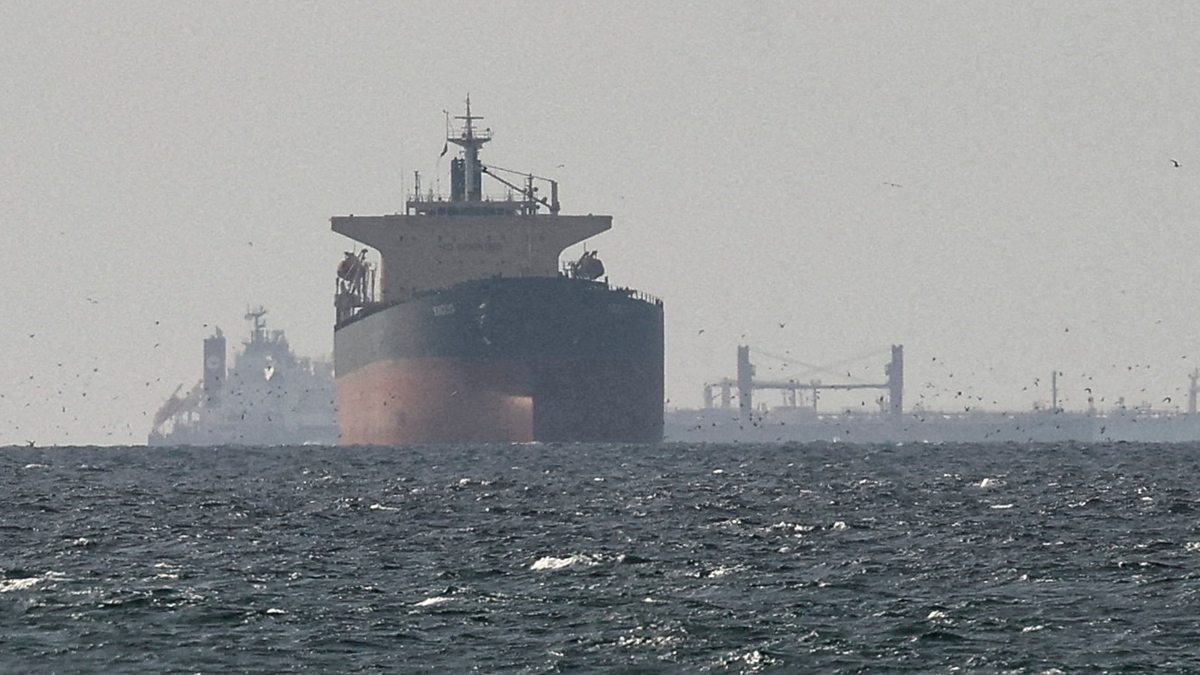
Tensions in the Middle East have escalated sharply as China calls the US blockade of Iranian ports “dangerous and irresponsible,” marking a significant diplomatic rift between Beijing, and Washington. The naval blockade, which came into force on Monday, April 13, follows the collapse of peace negotiations between the United States and Iran over the weekend in Pakistan.
President Donald Trump stated that the measure is intended to force Iran to abandon its nuclear ambitions. However, the move has sparked immediate international concern, with the International Monetary Fund warning that the global economy is facing a “major test” due to the outbreak of war in the region NBC News.
The blockade targets Iranian ports and impacts the Strait of Hormuz, a critical global trade route. While the U.S. Has vowed to cut off the waterway entirely, current reports indicate the actual blockade stops short of a total closure, though it remains a volatile flashpoint for international shipping.
Beijing’s Response and the Risk to Global Trade
China’s foreign ministry has been vocal in its opposition to the U.S. Strategy, asserting that the blockade undermines a fragile ceasefire agreement and jeopardizes the safety of all vessels transiting the Strait of Hormuz. President Xi Jinping emphasized that the global community must not be allowed to “revert to the law of the jungle” NBC News.
The strategic tension is compounded by China’s role as the largest buyer of Iranian oil. Analysts suggest the blockade is not only a move against Tehran but is also designed to pressure Beijing to encourage Iran to reopen the strait BBC. For China, the blockade poses a direct threat to its energy security and could have far-reaching consequences for its domestic economy.
Despite the restrictions, some vessels continue to navigate the waterway. A U.S.-sanctioned Chinese tanker was reported as the first ship to successfully pass through the Strait of Hormuz since the blockade began. It remains unclear if such vessels are paying tolls to Iran to facilitate their passage BBC.
The Human Cost and Regional Instability
The blockade follows a period of intense violence. Iran’s forensic chief reported that more than 3,000 people have been killed within Iran since U.S.-Israeli strikes commenced on February 28 NBC News. The conflict has spilled across borders, with more than 2,000 deaths reported in Lebanon, 32 in Gulf states, and 23 in Israel.
The instability extends to the Israel-Lebanon border. While direct talks between Israel and Lebanon are scheduled to take place in Washington, the Iran-backed militant group Hezbollah has urged Lebanon to withdraw from these discussions and vowed that it will not abide by any resulting agreements NBC News.
Intelligence Disputes and Weaponry Allegations
Adding to the diplomatic friction are reports from U.S. Intelligence indicating that China is preparing to deliver new air defense systems to Iran. Specifically, sources suggest Beijing is arranging the transfer of shoulder-fired anti-air missile systems, known as MANPADS, potentially routing them through third countries to mask their origin CNN.
These systems are viewed as an asymmetric threat to low-flying U.S. Military aircraft. President Trump has warned that China would face “big problems” if it proceeds with these shipments. However, the Chinese Embassy in Washington has categorically denied these claims, stating that China has never provided weapons to any party in the conflict and describing the intelligence reports as “completely fabricated” BBC.
Key Developments Timeline
| Date/Period | Event | Impact |
|---|---|---|
| Feb 28 | U.S.-Israeli strikes commence | Death toll in Iran exceeds 3,000 |
| April 11 | U.S. Intel report | Allegations of China shipping MANPADS to Iran |
| April 13 | U.S. Blockade begins | Iranian ports restricted; China calls move “dangerous” |
| April 14 | Direct Talks | Israel and Lebanon meet in Washington |
What Happens Next
The immediate future of the region hinges on whether diplomatic channels can be reopened. Two sources familiar with negotiations told NBC News that in-person talks between the U.S. And Iran could resume as early as this week NBC News. Following the failure of talks in Pakistan, Vice President JD Vance stated that the next step rests with Iran.
President Donald Trump is scheduled to visit China early next month for high-level talks with President Xi Jinping, which will likely address both the blockade and the allegations regarding weapon transfers CNN.
We will continue to monitor the situation as the U.S. And Iran determine if a return to the negotiating table is possible. Share your thoughts on the global economic implications of this blockade in the comments below.