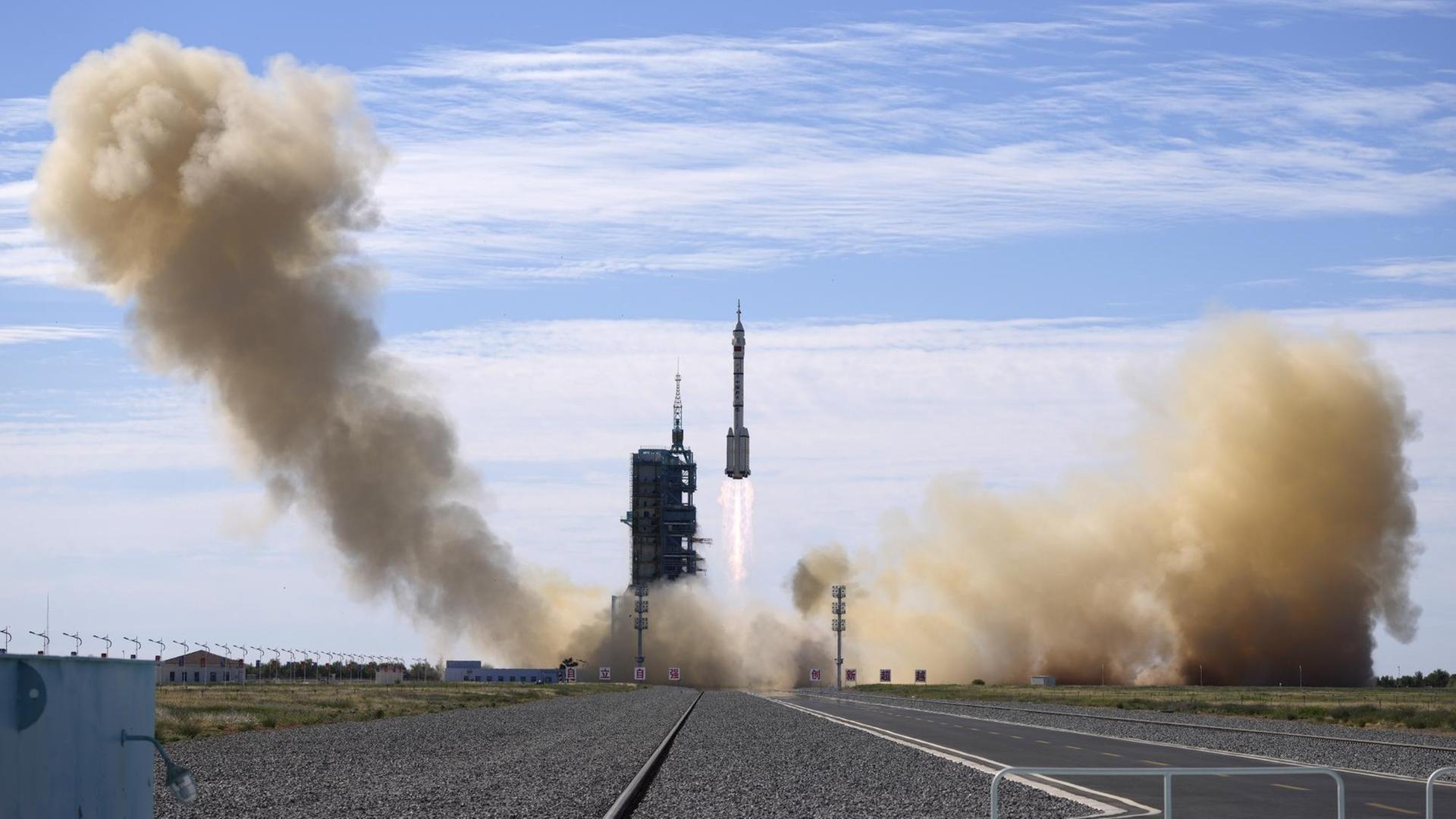
China is set to embark on a significant new chapter in its space exploration program, with the planned launch of the Shenzhou-23 mission. The mission, which aims to send three astronauts to the Tiangong space station, marks a critical step in the nation’s long-term strategy for human spaceflight, including the stated goal of achieving a crewed moon landing by 2030, according to reports from Reuters.
The Shenzhou-23 vessel is scheduled for launch at 11:08 p.m. (1508 GMT) on Sunday, using a Long March-2F Y23 carrier rocket from the Jiuquan Satellite Launch Center located in northwest China. This mission is particularly noteworthy as it includes plans for one of the three crew members to remain on the Tiangong space station for a full year, a duration that would represent a record length for China’s space program, as noted by the China Manned Space Agency.
The Shenzhou-23 Crew and Mission Objectives
The mission crew comprises three individuals with distinct roles. The commander is Zhu Yangzhu, and the pilot is Zhang Yuanzhi; both are members of the People’s Liberation Army’s astronaut division. Joining them is payload specialist Li Jiaying, a former Hong Kong police inspector. Li’s participation is a historic milestone, as she becomes the first astronaut from Hong Kong to take part in a Chinese space mission, as reported by Reuters.
The primary scientific objective of the year-long stay is to enable the study of long-duration human physiology in space. This research is viewed as essential for Beijing’s broader ambitions in deep space exploration. While a one-year mission is significant, it remains shorter than the 14-1/2 month record set by a Russian cosmonaut in 1995. The China Manned Space Agency indicated that the specific astronaut chosen to remain for the full year will be determined based on the progress of the mission.
Geopolitical Context and the Race to the Moon
The launch of Shenzhou-23 occurs against a backdrop of accelerating international competition regarding lunar exploration. Both China and the United States have publicly stated their intentions to land humans on the moon. Beijing has set a target of 2030 for its crewed moon landing, while NASA is currently working toward a crewed landing in 2028. The U.S. Space agency, following the successful flight of the Artemis II mission in April—which carried four astronauts on a trip around the moon—aims to establish a long-term lunar presence as a foundation for future human exploration of Mars.
This competition has led to diplomatic friction. The U.S. Has expressed concerns regarding China’s plans for lunar territory and potential resource mining. Beijing has formally rejected these allegations, maintaining that its space activities are peaceful and intended for the benefit of humanity.
Key Facts at a Glance
- Launch Vehicle: Long March-2F Y23 carrier rocket.
- Launch Site: Jiuquan Satellite Launch Center, northwest China.
- Mission Duration: One of the astronauts is expected to remain on the station for one year.
- Historic First: Li Jiaying is the first astronaut from Hong Kong to join a Chinese space mission.
- Strategic Goal: Supporting the ambition of a crewed moon landing by 2030.
Looking Ahead: The Future of Tiangong
Since 2021, China has consistently maintained a presence on its Tiangong space station, typically sending trios of astronauts for six-month rotations. The extension to a year-long mission marks a shift in operational capability, allowing for more rigorous testing of life-support systems and the psychological and physical impacts of extended orbital stays on the human body. As the mission proceeds, the global scientific community will be watching closely to see how these long-duration studies contribute to the safety and viability of future lunar and Martian expeditions.

Updates regarding the progress of the Shenzhou-23 mission, including the docking of the vessel and the commencement of the long-duration stay, will be provided by the China Manned Space Agency through their official channels as the mission unfolds. We invite our readers to share their thoughts on the implications of this mission for the future of international space cooperation in the comments section below.