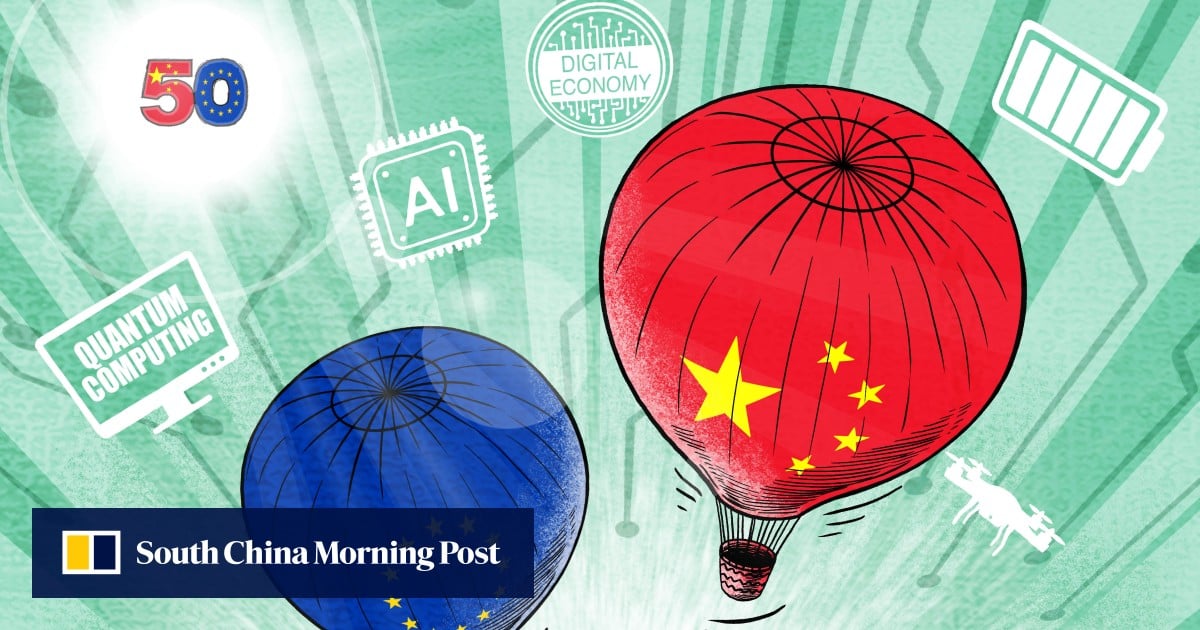
From technology Importer to Innovation Powerhouse: How China Rewrote the Rules
This year marks a notable milestone: half a century of formal diplomatic relations between China and the European Union,alongside the 25th anniversary of the European Union Chamber of Commerce in China. Examining the evolving relationship between these two global powers reveals a captivating shift - a technological conversion where China has dramatically altered its position on the world stage. This article delves into how China moved from being a technology importer to a global innovation powerhouse,a journey marked by strategic vision and relentless execution.
The 1978 Delegation: Acknowledging the Gap
In 1978, China was emerging from the tumultuous period of the Cultural Revolution, and a clear-eyed assessment of its technological standing was crucial. Beijing dispatched a high-level delegation on an intensive 36-day tour of Western Europe. They visited 25 cities across five countries, meticulously examining factories, mines, ports, farms, universities, and research institutions.
The findings were stark. Officials concluded that China lagged at least 20 years behind Europe in science, technology, and overall industrial growth. This realization wasn’t a cause for despair, but rather a catalyst for change. It provided a clear roadmap for the ambitious reforms and opening-up policies that would soon define ChinaS trajectory.
The Reform and Opening-Up Era: Laying the Foundation
China’s commitment to “reform and opening-up” initiated a period of unprecedented economic growth. This wasn’t simply about adopting Western technologies; it was about building a foundation for indigenous innovation. Initially, this involved absorbing and adapting foreign technologies, but the long-term goal was always self-reliance.
Several key strategies underpinned this approach:
* Strategic Investment: Massive investments were directed towards research and development (R&D) across key sectors.
* Education Reform: A focus on STEM education (science, technology, engineering, and mathematics) was prioritized to cultivate a skilled workforce.
* Technology Transfer Policies: Policies were implemented to encourage – and sometimes require – technology transfer from foreign companies operating in China.
* Market Access: Offering access to China’s vast market incentivized foreign companies to establish operations and share expertise.
The Rise of Indigenous Innovation
Over the decades, china steadily climbed the global value chain. It transitioned from being a low-cost manufacturer to a significant player in high-tech industries. Today, China is a leader in areas like:
* 5G Technology: Dominating the development and deployment of next-generation mobile networks.
* Artificial Intelligence (AI): Making rapid advancements in AI research and applications.
* Electric Vehicles (EVs): Leading the world in EV production and adoption.
* Renewable Energy: Becoming a global hub for renewable energy technologies.
* High-Speed Rail: Operating the world’s largest high-speed rail network.
This shift wasn’t accidental. It was the result of deliberate policies, sustained investment, and a national commitment to innovation. You can see the impact in the sheer number of patents filed by chinese companies and individuals – a metric that has skyrocketed in recent years.
Lessons for Europe and Beyond
China’s technological ascent offers valuable lessons for other nations. It demonstrates the power of long-term strategic planning,consistent investment in R&D,and a willingness to adapt and learn. For Europe, it presents both challenges and opportunities.
Consider these points:
* Increased Competition: European companies now face fierce competition from Chinese firms in key technological sectors.
* Collaboration opportunities: There are still significant opportunities for collaboration in areas like green technology and enduring development.
* The Need for Investment: Europe must increase its own investment in R&D to maintain its competitive edge.
* Adapting to Change: A proactive approach to adapting to the changing global technological landscape is essential.
Looking Ahead: China’s Innovation Future
China’s journey from technology importer to innovation powerhouse is far from over. The country is now focused on achieving self-sufficiency in critical technologies, such as semiconductors.This ambition is driven by geopolitical considerations and a desire to reduce reliance on foreign suppliers.
As china continues to innovate,its impact
Related reading