## The Rise of Megastructures: China‘s New World-Record bridge and the Future of Infrastructure
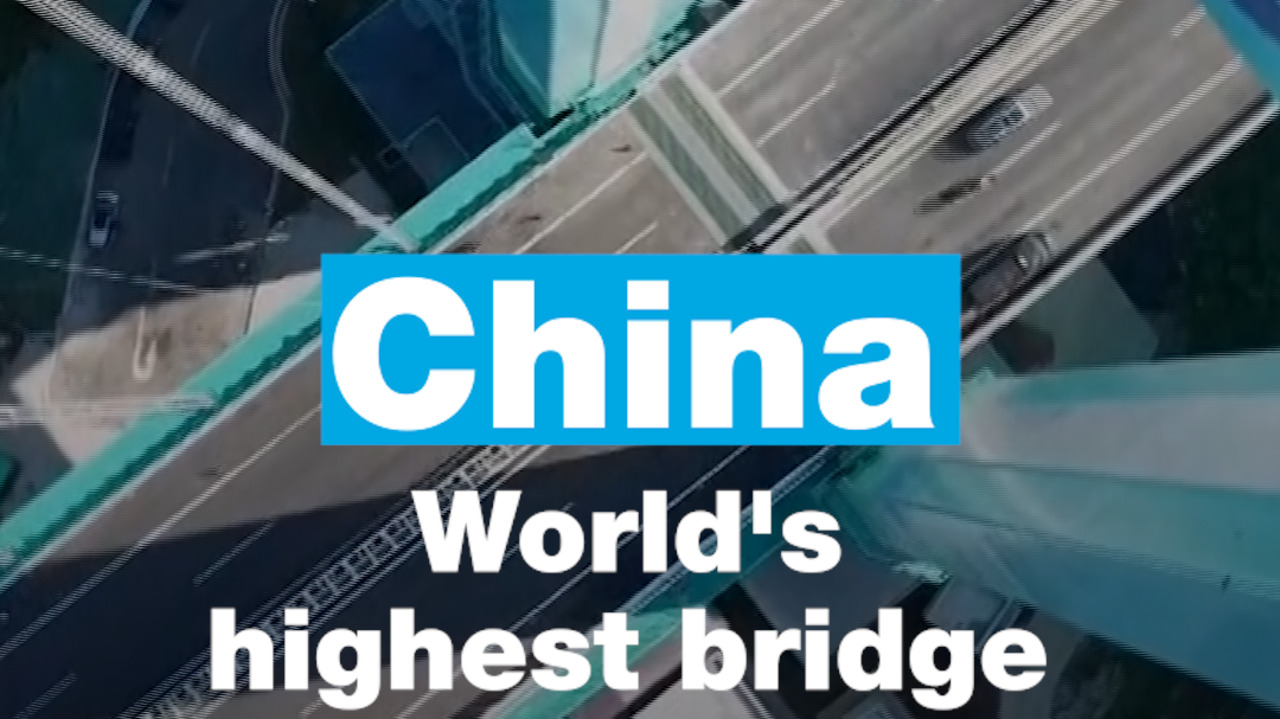
The global landscape of infrastructure is constantly evolving, with engineers pushing the boundaries of what’s possible. Recently, on September 29, 2025, China inaugurated the Huajiang Grand Canyon Bridge, a monumental achievement that has redefined the standard for bridge construction. This new structure, a testament to modern engineering prowess, now holds the title of the world’s highest bridge, surpassing its predecessor – also located within China’s Guizhou province – and signaling a new era in ambitious infrastructure projects. This article delves into the details of this remarkable feat, exploring the engineering challenges, the regional context, and the broader implications for the future of global infrastructure development.
### Engineering Marvel: A Deep Dive into the Huajiang Grand Canyon Bridge
The Huajiang Grand Canyon Bridge isn’t simply a taller version of existing structures; it represents a significant leap forward in bridge-building technology.Rising an astounding 625 meters (2,051 feet) above the valley floor, the bridge spans a dramatic gorge carved by a river in the mountainous Guizhou province. The construction, completed after three years of intensive work, demanded innovative solutions to overcome the unique challenges presented by the terrain and altitude.
| Bridge | Height (meters) | Height (feet) | Location |
|---|---|---|---|
| Huajiang Grand Canyon Bridge | 625 | 2,051 | Guizhou, China |
| Beipanjiang Bridge | 565 | 1,854 | Guizhou, China |
the bridge’s design incorporates advanced materials and construction techniques, including high-strength steel and a complex cable-stayed system. this system distributes the bridge’s weight efficiently, minimizing stress on the supporting towers and allowing for the immense span. The selection of materials was crucial,considering the region’s susceptibility to seismic activity and extreme weather conditions.According to a recent report by the American Society of Civil Engineers (ASCE, July 2025), the use of self-consolidating concrete (SCC) in the bridge’s foundations significantly enhanced durability and reduced construction time. SCC, a highly flowable concrete, allows for easier placement in complex forms, minimizing voids and maximizing structural integrity.
Did You No? The Huajiang Grand Canyon Bridge’s height is roughly equivalent to the height of the Eiffel Tower, but the bridge spans a natural chasm rather than being built on relatively flat ground.
### Guizhou Province: A Hub for High-Altitude Infrastructure
The concentration of the world’s highest bridges in Guizhou province isn’t accidental. This region, characterized by its rugged karst topography and deep river valleys, presents significant transportation challenges. Historically, travel within Guizhou was arduous and time-consuming. Though, the provincial government has prioritized infrastructure development as a key driver of economic growth and social progress.
The construction of these bridges isn’t merely about connecting communities; it’s about unlocking economic potential. Improved transportation links facilitate trade, tourism, and access to essential services. The Beipanjiang Bridge,previously holding the world record,has already demonstrated this impact,reducing travel times between previously isolated villages by up to 80%. A case study published by the World Bank (March 2025) highlighted the positive correlation between infrastructure investment in Guizhou and increased regional GDP. The study noted a 15% increase in economic activity in areas directly connected by the Beipanjiang Bridge within the first two years of its operation.
Pro Tip: When evaluating infrastructure projects, consider not only the immediate construction costs but also the long-term economic and social benefits. A well-planned infrastructure investment can yield returns far exceeding the initial outlay.
### The Global Trend: Pushing the Limits of Bridge Engineering
China’s achievement with the Huajiang Grand canyon Bridge is part of a broader global trend towards increasingly ambitious infrastructure projects. Several factors are driving this trend, including rapid urbanization, growing populations, and the need for more efficient transportation networks.
The demand for longer spans and higher elevations is forcing engineers to develop innovative solutions in areas such as materials science, structural design, and construction techniques.
Related reading
- US-Handelskrieg: Zoll und Rauch – junge Welt
- Guerra de EE.UU. e Israel con Irán, en vivo: ataques, noticias sobre el estrecho de Ormuz y más – CNN en Español
- China’s AI Surge: Market Growth, Tech Distillation, and US Tension (archynewsy.com)
- China Launches Commercial Space Debris Monitoring Constellation (world-today-news.com)