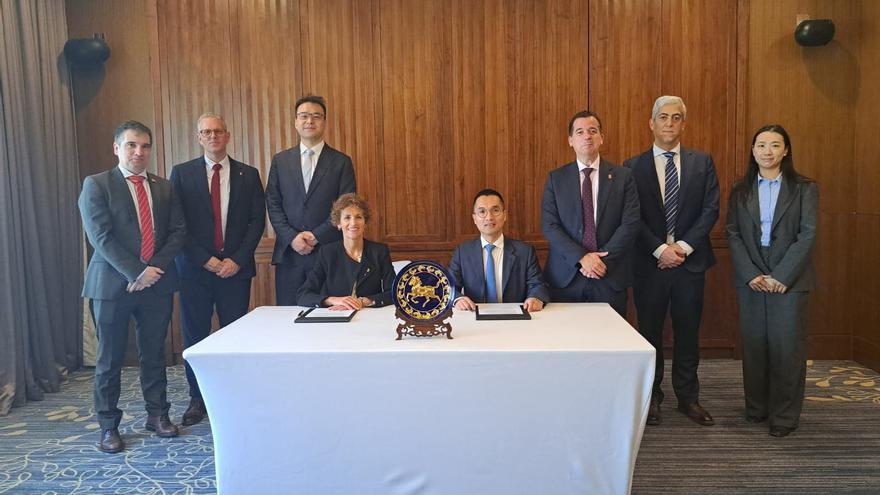
In a strategic move to bolster Europe’s energy infrastructure, Chinese multinational Hithium is considering a significant investment of approximately €400 million to establish a battery and energy storage systems manufacturing plant in Navarra, Spain. The project represents a major step in the region’s push toward technological reindustrialization and the broader transition to sustainable energy.
The proposed facility is expected to create up to 1,050 jobs across two distinct development phases. The first phase of the project is projected to generate around 750 direct positions, with an additional 300 roles anticipated during the second phase. This investment underscores Spain’s growing attractiveness as a hub for green technology and high-capacity energy storage solutions.
The initiative has received high-level political backing. Spanish Prime Minister Pedro Sánchez recently confirmed meetings with Jeff Wu, the founder of Hithium, to discuss the potential for manufacturing energy storage systems in the Navarre region. Following these discussions, María Chivite, the President of Navarre, announced the signing of a letter of intent between the regional government and the company to formalize the framework for the investment on March 11, 2026.
A Strategic Public-Private Partnership
The Hithium battery factory Navarra project is designed as a joint venture between the Chinese company and Sodena, a public company owned by the Navarrese government. Regional authorities have described this arrangement as a prime example of public-private collaboration, intended to drive the region’s technological evolution and industrial capacity.
While the exact location of the plant within Navarra has not yet been determined, officials aim for the facility to become operational by 2027. The collaboration with Sodena is expected to streamline the integration of Hithium’s global expertise with local industrial resources, ensuring the project aligns with regional economic goals.
Focus on LFP Technology and Energy Storage
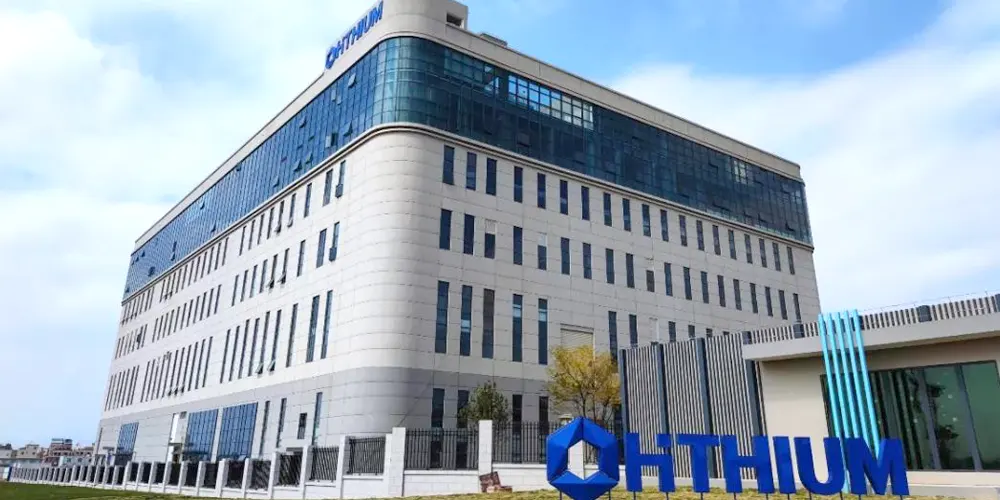
Hithium is a specialist in the production of lithium iron phosphate (LFP) batteries, a chemistry widely regarded for its safety, longevity, and cost-effectiveness compared to other lithium-ion variants. In its home market of China, the company manages a comprehensive production chain, ranging from individual battery cells to fully integrated, containerized energy storage systems designed for large-scale power plants .
Although the specific production capacity for the Navarra plant has not been disclosed, the facility is intended to focus on energy storage systems. It remains unclear at this stage whether the Spanish site will manufacture the core battery cells or focus on the assembly of complete battery systems. However, the introduction of LFP technology on a “mega” scale in Spain could significantly reduce the region’s reliance on imported storage solutions and support the stability of the local power grid.
Key Project Specifications
Economic and Industrial Implications
The arrival of a major player like Hithium is seen as a catalyst for the “technological reindustrialization” of Navarra. By integrating advanced energy storage manufacturing into the local economy, the region positions itself as a critical node in the European energy transition. The focus on energy storage systems is particularly vital as Europe seeks to manage the intermittency of renewable energy sources like wind and solar.
The phased approach to hiring—starting with 750 jobs and expanding by another 300—suggests a scalable growth strategy that allows the local labor market to adapt to the specialized requirements of battery manufacturing. This investment not only brings capital but also transfers technical knowledge in LFP battery integration, which is essential for the next generation of power plant infrastructure.
The next confirmed milestone for the project involves the finalization of the facility’s exact location and the detailed operational planning required to meet the 2027 target date.
World Today Journal encourages readers to share their thoughts on the expansion of battery manufacturing in Europe in the comments section below.
Worth a look