
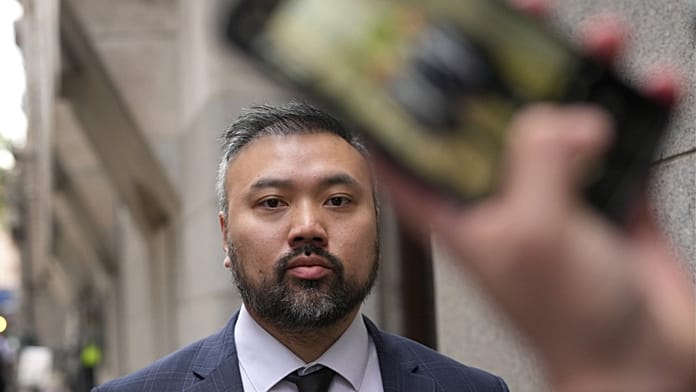
In a landmark legal development that underscores the escalating tension between London and Beijing, a British court has convicted two men of spying for China and Hong Kong. The convictions mark a significant milestone in the United Kingdom’s efforts to combat foreign intelligence operations on its soil, particularly those targeting political dissidents who have sought refuge in Britain.
Chung Biu “Bill” Yuen, 65, and Chi Leung “Peter” Wai, 40, were found guilty at London’s Old Bailey on Thursday of assisting a foreign intelligence service. The case has sent shockwaves through the UK security establishment, as Wai was revealed to be an employee of the UK Border Force, providing the foreign service with a potential vantage point within the state’s own immigration infrastructure.
The two men, both dual British and Chinese nationals, were convicted of carrying out surveillance on prominent pro-democracy dissidents residing in the UK between December 2023 and May 2024. While the defendants denied the charges, the jury’s decision highlights the growing vulnerability of political exiles to “transnational repression”—a strategy used by authoritarian regimes to silence critics abroad.
The convictions come at a precarious moment for bilateral relations. While British Prime Minister Keir Starmer visited China in January in an attempt to stabilize economic ties, repeated accusations of espionage and the targeting of dissidents have remained a primary stumbling block in improving the diplomatic relationship.
The Scope of the Intelligence Operation
The prosecution detailed a coordinated effort to monitor and intimidate individuals who had fled Hong Kong following the 2019 national security crackdown. Between December 2023 and May 2024, Yuen and Wai engaged in active surveillance of targets, which included tracking movements and gathering intelligence on the activities of pro-democracy activists.

The involvement of Chi Leung Wai is particularly concerning to security officials. As a member of the UK Border Force, Wai occupied a position of trust. His conviction for assisting a foreign intelligence service suggests a breach of security that may prompt a wider review of vetting processes for personnel in sensitive border and immigration roles.
The trial revealed the psychological toll on the targets. Evidence presented in court suggested that the surveillance was not merely about data collection but served as a tool for intimidation. Witnesses described an atmosphere of fear, with some reporting that the presence of these operatives was intended to signal that they were still being watched by authorities in Hong Kong, regardless of their physical location in the UK.
Unresolved Charges of Foreign Interference
While the jury reached a consensus on the spying charges, they were unable to reach a verdict on a separate, more aggressive charge of “foreign interference.” This specific charge related to an incident in northern England, where the pair were accused of forcing entry into the home of a woman who had been accused of fraud in Hong Kong.
The prosecution alleged that this forced entry was carried out on behalf of Hong Kong authorities, representing a direct violation of British sovereignty. The failure of the jury to reach a verdict on this count suggests a higher evidentiary bar for “interference” compared to “assisting a foreign intelligence service,” though the underlying facts of the intrusion remain a central part of the case’s narrative.
The distinction between these charges is critical for legal analysts. Assisting a foreign intelligence service focuses on the act of spying and information gathering, whereas foreign interference typically involves attempts to coerce, manipulate, or illegally influence the domestic affairs or residents of the UK through clandestine means.
Geopolitical Fallout and the ‘Transnational Repression’ Trend
The conviction of Yuen and Wai is not an isolated incident but part of a broader global trend. Intelligence agencies in the West have increasingly warned about “transnational repression,” where states like China use a combination of digital surveillance, threats to family members in the home country, and physical stalking to silence dissidents abroad.
The Chinese embassy in London has dismissed the proceedings, accusing the British government of fabricating the charges. This denial follows a pattern of diplomatic responses from Beijing, which typically frames such legal actions as politically motivated attempts to smear China’s international image.
For the UK, the case creates a diplomatic paradox. The government seeks to maintain a pragmatic economic relationship with the world’s second-largest economy while simultaneously hardening its national security posture. The fact that these are believed to be the first convictions of this specific nature regarding Chinese spying in Britain places additional pressure on the Foreign, Commonwealth & Development Office to define the “red lines” of acceptable diplomatic conduct.
Legal Consequences and Next Steps
Under the National Security Act 2023, which modernized the UK’s espionage laws to address 21st-century threats, the penalties for assisting a foreign intelligence service are severe. Both Yuen and Wai now face up to 14 years in prison.

The sentencing hearing will be a pivotal moment, as the judge will weigh the breach of trust—particularly in Wai’s case—against the overall impact of the surveillance operation. Legal experts suggest that the sentence will serve as a deterrent to others who might be recruited by foreign intelligence services within the UK civil service.
For the victims of the surveillance, the convictions provide a degree of legal validation, though many remain cautious. The case underscores the necessity for enhanced protection for political refugees and a more robust mechanism for reporting suspected foreign agent activity to the Metropolitan Police and MI5.
The next confirmed checkpoint in this case is the sentencing hearing for Chung Biu Yuen and Chi Leung Wai, the date of which is to be announced by the Old Bailey. We will provide updates as the court schedule is finalized.
Do you believe the UK is doing enough to protect political dissidents from foreign surveillance? Share your thoughts in the comments below or share this article to join the conversation.