
Military forces from the United States and Iran exchanged fire in the Strait of Hormuz on Friday, marking a volatile escalation in one of the world’s most critical maritime chokepoints. The confrontation, which involved missile and drone activity, has placed a fragile four-week-old truce under severe strain, raising immediate concerns over global shipping security and regional stability.
The incident began when US Navy guided-missile destroyers transiting the strait were targeted by Iranian forces. In response, the United States launched self-defense strikes against Iranian military facilities. While both nations have provided conflicting accounts of who initiated the engagement, the exchange represents the most significant direct military friction between Washington and Tehran since the implementation of their recent ceasefire agreement.
Despite the intensity of the flare-up, US President Donald Trump has signaled that the broader diplomatic framework remains intact. In an interview with ABC News, the President characterized the exchange of fire as a “love tap,” asserting that the existing ceasefire and the US blockade of Iran remain in effect. This attempt to downplay the severity of the clash comes as the international community monitors the Strait of Hormuz for further signs of escalation that could disrupt global energy markets.
Tactical Exchange and Conflicting Accounts
The specifics of the engagement reveal a chaotic sequence of events across the Gulf. US Central Command (CENTCOM) announced that US forces intercepted “unprovoked Iranian attacks” while Navy destroyers were transiting the strait. CENTCOM stated that the US responded with self-defense strikes and confirmed that no US assets were struck during the encounter. US Central Command reports that the military remains positioned to protect American forces but does not seek further escalation.
Conversely, Iranian authorities have accused the United States of violating the ceasefire agreement established on April 7. Iranian news agencies reported that several explosions were heard near the city of Bandar Abbas, and that commercial sections of a pier on Qeshm—the largest island in the Gulf—were targeted. Iran’s top military command further alleged that the US targeted an Iranian oil tanker moving toward the strait, as well as another vessel positioned opposite the Emirati port of Fujairah.
Iran claims its armed forces responded immediately by attacking US military vessels, asserting that they inflicted “significant damage.” However, President Trump contradicted these claims, confirming that while three US naval destroyers in the strait were attacked, they sustained no damage. He maintained that “great damage” was instead dealt to the Iranian attackers.
The Fragility of the April 7 Ceasefire
The current tension is particularly acute because it threatens a truce that is only a month old. The ceasefire, signed on April 7, was intended to stabilize relations and prevent direct military conflict in the Persian Gulf. The Friday clash suggests that the underlying grievances and strategic mistrust between the two powers continue to outweigh the diplomatic gains of the agreement.
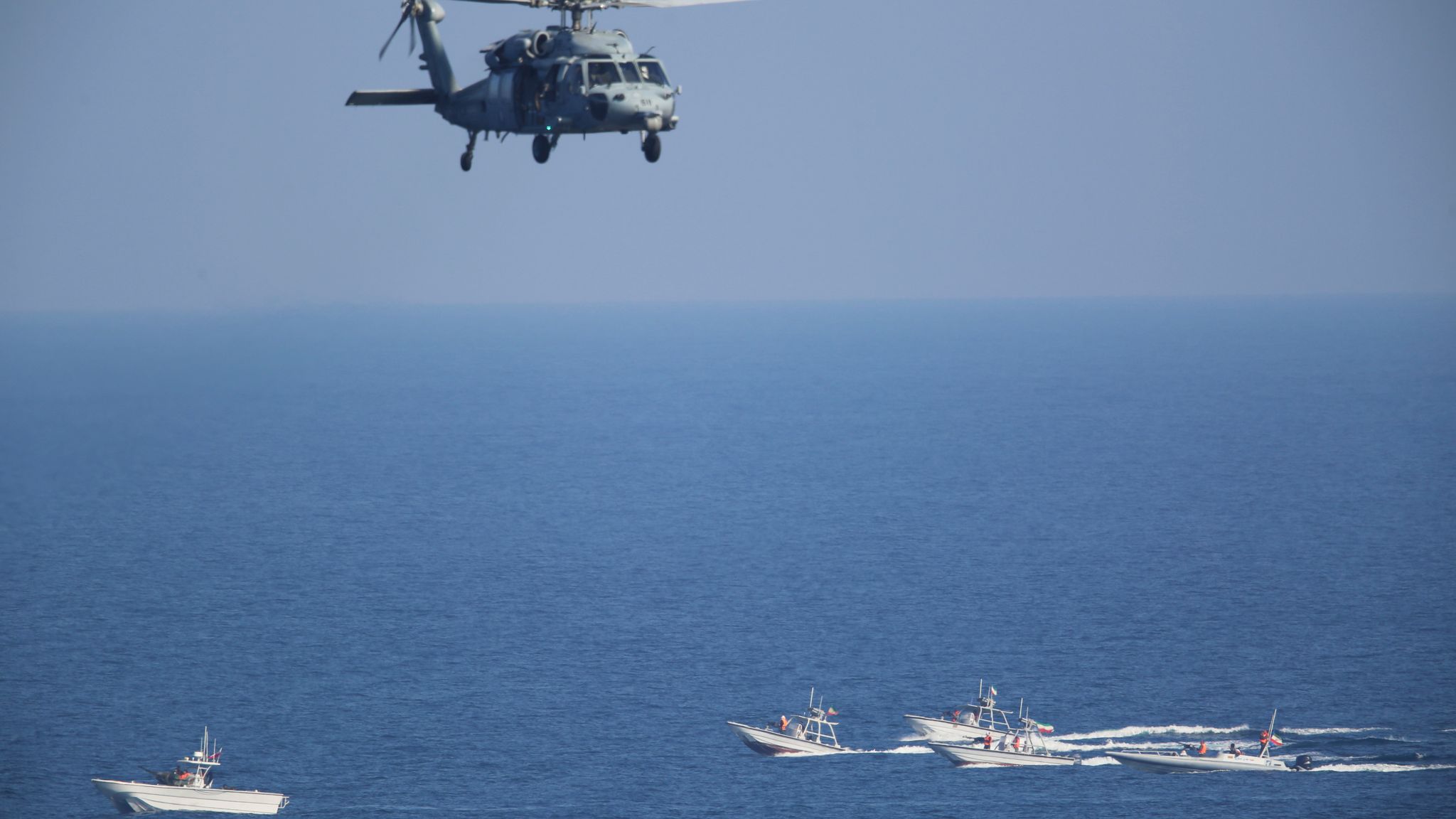
The Strait of Hormuz is a vital artery for the global economy, with a significant portion of the world’s liquefied natural gas and crude oil passing through its narrow waters. Any sustained military conflict in the region typically leads to immediate volatility in oil prices and increased insurance premiums for commercial shipping. The targeting of commercial infrastructure, such as the pier in Qeshm and the alleged targeting of tankers, indicates that the risk to non-combatant maritime traffic remains high.
The US maintains a blockade of Iran as part of its broader strategic pressure campaign. The intersection of this blockade with the fragile ceasefire creates a precarious environment where tactical miscalculations by local commanders can quickly escalate into a strategic crisis. The US position remains that the blockade and the ceasefire can coexist, though Tehran views the blockade as a continuing provocation.
Regional Impact and What Happens Next
While Iranian television reported that “life is moving on as normal” in several cities despite the explosions, the military readiness in the region has spiked. The involvement of the Emirati port of Fujairah as a reference point for the attacks highlights the potential for the conflict to spill over into neighboring Gulf states, further complicating the security architecture of the Middle East.
The primary question now is whether this “exchange of fire” will lead to a permanent collapse of the April 7 agreement or if both sides will treat it as an isolated incident. The US administration’s rhetoric—specifically the use of the term “love tap”—suggests a desire to avoid a full-scale war while maintaining a posture of military dominance. However, the Iranian regime’s insistence that the US has violated the truce provides a pretext for further “responsive” actions.
International observers are now looking toward the next diplomatic window to see if the US and Iran can renegotiate the terms of the truce or if the region is sliding toward a more permanent state of hostilities. For now, the US Navy remains on high alert in the strait, and the global shipping industry continues to monitor the situation for any formal advisories or changes in transit safety.
The next confirmed checkpoint for the situation will be the upcoming official briefings from US Central Command and the Iranian Ministry of Foreign Affairs regarding the status of the April 7 ceasefire.
World Today Journal encourages readers to share this report and leave their perspectives on the regional stability of the Persian Gulf in the comments section below.
Keep reading