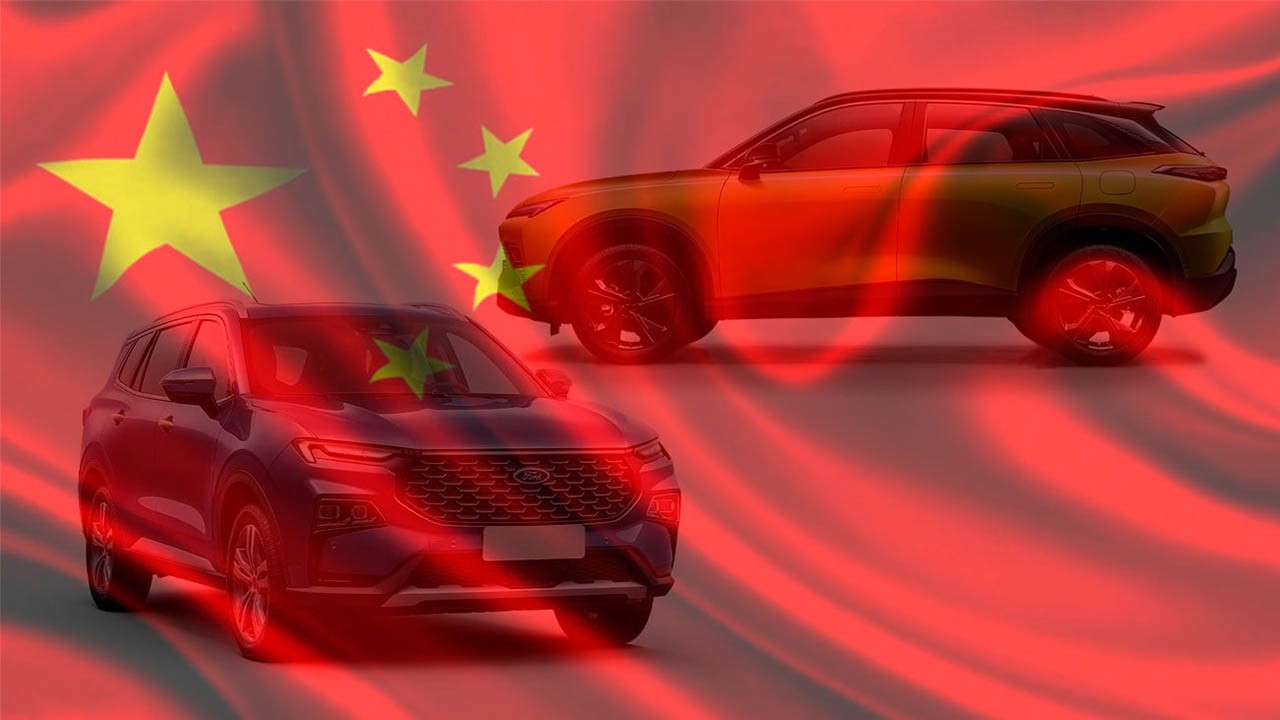
Chinese automakers have significantly expanded their presence in Argentina’s automotive market, offering consumers a growing selection of affordable vehicles amid shifting economic conditions. As of mid-2024, over 60 distinct models of passenger cars and sport utility vehicles from Chinese manufacturers are available for sale in the country, according to industry monitoring by local automotive associations and dealership networks. This expansion reflects both the strategic push by Chinese brands to gain footholds in emerging markets and the increasing demand among Argentine buyers for value-oriented options in a context of currency volatility and inflation.
The influx has been particularly notable in the SUV and crossover segments, where Chinese manufacturers have introduced competitively priced hybrids and fully electric models that challenge established players like Toyota, Honda, and Volkswagen. Vehicles such as the Chery Tiggo 7 Pro, Haval Jolion, and MG HS have gained attention for their feature-rich specifications relative to price, often including touchscreen infotainment, advanced driver-assistance systems, and panoramic sunroofs even in mid-tier trims. These offerings have resonated with urban buyers seeking modern amenities without the premium associated with traditional European or Japanese brands.
To understand the scope and implications of this market shift, it is essential to examine which Chinese brands are active in Argentina, how their pricing compares to regional benchmarks, and what factors are driving consumer interest. This overview draws on verified data from manufacturer websites, official import records from Argentina’s National Customs Directorate, and recent market analyses by automotive industry observers.
Chinese Automakers Operating in Argentina: Brand Overview
As of June 2024, ten Chinese automotive brands have established official distribution channels in Argentina through local importers or joint ventures. These include Chery, Haval (a subsidiary of Great Wall Motors), MG Motor (owned by SAIC Motor), GAC Group, JAC Motors, BYD, Geely, Lynk & Co, Omoda, and Jaecoo. Each brand offers a range of models tailored to different segments, from compact hatchbacks to seven-seat SUVs and electric vehicles.
Chery leads in model diversity, with over 15 variants available, including the Arrizo 6 sedan, Tiggo 2, Tiggo 4 Pro, Tiggo 5X, Tiggo 7 Pro, and Tiggo 8 Pro. Haval follows closely, offering the H2, H6, Jolion, and Dargo models, with particular emphasis on its hybrid and turbocharged petrol variants. MG Motor has focused on the ZS, HS, and EP series, including the MG ZS EV, one of the most affordable electric SUVs in the Argentine market.
BYD, while primarily known for its electric vehicles, has introduced the Han sedan and Tang SUV in limited numbers, though availability remains constrained by import logistics and battery supply chains. GAC Group markets the GS3 Emzoom and GS4 under its Trumpchi sub-brand, while JAC offers the T6 pickup and T8 SUV. Geely presents the Coolray and Azkarra, and Lynk & Co offers the 01 and 02 models, positioning themselves in the premium-tinged compact SUV space.
Omoda and Jaecoo, both newer entrants backed by Chery International, launched in Argentina in late 2023 and early 2024, respectively. Omoda offers the C5 SUV, while Jaecoo markets the J7, both emphasizing design and technology features aimed at younger buyers.
All vehicles are imported completely built-up (CBU) or as semi-knocked-down (SKD) kits for local assembly, depending on the manufacturer’s agreement with local partners. Import volumes fluctuate monthly based on foreign exchange availability, tariff classifications, and provincial registration data.
Pricing Trends and Market Positioning
Pricing for Chinese-branded vehicles in Argentina varies significantly by model, trim level, and powertrain, but generally remains below that of comparable Japanese, European, or American counterparts. Entry-level models such as the Chery Tiggo 2 and Haval H2 start at approximately ARS 25 million (around USD 25,000 at the official exchange rate), while mid-range hybrids like the Haval H6 Hybrid and MG HS PHEV range from ARS 38 to 45 million.
Fully electric models present a notable value proposition. The MG ZS EV, for example, is listed at approximately ARS 42 million, making it one of the most accessible electric SUVs in the country. In comparison, the Nissan Leaf and Hyundai Kona Electric typically exceed ARS 50 million when available. BYD’s Han EV and Tang EV are priced higher, reflecting their premium positioning, but still fall below equivalent Tesla or Mercedes-Benz EQ models in local pricing.
These figures are subject to frequent adjustment due to Argentina’s volatile economic environment, including monthly inflation adjustments, changes in import taxes, and fluctuations in the official and blue-chip dollar rates. Automakers often adjust prices quarterly or even monthly to reflect macroeconomic conditions, and promotional financing or trade-in incentives are commonly offered through dealership networks to stimulate demand.
According to data from the Argentine Automobile Dealers Association (ACARA), Chinese-branded vehicles accounted for approximately 18% of all new vehicle registrations in the first five months of 2024, up from just 5% in the same period of 2022. This growth has been driven largely by SUV and hybrid demand, with models like the Haval Jolion Hybrid and Chery Tiggo 7 Pro ranking among the top 20 best-selling vehicles nationally in April and May 2024.
Consumer Considerations and After-Sales Support
While price and features are strong selling points, prospective buyers often evaluate Chinese vehicles based on long-term reliability, resale value, and the availability of service networks. To address these concerns, most brands have expanded their official service infrastructure, with Chery, Haval, and MG operating over 60 authorized service centers across Argentina as of mid-2024, particularly concentrated in Buenos Aires, Córdoba, Rosario, and Mendoza.
Warranty offerings are generally competitive, with most manufacturers providing a 3-year or 100,000-kilometer warranty, whichever comes first, and some offering extended coverage on hybrid and electric components. For example, BYD provides an 8-year or 160,000-kilometer warranty on its blade batteries, while MG offers a similar term for its electric powertrain.
Independent assessments by automotive publications such as Motor 1 Argentina and Parabrisas have noted improvements in build quality and driving dynamics across recent model years, particularly in vehicles equipped with turbocharged engines and dual-clutch transmissions. However, some reviewers continue to note inconsistencies in interior material quality and infotainment responsiveness compared to established brands, though these gaps have narrowed in 2023–2024 model updates.
Resale value remains a consideration, as historical data on Chinese vehicles in Argentina is limited due to their relatively recent market entry. However, early indicators suggest that well-maintained models from Chery, Haval, and MG are holding value reasonably well in the used market, particularly when supported by complete service histories.
Infrastructure and Electrification Trends
The rise of Chinese electric and hybrid vehicles coincides with gradual developments in Argentina’s charging infrastructure. As of June 2024, the country has over 300 public charging stations, according to the National Secretariat of Energy, with concentrations in major urban centers and along key highways such as Route 9 and the Access West. While this network remains modest compared to Chile or Uruguay, it is sufficient to support daily urban use of EVs like the MG ZS EV and BYD Han.
Several Chinese brands have partnered with local energy companies to promote home charging solutions. MG Motor, for instance, offers discounted wallbox installations through a collaboration with YPF Luz, while BYD provides guidance on residential charging setup through its local representatives. These efforts aim to reduce range anxiety and support broader adoption, particularly among urban commuters and fleet operators.
Government incentives for electric vehicles remain limited at the national level, though some provinces offer reduced registration fees or tax exemptions for zero-emission vehicles. The City of Buenos Aires has implemented preferential parking and reduced tolls for EVs, while Córdoba offers a partial subsidy for home charging equipment. Advocacy groups continue to push for a national framework similar to Brazil’s Rota 2030 or Chile’s National Electromobility Strategy to accelerate adoption.
Outlook and Market Evolution
The trajectory of Chinese automotive brands in Argentina will depend on multiple factors, including macroeconomic stability, evolving consumer preferences, and the ability of manufacturers to adapt to local conditions. While current growth is robust, sustained success will require not only competitive pricing but also consistent product quality, transparent communication, and long-term investment in after-sales support.
Industry analysts consulted by América Economía and EFE News Agency suggest that if inflation stabilizes and access to foreign exchange improves, Chinese brands could capture over 25% of the new vehicle market by 2026, particularly if they expand their electric and hybrid offerings. Conversely, any deterioration in economic conditions or perception of reliability could gradual adoption, especially if consumers revert to established brands during periods of uncertainty.
For now, the presence of Chinese automakers has undeniably expanded choice in Argentina’s automotive landscape, introducing advanced features at accessible price points and accelerating the gradual shift toward electrification. As more models enter the market and local support networks mature, these vehicles are likely to play an increasingly significant role in shaping the country’s mobility future.
For the latest updates on vehicle availability, pricing, and incentives, consumers are encouraged to consult official brand websites, visit authorized dealerships, or refer to regularly updated guides from reputable sources such as the Argentine Automobile Dealers Association (ACARA) and the National Registry of Motor Vehicle Owners (DNRPA).
Have you considered a Chinese-made vehicle for your next purchase? Share your thoughts or questions in the comments below, and feel free to share this article with others navigating Argentina’s evolving car market.
Keep reading