
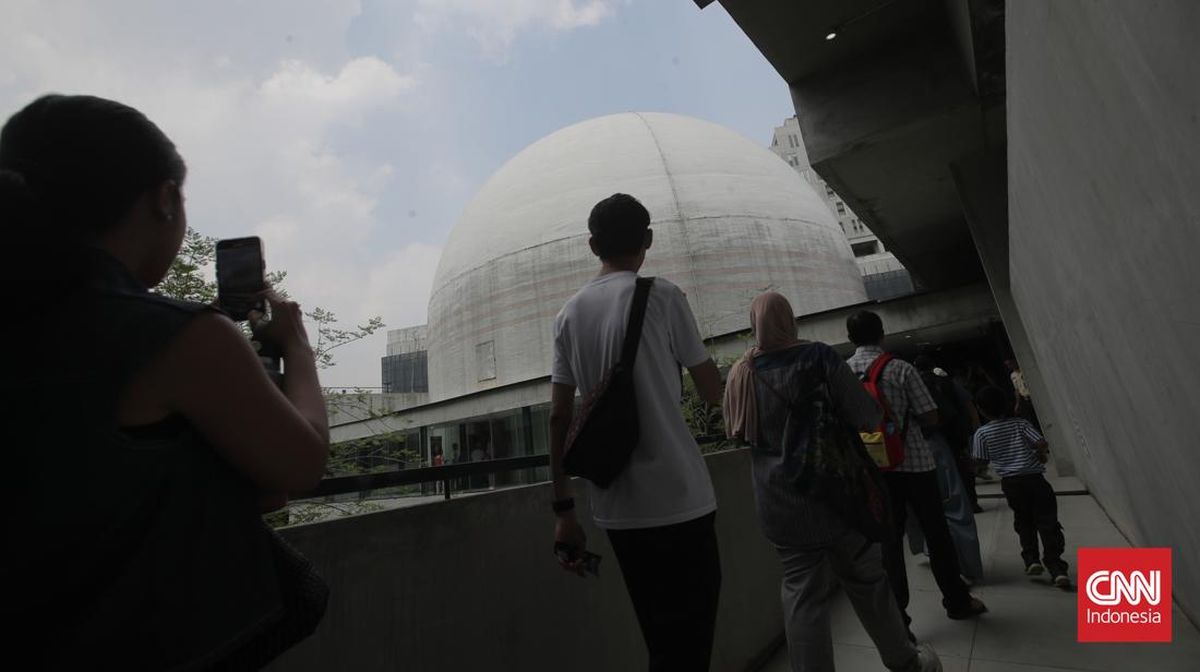
On Thursday, April 23, 2026, Planetarium Jakarta will host a free public event titled “Piknik Malam Bersama Bulan dan Jupiter” (Night Picnic with the Moon and Jupiter) from 5:00 PM to 9:00 PM Western Indonesian Time (WIB). The event is open to all and will take place at the Gedung Teater Jakarta within Taman Ismail Marzuki in Cikini, Central Jakarta. Attendees are encouraged to arrive early, as on-site registration begins at 4:00 PM WIB.
The program centers on observing the astronomical conjunction of the Moon and Jupiter, a celestial alignment where the two bodies appear close together in the night sky. According to Planetarium Jakarta’s announcement shared via Instagram on April 21, 2026, this proximity offers an ideal opportunity for joint observation using telescopes provided at the venue. Participants will be able to view lunar surface features such as craters, valleys, and mountains, as well as Jupiter’s enduring storm systems and its Galilean moons in orbit.
Beyond stargazing, the evening includes a talkshow and discussion on astronomy, a mini planetarium present, and an astrophotography exhibition. All activities are free of charge, with no prior registration required—entry is granted on a first-come, first-served basis. Organizers emphasize that the event aims to develop astronomy accessible to the general public, particularly highlighting the educational value of direct observation during rare celestial events.
This initiative aligns with Planetarium Jakarta’s ongoing efforts to promote public engagement with space science through community-based programs. By combining informal learning with hands-on viewing experiences, the institution seeks to inspire curiosity about the universe among visitors of all ages. The April 23 event is part of a broader schedule of nighttime astronomy programs offered periodically throughout the year, often timed to coincide with notable planetary alignments or lunar phases.
Weather permitting, the conjunction will be visible to the naked eye, though enhanced viewing through telescopes will allow for greater detail. Jupiter, the largest planet in the solar system, is currently observable in the evening sky, while the Moon will be in its first quarter phase, offering optimal illumination for surface feature visibility without overwhelming brightness.
Those interested in attending are advised to check local weather forecasts closer to the date, as cloud cover could affect visibility. No special equipment is needed to participate, though bringing blankets or mats for comfortable ground seating is recommended. Food and beverages are permitted, reinforcing the picnic-style atmosphere of the gathering.
As of now, no official attendance cap has been announced by Planetarium Jakarta for this event, though past similar programs have drawn large crowds due to their popularity and free access. The institution continues to update event details through its official social media channels, including Instagram, where real-time announcements and changes are typically posted.
For ongoing updates about future astronomy events at Planetarium Jakarta, members of the public are encouraged to follow the organization’s verified social media accounts or visit its official website when available. These platforms serve as the primary source for confirmed schedules, program changes, and safety guidelines related to public viewing sessions.
To stay informed about similar skywatching opportunities worldwide, readers can consult reputable astronomy organizations and sky calendars that track conjunctions, oppositions, and other notable celestial phenomena. Events like this one remind us that moments of cosmic alignment are not only scientifically significant but also shared human experiences that transcend borders.
If you attended the Piknik Malam Bersama Bulan dan Jupiter or plan to participate in future events hosted by Planetarium Jakarta, we invite you to share your experience in the comments below. Your insights help foster a global conversation about science education and public engagement with the cosmos.
Sense free to share this article with friends, family, or fellow astronomy enthusiasts who may appreciate knowing about this unique opportunity to observe the Moon and Jupiter together under the Jakarta night sky.