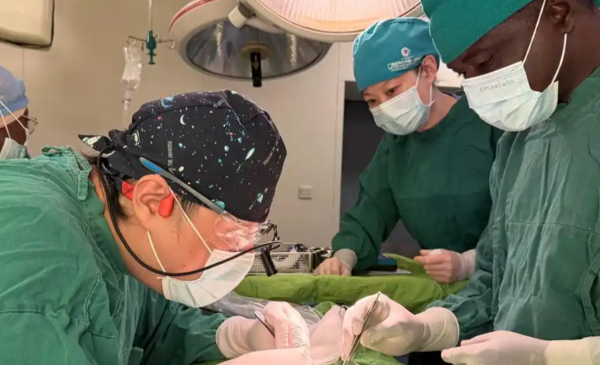
In a significant milestone for surgical care in West Africa, a team of Chinese medical specialists has successfully performed a tympanoplasty in Niger, marking a critical advancement in the country’s capacity to treat chronic ear conditions. The procedure, which involves the surgical repair of the tympanic membrane (eardrum), represents a shift toward more specialized otolaryngological interventions within the Nigerien healthcare system.
For many patients in the region, chronic otitis media—inflammation of the middle ear—often leads to permanent eardrum perforation, resulting in hearing loss and recurrent infections. Until recently, the technical requirements and specialized equipment needed for tympanoplasty were largely unavailable within the national health infrastructure, forcing patients to seek expensive treatment abroad or live with permanent impairment.
The successful outcome of this surgery is the result of a long-standing bilateral cooperation between China and Niger, specifically through the deployment of Chinese medical missions. These missions are designed not only to provide immediate clinical care but to facilitate the transfer of surgical skills to local healthcare providers, ensuring that the ability to perform such procedures remains in the country long after the visiting specialists depart.
As a physician and journalist, I recognize that while a single surgery may seem like a small victory, the systemic impact of introducing specialized surgical techniques to underserved regions is profound. The ability to restore hearing and prevent further infection through a tympanoplasty can fundamentally alter a patient’s quality of life, improving their ability to communicate, work and integrate socially.
The Clinical Significance of Tympanoplasty in Niger
Tympanoplasty is a specialized surgical procedure used to reconstruct the tympanic membrane and, in some cases, the small bones (ossicles) of the middle ear. The primary goal is to close a perforation in the eardrum, which restores the ear’s natural barrier against bacteria and improves the conduction of sound waves to the inner ear.
In Niger, where access to specialized ENT (Ear, Nose, and Throat) services is limited, the prevalence of untreated ear infections is high. Environmental factors, such as dust and limited access to clean water, often exacerbate respiratory and ear infections. When these infections become chronic, they can erode the eardrum, leading to a condition where the middle ear is permanently exposed to the external environment.
The introduction of this surgery by the Chinese medical team addresses a critical gap in the local “continuum of care.” Previously, patients with perforated eardrums were often managed with topical drops or antibiotics to control infections, but the structural damage could not be repaired. By implementing tympanoplasty, the medical team has moved the treatment protocol from palliative management to curative restoration.
Understanding the Surgical Process
The procedure performed by the Chinese specialists involves several precise steps. First, the surgeon must clear any existing infection from the middle ear. Then, a small piece of the patient’s own tissue—typically a graft taken from the fascia of the temporalis muscle or cartilage from the tragus of the ear—is used to patch the hole in the eardrum.
This autologous graft is preferred because it minimizes the risk of rejection and promotes faster healing. Once the graft is securely placed, the surgeon ensures the middle ear is ventilated and the external ear canal is packed to hold the graft in place during the initial healing phase.
The success of the surgery is measured by two primary outcomes: the complete closure of the perforation and a measurable improvement in the patient’s hearing threshold. In the case of the recent procedure in Niger, reports indicate that the graft successfully adhered and the patient’s auditory function showed immediate signs of improvement.
China-Niger Medical Cooperation and Knowledge Transfer
The presence of the Chinese medical team in Niger is part of a broader strategic partnership focused on health infrastructure and human resource development. China has a history of sending medical brigades to various African nations, often focusing on both primary care and specialized surgical interventions.
The “first” of any surgery in a country is rarely just about the patient on the table; This proves about the surgeons standing beside the lead operator. A key component of this mission has been the mentorship of Nigerien doctors and nurses. By involving local staff in the preoperative planning, the surgical execution, and the postoperative follow-up, the Chinese team is building a local knowledge base.
This model of medical diplomacy emphasizes sustainability. Rather than creating a dependency on foreign surgeons, the goal is to equip Nigerien hospitals with the tools and the expertise to perform these surgeries independently. This includes training in the employ of surgical microscopes and specialized micro-instruments required for the delicate work of the middle ear.
Overcoming Infrastructure Challenges
Performing specialized surgery in a resource-limited setting presents significant challenges. Sterile processing, consistent power for surgical lighting and microscopes, and the availability of specific surgical consumables are all hurdles that must be cleared.
The Chinese medical mission often brings its own specialized equipment or helps the host hospital upgrade its facilities to meet the standards required for otological surgery. This infrastructure improvement benefits all patients, not just those undergoing ear surgery, as it raises the general standard of surgical hygiene and precision within the facility.
The Public Health Impact of Hearing Restoration
Hearing loss is often an “invisible disability,” yet its impact on public health is substantial. In a developing economy, the ability to hear is tied directly to economic productivity and educational attainment. For children, a perforated eardrum can lead to delays in language development and poor performance in school.
For adults, hearing impairment can lead to social isolation and an increased risk of accidents in the workplace. By providing access to tympanoplasty, the medical team is not only treating a biological defect but is likewise addressing a socio-economic barrier. The restoration of hearing allows individuals to return to full participation in their communities.
closing the eardrum prevents “cholesteatoma”—a dangerous growth of skin cells in the middle ear that can occur through a perforation. If left untreated, a cholesteatoma can erode the bone of the skull, potentially leading to meningitis or permanent facial nerve paralysis. This surgery is as much about preventing life-threatening complications as it is about restoring hearing.
Comparative Access to ENT Care
When compared to other regions in Sub-Saharan Africa, Niger has historically faced some of the most acute shortages of specialized medical personnel. The ratio of ENT specialists to the general population remains critically low. The introduction of these specialized surgeries represents a vital step in diversifying the available medical services within the country.
The success of this tympanoplasty serves as a proof-of-concept. It demonstrates that with the right partnership and technical support, complex surgeries can be performed safely and effectively within Niger’s borders, reducing the need for medical evacuations and making specialized care more equitable.
Key Takeaways for Global Health Observers
- Surgical Innovation: The first tympanoplasty in Niger marks a transition from basic ear care to specialized reconstructive surgery.
- Strategic Partnership: The procedure was made possible through the collaboration between Chinese medical brigades and Nigerien health authorities.
- Capacity Building: A primary goal of the mission is the transfer of skills to local surgeons to ensure long-term sustainability.
- Preventative Health: Beyond hearing restoration, the surgery prevents severe complications like cholesteatoma and meningitis.
- Socio-Economic Benefit: Improving auditory function directly enhances educational and economic opportunities for the affected population.
Looking Forward: The Future of Specialized Surgery in Niger
The successful completion of this tympanoplasty is expected to pave the way for more complex otological and rhinology procedures. The next logical step for the medical team and their local partners will be to establish a dedicated ENT surgical wing or a specialized clinic that can screen and treat a larger volume of patients.
As the local medical staff gains confidence and proficiency in tympanoplasty, the focus will likely shift toward treating more advanced cases, such as mastoidectomies (removal of infected mastoid bone) or the implantation of hearing aids for those with sensorineural loss.
The long-term success of this initiative will depend on continued investment in medical education and the maintenance of the equipment provided. The international community and the Nigerien government will need to ensure that the training provided by the Chinese mission is integrated into the national medical curriculum.
The next confirmed milestone for this partnership will be the evaluation of the patient’s long-term hearing recovery and the scheduled training sessions for the next cohort of Nigerien surgical residents. These follow-ups will determine the scalability of the program and whether similar specialized missions can be expanded to other regions of the country.
Do you believe international medical missions are the most effective way to build healthcare capacity in developing nations? Share your thoughts in the comments below or share this article to spark a conversation on global health equity.