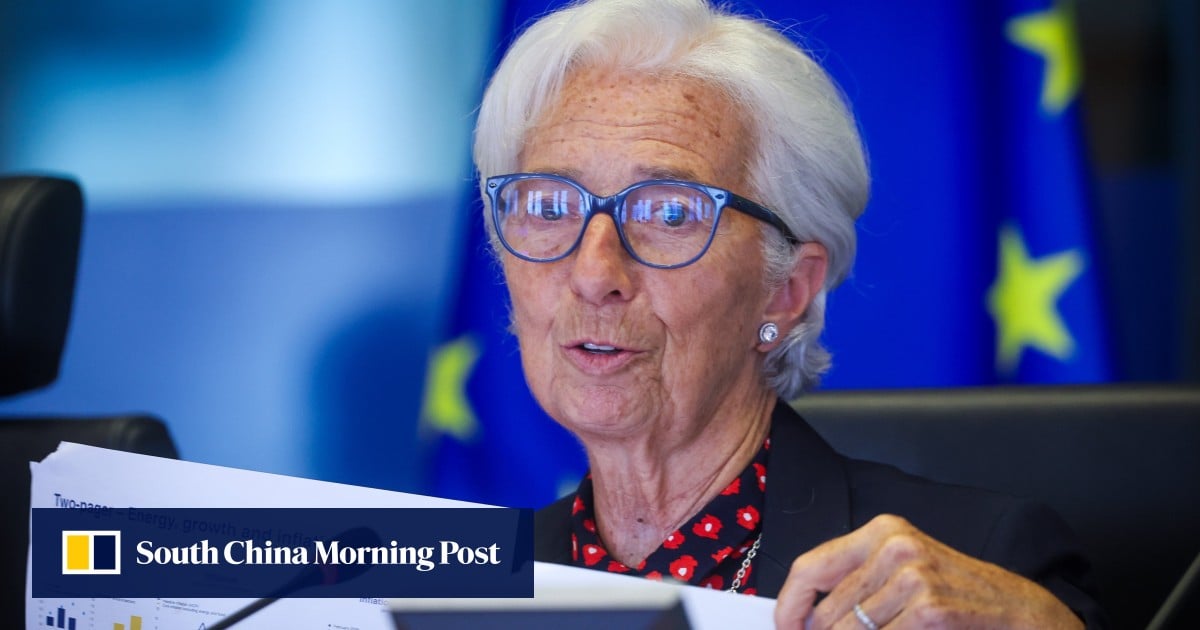
European Central Bank (ECB) President Christine Lagarde has urged global leaders to address what she describes as the “systemic imbalances” caused by China’s yuan undervaluation, a move that could intensify trade tensions and reshape monetary policy coordination. In remarks delivered on Monday, Lagarde framed the issue as a critical facet of broader economic mismatches—including persistent U.S. deficits and Europe’s sluggish growth—that risk destabilizing the global financial system. Her call comes as the Group of Seven (G7) nations prepare to finalize their joint stance on economic governance ahead of their next summit.
Lagarde’s intervention marks a rare public push by a major central banker to directly challenge China’s long-standing currency policies, which Beijing has repeatedly denied manipulate for trade advantage. The ECB president’s comments follow weeks of escalating rhetoric from Western policymakers, who point to China’s record trade surpluses—exceeding $800 billion in 2023—as evidence of structural distortions in the global economy. Meanwhile, the U.S. has already labeled China a “currency manipulator” under its 1988 Trade Act, a designation that could trigger retaliatory tariffs.
The timing of Lagarde’s remarks is significant. They come just days after the G7 finance ministers in France reaffirmed their commitment to a “rules-based trading system,” though without explicitly naming China. The ECB’s stance adds fresh urgency to the debate, as European officials increasingly view yuan undervaluation as a direct threat to their export competitiveness. “The current exchange rate dynamics are not sustainable,” Lagarde told reporters, adding that “coordinated action” was needed to prevent further market distortions.
Why the Yuan’s Value Matters—and How China Responds
China’s yuan has weakened slightly against the dollar in recent months, falling below 7.3 per dollar in May—a level Beijing has defended as a market-driven adjustment. However, economists and Western officials argue that the yuan remains artificially suppressed through a mix of capital controls, state-directed interventions, and the People’s Bank of China’s (PBOC) influence over onshore forex markets. According to the International Monetary Fund (IMF), the yuan’s real effective exchange rate remains around 10% undervalued compared to its equilibrium level.


China’s official response has been consistent: it denies manipulating its currency and insists its forex policy is transparent. “The yuan’s exchange rate is determined by market supply and demand,” a PBOC spokesperson told Reuters earlier this month. “China opposes any unilateral measures that disrupt global trade.” Yet the PBOC has also taken steps to stabilize the yuan, including raising reserve requirements for foreign exchange trading and encouraging domestic investors to buy dollars—a move that analysts interpret as a subtle signal to prop up the currency.
What complicates the issue is the yuan’s growing role in global trade. While the dollar remains dominant, China’s push to internationalize its currency—through initiatives like the Cross-Border Interbank Payment System (CIPS) and yuan-denominated oil contracts—means that undervaluation could have ripple effects beyond traditional trade balances. The ECB’s concern is that persistent undervaluation could trigger competitive devaluations, a scenario reminiscent of the 1990s Asian financial crisis.
G7 Divisions and the Risk of Retaliation
The G7’s ability to act on currency issues is limited by deep divisions. While the U.S. and Europe agree on the problem, they differ on solutions. The Biden administration has favored targeted tariffs and sanctions, whereas the EU has historically preferred multilateral negotiations through the World Trade Organization (WTO). Lagarde’s call for “talks” suggests the ECB is leaning toward diplomatic pressure, though her remarks stop short of endorsing punitive measures.
China’s reaction to Western criticism has been measured but firm. In a statement released Monday, the Chinese Ministry of Commerce accused the U.S. and its allies of “politicizing economic issues” and warned that “unilateral actions will only harm global stability.” The ministry pointed to Europe’s own trade surpluses—particularly in energy and machinery—as evidence that imbalances are not one-sided. “Europe should first address its own structural weaknesses before pointing fingers,” the statement said.
Economists warn that any escalation could backfire. A study by the Peterson Institute for International Economics found that currency wars in the past have led to higher volatility and reduced global growth. “The risk is that tit-for-tat measures spiral into a broader trade conflict,” said Adam Posen, president of the institute. “The G7 needs a unified strategy, not just rhetoric.”
What Happens Next: Key Checkpoints
The next critical moment will be the G7 summit in June, where finance ministers are expected to finalize a joint statement on economic imbalances. Sources close to the negotiations say the U.S. is pushing for stronger language on China’s currency practices, while Germany and France are advocating for a more balanced approach to avoid provoking Beijing. Meanwhile, the ECB is likely to monitor the yuan’s movements closely, with Lagarde’s next public comments due at the bank’s July policy meeting.

On the ground, businesses are already adjusting. European exporters, particularly in automotive and machinery sectors, have reported rising costs due to the strong euro. “We’re seeing clients delay orders until they have more clarity on exchange rates,” said a senior executive at a German engineering firm, who requested anonymity. In contrast, Chinese manufacturers are benefiting from lower production costs, though some have privately expressed concern over potential U.S. tariffs on key exports like semiconductors and electric vehicles.
FAQ: What You Need to Know
- Could the ECB take direct action against the yuan?
The ECB’s mandate is focused on eurozone price stability, not currency wars. However, Lagarde’s remarks signal growing internal pressure to coordinate with the U.S. Federal Reserve and other central banks. Some analysts speculate that the ECB could indirectly influence markets by signaling a more hawkish stance on euro strength. - Has China ever been found guilty of currency manipulation?
Under the U.S. Trade Act of 1988, a country is deemed a manipulator if it meets two of three criteria: a trade surplus with the U.S. exceeding $20 billion, a material current account surplus, and persistent one-sided intervention in forex markets. China met these criteria in 2019, leading to its designation—but the Trump administration later dropped the label amid trade negotiations. - What would a currency war look like?
Historical examples include the 1930s competitive devaluations that worsened the Great Depression and the 1990s Asian financial crisis, where countries like Thailand and Indonesia saw their currencies collapse after losing confidence. Today, a modern currency war could involve tariffs, capital controls, and coordinated central bank interventions—all of which could trigger market chaos. - How does the yuan’s value affect everyday consumers?
An undervalued yuan makes Chinese exports cheaper for foreign buyers, which can lower prices on goods like electronics and apparel. However, it also makes imports—such as European cars or Australian wine—more expensive for Chinese consumers. Over time, this can distort global supply chains and inflation patterns.
The ECB’s intervention underscores the growing friction between China’s economic model and Western demands for fair trade. With no immediate resolution in sight, the focus now shifts to whether the G7 can present a united front—or if the issue will fester into a deeper rift. For now, markets are watching closely, with the yuan’s trajectory and Lagarde’s next moves likely to dominate headlines.
For real-time updates on G7 economic policies and central bank statements, follow the European Central Bank and IMF World Economic Outlook reports. Share your thoughts in the comments below or join the discussion on our social channels.
Keep reading
- Shadow the Bald Eagle Finds Comfort with New Partner “Katie” After Jackie’s Death
- Prabowo Proposes Ad Hoc Court for SOE Losses; Minister Clarifies It Was Only an Example
- Apple Warns iPhone Users in 110 Countries of Mercenary Spyware Attacks (archynewsy.com)
- Government Warns Single-Use Grills Pose Significant Public Risk Amid Heatwave (world-today-news.com)