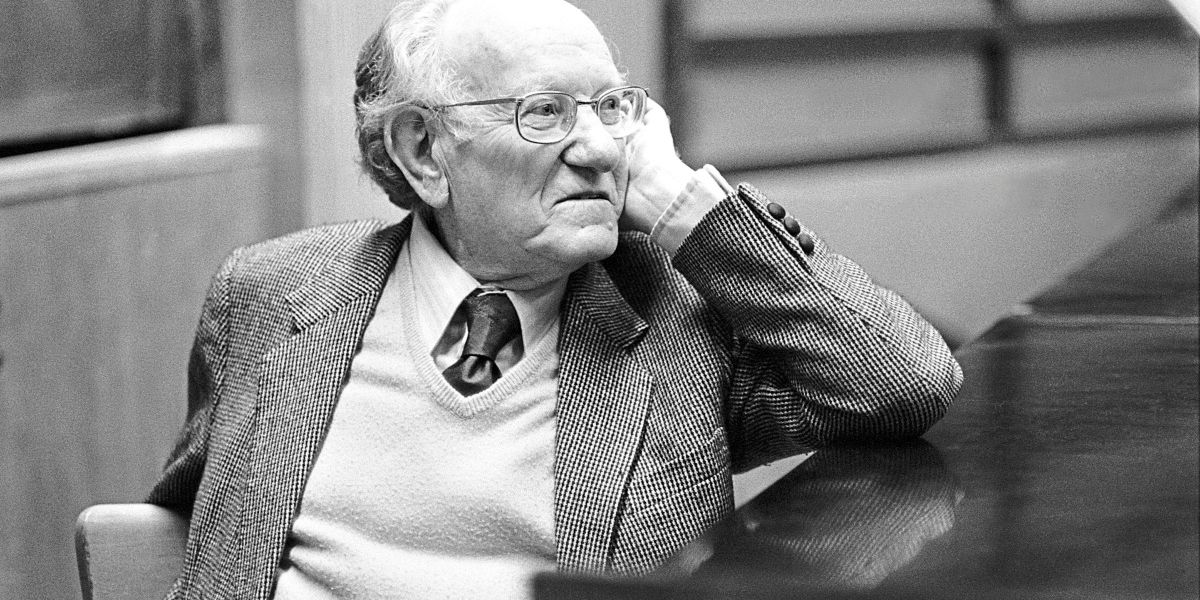
The Austrian Psychologist Who Sold Americans the Dream of Automotive Desire
In the late 1930s, as Europe braced for war, an Austrian psychologist fleeing Nazi persecution found himself tasked with a uniquely American problem: how to boost the sales of a struggling automobile brand. Ernest Dichter, a recent immigrant to the United States, would revolutionize advertising by applying the principles of psychoanalysis to understand what truly motivated consumers. His work, initially for Chrysler, tapped into subconscious desires and ultimately reshaped how cars – and countless other products – were marketed to the American public.
Chrysler Corporation was facing sluggish sales of its Plymouth vehicles in 1939. Rather than focusing solely on the car’s features, the company took a gamble on a relatively unknown psychologist. Dichter, having recently escaped the rising tide of Nazism in Austria, brought with him a fresh perspective and a willingness to challenge conventional marketing wisdom. He didn’t immediately dive into analyzing the Plymouth itself; instead, he embarked on a psychological study, interviewing approximately one hundred automobile owners to understand their deeper motivations and emotional connections to their vehicles. This approach was groundbreaking for its time.
From Vienna to the American Marketplace: A Life Interrupted
Born on August 14, 1907, in Vienna, Austria, Ernest Dichter’s early life was marked by financial hardship. According to his Wikipedia entry, his education was interrupted by his family’s difficulties, but he persevered through tutoring and odd jobs, eventually studying literature at the Sorbonne in Paris. He later earned a PhD in psychology from the University of Vienna in 1934. The rise of the Nazi regime forced Dichter to flee his homeland, seeking refuge and opportunity in the United States. This displacement profoundly shaped his understanding of human needs and desires, which he would later leverage in his marketing work.
Dichter’s background was crucial to his success. He wasn’t simply a market researcher; he was a trained psychoanalyst, deeply familiar with the theories of Sigmund Freud. He believed that consumers weren’t always rational actors and that their purchasing decisions were often driven by unconscious motivations, hidden anxieties and deeply ingrained desires. This insight formed the foundation of what became known as “motivational research,” a field Dichter pioneered and for which he earned the title “father of motivational research.”
Uncovering the Hidden Desires Behind the Wheel
Dichter’s research for Chrysler revealed that car ownership wasn’t simply about transportation; it was about status, power, and even sexuality. He discovered that men often projected complex emotional relationships onto their vehicles. As detailed in a study of his work, Dichter identified a recurring theme: the convertible automobile was often seen as a “mistress” – representing freedom, excitement, and illicit desire – while the sedan was viewed as the “wife” – symbolizing responsibility, stability, and domesticity.
This insight led to a brilliant marketing strategy. Dichter advised Chrysler to develop a car that bridged the gap between these two archetypes – a vehicle that offered the allure of the “mistress” while still providing the practicality of the “wife.” The result was the hardtop car, introduced by Chrysler’s Packard division in 1957. Packard’s adoption of this concept demonstrated the power of Dichter’s psychological approach to marketing.
The Strategy of Desire and the Rise of Corporate Hedonism
Dichter’s success with Chrysler propelled him to the forefront of the advertising industry. He founded the Institute for Motivational Research and consulted with numerous Fortune 500 companies, applying his techniques to a wide range of products, from toothpaste to coffee. In 1960, he published his influential book, *The Strategy of Desire*, outlining his methods and philosophy. The book became a seminal text in the field of marketing.
Dichter’s work wasn’t without its critics. Some accused him of manipulation, arguing that he exploited consumers’ subconscious vulnerabilities. However, he defended his methods, claiming that he was simply giving people permission to indulge their desires. He believed that embracing hedonism and consumption could be a positive force, offering a psychological release and even inoculating people against extremist ideologies. This perspective reflected the optimistic, consumer-driven spirit of post-war America.
He argued that by understanding and appealing to these underlying motivations, companies could not only sell more products but similarly contribute to a more fulfilling and psychologically healthy society. This philosophy, while controversial, resonated with a generation eager to embrace the promises of prosperity and pleasure.
A Lasting Legacy: Motivational Research Today
Ernest Dichter died on November 21, 1991, in Peekskill, New York, leaving behind a lasting legacy in the field of marketing. His pioneering work laid the foundation for modern consumer research and continues to influence advertising strategies today. While the techniques have evolved, the fundamental principle – that understanding the psychological drivers of consumer behavior is essential for successful marketing – remains as relevant as ever.
The impact of Dichter’s work extends beyond the automotive industry. His insights have been applied to countless products and brands, shaping the way companies connect with consumers on an emotional level. The idea that cars represent more than just transportation – that they are symbols of identity, status, and personal expression – is a direct result of Dichter’s groundbreaking research. Modern car marketing continues to leverage these psychological associations, emphasizing lifestyle, adventure, and self-image.
Key Takeaways
- Ernest Dichter revolutionized advertising by applying psychoanalysis to understand consumer motivations.
- His research for Chrysler revealed that cars were often imbued with symbolic meaning, representing relationships and desires.
- Dichter’s concept of the “mistress” convertible and the “wife” sedan led to the development of the hardtop car.
- His book, *The Strategy of Desire*, became a foundational text in the field of marketing.
- Dichter’s legacy continues to influence advertising strategies today, emphasizing the importance of emotional connection with consumers.
The ongoing evolution of automotive marketing, with its increasing focus on brand storytelling and emotional resonance, is a testament to the enduring influence of Ernest Dichter’s work. As the industry navigates the challenges of electric vehicles and autonomous driving, understanding the psychological needs and desires of consumers will be more critical than ever. The next major shift in automotive marketing will likely involve understanding consumer anxieties and aspirations surrounding these new technologies, a challenge that Dichter, with his focus on the subconscious, would have undoubtedly found fascinating.
What are your thoughts on the psychological tactics used in advertising? Share your comments below, and let’s continue the conversation.
Related reading