
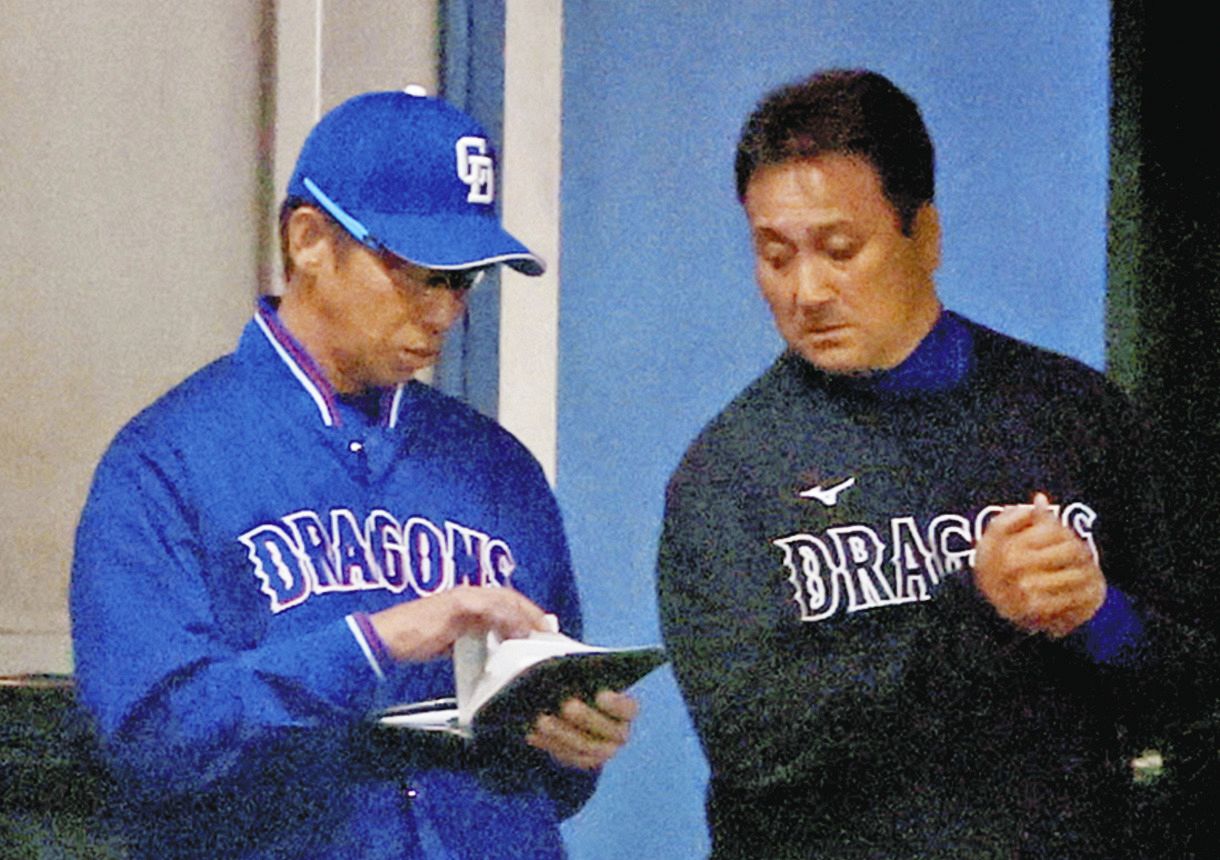
The Chunichi Dragons are implementing a strategic overhaul of their pitching operations, signaling a critical shift in how the organization manages its bullpen and athlete workload. In a move designed to stabilize a struggling pitching staff, the club has expanded the responsibilities of Eiji Ochiai, appointing him as the Pitching Coordinator, Manager, and Scorer. This hybrid role places Ochiai at the intersection of technical development and game-day management, a necessity born from a period of instability in the team’s relief corps.
From a sports health and performance perspective, the timing of this appointment is pivotal. The Dragons have faced challenges with bullpen consistency, leading to a reliance on a small group of pitchers who have seen an unsustainable increase in their workload. Eiji Ochiai, a veteran of the game with deep roots in both Japanese and Korean professional baseball, has already identified a primary concern: the excessive number of innings pitched by the relief staff. For any professional athlete, particularly pitchers, the accumulation of high-stress innings without adequate recovery is a precursor to fatigue and potential injury, making this intervention a matter of both tactical success and player longevity.
Ochiai’s transition into this multi-faceted role is not merely a title change but a tactical deployment of his expertise to the first-team unit. By integrating the roles of coordinator, manager, and scorer, the Dragons are attempting to bridge the gap between data collection (scoring) and real-time decision-making (managing). This approach aims to enhance the “observation power” required to make precise pitching changes—the critical art of knowing exactly when a reliever has reached their limit before a collapse occurs on the mound.
A Strategic Pivot in Bullpen Management
The core of the current crisis for the Chunichi Dragons lies in the management of their relay pitching. In professional baseball, the transition from a starting pitcher to a series of relief pitchers requires a delicate balance of timing and observation. Ochiai has noted that the bullpen’s current state is a result of relief pitchers throwing too many innings, a situation that often leads to diminished velocity and a loss of command.
By taking on the role of “manager” and “scorer” alongside his coordinator duties, Ochiai is positioned to monitor pitcher fatigue in real-time. The role of a scorer allows for a granular analysis of pitch counts, movement, and batter interactions, which can then be immediately applied to managerial decisions regarding substitutions. This integration is intended to prevent the “over-use” cycle that has plagued the staff, ensuring that pitchers are utilized within a health-conscious framework that prioritizes long-term availability over short-term desperation.
This shift is particularly urgent as the team seeks to optimize the performance of its younger arms. Ochiai has already begun integrating with the first-team squad, where he has been observed overseeing the training and practice of pitchers such as Shinya Matsuyama. This hands-on approach allows the organization to synchronize the development of young talent with the immediate needs of the professional rotation, ensuring that the transition from the farm system to the main roster is managed with a focus on technical precision and physical readiness.
The Pedigree of Eiji Ochiai
The appointment of Eiji Ochiai is a calculated move based on a career defined by versatility and international experience. A right-handed pitcher by trade, Ochiai was a 1991 first-round draft pick for the Chunichi Dragons, playing for the club from 1992 through 2006. Throughout his active playing career, he established himself as a reliable presence in the bullpen, contributing to the team’s defensive stability over 14 seasons.
Beyond his playing days in Japan, Ochiai expanded his professional horizon in the Korea Baseball Organization (KBO). His tenure as a coach with the Samsung Lions—spanning from 2010 to 2012 and again from 2018 to 2021—provided him with a different perspective on pitcher development and game management. This international experience, combined with a coaching stint with the Chiba Lotte Marines between 2015 and 2017, has equipped him with a diverse toolkit for managing various personality types and technical challenges within a pitching staff (Wikipedia).
His return to the Chunichi Dragons in 2022 as a coordinator was the first step in a gradual reintegration into the club’s leadership. The current expansion of his role suggests that the organization views his blend of playing experience and international coaching as the ideal remedy for a bullpen that has struggled with both tactical execution and physical exhaustion.
Addressing the ‘Observation Power’ Gap
In the context of high-stakes professional baseball, “observation power” refers to the ability of a coach or manager to detect subtle signs of pitcher fatigue—such as a slight drop in fastball velocity, a change in the break of a slider, or a shift in the pitcher’s mechanical balance—before those signs manifest as hits or walks. When this observation fails, the result is often a “blown lead,” where a pitcher is left in the game too long, leading to a sudden offensive surge by the opponent.
Ochiai’s philosophy emphasizes that the key to successful relay pitching is not just having talented arms, but having the observational discipline to manage them. By acting as the “fourth helmsman” in a series of leadership transitions for the pitching staff, Ochiai is tasked with calming a volatile bullpen. His focus is on reducing the unnecessary burden on key relievers, thereby preserving their effectiveness for high-leverage situations.
This approach aligns with modern athletic health standards. Overloading a pitcher’s arm—especially in the high-intensity environment of relief pitching—increases the risk of acute injuries. By emphasizing a more distributed workload and a higher standard of observation, the Dragons are moving toward a more sustainable model of performance that protects their most valuable assets: the players’ health.
Career Timeline of Eiji Ochiai
| Period | Organization | Role |
|---|---|---|
| 1992–2006 | Chunichi Dragons | Player (Pitcher) |
| 2010–2012 | Samsung Lions (KBO) | Coach |
| 2015–2017 | Chiba Lotte Marines | Coach |
| 2018–2021 | Samsung Lions (KBO) | Coach |
| 2022–Present | Chunichi Dragons | Pitching Coordinator / Manager / Scorer |
Impact on the Dragons’ Future
The immediate impact of Ochiai’s expanded role will be visible in the Dragons’ game-day substitutions. Fans and analysts will be watching to spot if the team moves away from the pattern of over-relying on a few dominant relievers and instead adopts a more balanced approach to innings distribution. If Ochiai can successfully implement his vision of “observation-led” management, the Dragons may see a decrease in late-game collapses and a more consistent performance from their middle relief.
the mentorship of young pitchers like Shinya Matsuyama is a critical component of this strategy. By providing these athletes with a coordinator who has seen the game from multiple international angles, the Dragons are investing in the technical literacy of their next generation. The goal is to create pitchers who are not only physically capable but are also aware of their own physiological limits and the technical nuances of their delivery.
the success of this personnel shift will be measured by two metrics: the reduction of innings-per-pitcher in the bullpen and the stability of the team’s lead in the final thirds of the game. By treating the bullpen as a system that requires constant observation and health-conscious management, the Chunichi Dragons are attempting to turn a point of weakness into a foundation of strength.
The organization’s next official update regarding staff performance and pitching rotations is expected as the season progresses and the impact of these structural changes becomes evident in the standings. For the most accurate and up-to-date information on roster changes and official announcements, followers should monitor the official NPB communications and the Chunichi Dragons’ corporate releases.
Do you think a hybrid role like “Coordinator, Manager, and Scorer” is the future of sports management, or is it too much for one person to handle? Share your thoughts in the comments below and share this analysis with other baseball enthusiasts.