
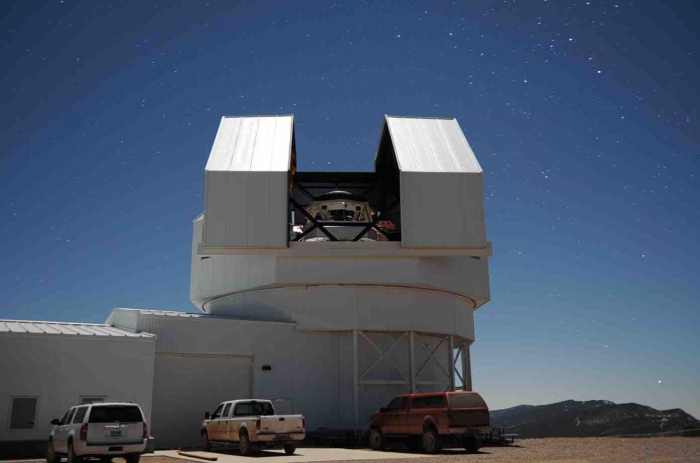
The United States Space Force is significantly expanding its surveillance capabilities in the Indo-Pacific, deploying advanced tracking technology in Western Australia to monitor high-altitude orbital corridors. This strategic move is designed to enhance Space Domain Awareness (SDA), ensuring that the U.S. And its allies can detect and track satellites and other objects in geostationary orbit (GEO) with unprecedented precision.
As the orbital environment becomes increasingly crowded and contested, the ability to maintain a clear “picture” of space is no longer just a scientific endeavor but a critical component of national security. The deployment of heavy-duty optical telescopes and radar systems in Australia allows the U.S. To monitor assets 36,000 kilometers above the Earth, where critical communication, weather and early-warning satellites reside.
This expansion comes amid growing concerns regarding the development of anti-satellite (ASAT) capabilities by global competitors. By strengthening the surveillance network in the Southern Hemisphere, the U.S. Space Force aims to mitigate the risk of “blind spots” in its tracking network, ensuring that any maneuver—whether a satellite repositioning or a potential threat—is identified in real time.
Monitoring the High Ground: The Importance of Geostationary Orbit
To understand why the U.S. Is deploying massive surveillance hardware in Australia, it is necessary to understand the unique nature of Geostationary Orbit (GEO). Unlike Low Earth Orbit (LEO), where satellites zip around the planet in minutes, GEO satellites remain fixed over a single point on the equator. This makes them indispensable for global telecommunications and missile warning systems, but it also makes them high-value targets.
Monitoring GEO is technically challenging due to the extreme distance. Standard radars often struggle to track objects at this altitude with high resolution. Here’s where the Space Surveillance Telescope (SST) and specialized optical sensors become vital. These systems use large-aperture mirrors to capture faint light from distant objects, allowing operators to track the movement of satellites and detect “inspector satellites” that may be attempting to shadow or interfere with U.S. Assets.
The integration of these optical systems with C-Band radar provides a multi-layered defense. While the telescopes provide high-resolution imagery and tracking for the deep-space GEO region, the radar systems are more effective at monitoring objects in lower and medium orbits, creating a comprehensive surveillance blanket that covers the entire orbital spectrum.
The Strategic Hub: Harold E. Holt Communication Station
The center of this surveillance effort is the Harold E. Holt Communication Station located near Exmouth, Western Australia. This facility has long been a cornerstone of U.S. Naval and space communications in the region, but its role has evolved from a simple communication relay to a sophisticated intelligence and surveillance hub.
Operated in coordination with the Australian Defence Force (ADF), the station leverages its geographic position to view sectors of space that are invisible to sensors based in North America or Europe. The deployment of new surveillance hardware at this site allows the U.S. Space Force to maintain continuous custody of satellites as they move across the sky, reducing the time between “sightings” and increasing the accuracy of orbital predictions.
The cooperation between the U.S. And Australia in this domain is part of a broader security architecture in the Indo-Pacific. By sharing data and infrastructure, the two nations are creating a resilient network of Space Situational Awareness (SSA) that can withstand the loss of any single sensor node, ensuring that critical data continues to flow even during a conflict.
Countering the Rise of Anti-Satellite (ASAT) Risks
The urgency of these deployments is driven by the rapid evolution of space warfare. Anti-satellite weapons—ranging from kinetic “killer satellites” that physically collide with targets to high-energy lasers and electronic jamming tools—have shifted the perception of space from a sanctuary to a combat domain.
The U.S. Space Force has noted that the ability to detect “co-orbital” threats—satellites that can maneuver close to another satellite to spy on it or disable it—is a top priority. Because these threats often move slowly and subtly, high-precision optical telescopes are the only way to identify suspicious maneuvers before they become a crisis.
Beyond physical attacks, the threat of electronic warfare (jamming) and cyber-attacks on satellite links necessitates a robust ground-based tracking system. If a satellite stops responding to commands, the U.S. Needs to know immediately whether the cause was a technical failure or an adversarial action. The expanded network in Australia provides the visual verification needed to make those critical distinctions.
This capability is particularly vital for protecting the Global Positioning System (GPS) and other navigation constellations. Since modern military and civilian infrastructure—from banking to aviation—relies on these signals, any disruption in space could have immediate and severe consequences on the ground.
What This Means for Regional Security
The deployment of advanced sensors in Australia signals a long-term U.S. Commitment to the Indo-Pacific. It transforms the region into a primary “listening post” for space activities, effectively extending the U.S. Military’s eyes and ears into the deepest reaches of the orbital environment.

For the global community, this represents a dual-edged sword. While enhanced surveillance can act as a deterrent by making “secret” space maneuvers impossible, it also underscores the intensifying competition between major powers. The “transparency” provided by these telescopes may reduce the risk of accidental escalation by clarifying the intent of orbital movements, but it also confirms that space is now a primary theater of strategic competition.
As the U.S. Space Force continues to refine its Space Domain Awareness capabilities, the focus is expected to shift toward integrating AI-driven analysis to process the massive amounts of data generated by these telescopes and radars. The goal is to move from “tracking” to “predicting,” allowing commanders to anticipate adversarial moves before they occur.
The next official update on space surveillance cooperation is expected during the upcoming bilateral security dialogues between the U.S. And Australian defense leadership, where further integration of the AUKUS-related space initiatives may be discussed.
Do you think the militarization of space is an inevitable step in global security, or should there be a renewed international treaty to keep orbit a neutral zone? Share your thoughts in the comments below.