
Jordan’s $6 Billion water Project: A Landmark Investment in Climate Resilience
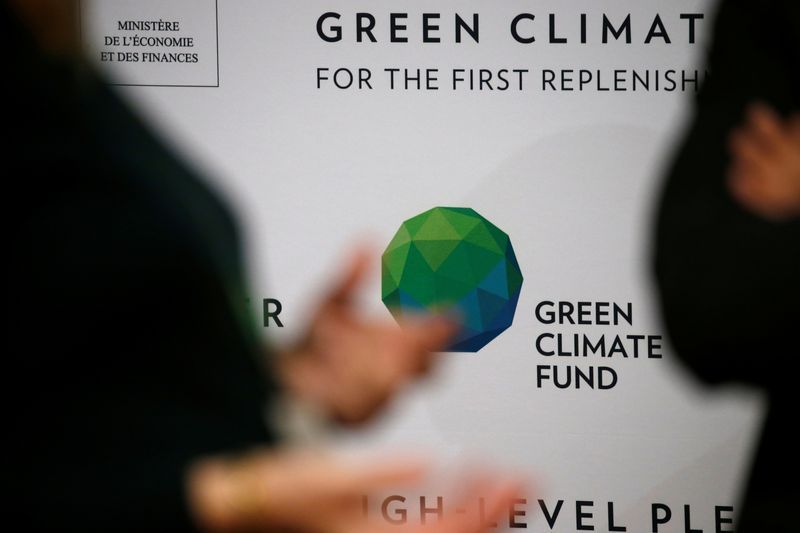
The Green Climate Fund (GCF) has committed a record $295 million to Jordan’s Aqaba-Amman Water Desalination and Conveyance Project – a $6 billion initiative poised to dramatically reshape the nation’s water security. This investment, approved at a recent GCF board meeting in South Korea, represents the fund’s largest single project commitment to date and signals a crucial step in addressing the escalating global water crisis.
this article provides a thorough overview of the project, its significance, and the broader implications for climate finance and water security in the Middle East.
Why Jordan Needs This Project: A Nation Parched for water
Jordan is one of the moast water-scarce countries globally, currently ranking second lowest in water availability. The situation is projected to worsen substantially due to climate change. Experts predict a 4°C temperature increase and a 21% rainfall decrease by the end of the century,leading to:
* Increased evaporation rates.
* Depleted groundwater reserves.
* More frequent and severe droughts.
These factors threaten not only Jordan’s environment but also its economic stability and public health.King Abdullah II has identified this project as a strategic national priority, recognizing its vital role in securing the future of the kingdom.
The Aqaba-amman Project: Details and Scope
This enterprising project aims to desalinate 300 million cubic meters of water annually, delivering it to most parts of Jordan and directly serving nearly half of the contry’s population. Here’s a breakdown of key aspects:
* Desalination Technology: The project will utilize advanced desalination technologies to convert seawater from the Red Sea into potable water.
* Conveyance System: A elegant network of pipelines will transport the desalinated water from aqaba, on the red Sea coast, to Amman and other population centers.
* Project Leaders: meridiam and SUEZ are leading the project’s progress and implementation.
* Financial Structure: The $6 billion project is being funded through a combination of grants, loans, and private sector investment.
Funding Breakdown: A Collaborative Effort
The GCF’s $295 million commitment is designed to attract further investment. Here’s a look at the current funding landscape:
* Green Climate Fund (GCF): $295 million (grant and loan).
* United States: $300 million in grants and $1 billion in loans.
* International Finance Corporation (IFC): Providing loan terms that will encourage cheaper private sector financing.
* Regional Contributions: Other countries in the region are expected to contribute financially.
The GCF funding is projected to lower the cost of water by 10 cents per liter and save the Jordanian government $1 billion over the project’s lifetime. This cost reduction will also facilitate more favorable loan terms from the IFC, further reducing the financial burden.
The GCF’s Broader Strategy: accelerating Climate finance
This investment in Jordan is part of a larger push by the GCF to accelerate its decision-making process and increase its financial disbursements. At the recent board meeting, 24 projects were considered, representing a potential total disbursement of $1.4 billion - the fund’s largest ever.
This acceleration is crucial as the world approaches COP30 in Brazil, a key event for assessing progress towards the goals of the Paris agreement. The GCF recognizes the need to mobilize more private sector capital, but also acknowledges the importance of realistic risk assessments for multilateral development banks (MDBs).
Implications for Water Security and Climate Resilience
The Aqaba-Amman project offers a model for addressing water scarcity in arid regions facing the impacts of climate change. Its success could pave the way for similar initiatives in other vulnerable countries.
For you, as a reader interested in climate solutions, this project highlights:
* The critical role of international climate finance in supporting adaptation efforts.
* The potential of large-scale desalination projects to address water scarcity.
* The importance of collaborative funding models involving governments, international organizations, and the private sector.
This project isn’t just about providing water; it’s about building a more resilient future for Jordan and demonstrating a pathway for other nations grappling with the challenges of a changing climate.
Sources:
![Healthier Singapore: Fitness & Wellness Trends | [Year] Update](https://i0.wp.com/www.healthcareasia.org/wp-content/uploads/2025/10/healthy-lifestyles.jpg?resize=150%2C150&ssl=1 "Healthier Singapore: Fitness & Wellness Trends | [Year] Update")


