
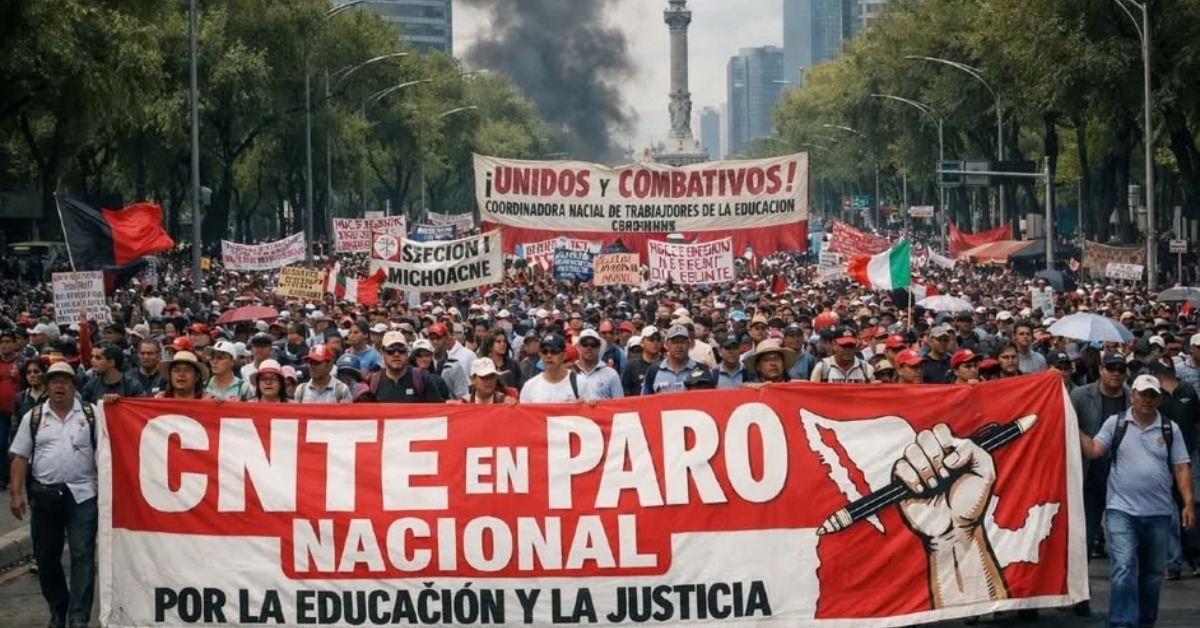
Members of the Coordinadora Nacional de Trabajadores de la Educación (CNTE) are marching along the Tlalpan corridor toward the Estadio Ciudad de México, creating significant blockades near the Azteca stadium. The protest follows a breakdown in negotiations with federal authorities, prompting Mexico City Mayor Clara Brugada to suspend several public activities as demonstrators demand concessions ahead of the upcoming World Cup.
The demonstration has disrupted major transit arteries in southern Mexico City, with protesters occupying key access points to the stadium. According to reports from local news outlets, the march has caused widespread traffic congestion, forcing commuters to seek alternative routes as the union maintains its presence near the historic sporting venue.
The current standoff represents a significant escalation in tensions between the teacher’s union and the federal government. While officials have reportedly offered new terms to resolve the dispute, the CNTE has maintained a hardened stance, stating that the responsibility for reaching a resolution now rests with the administration.
Why is the CNTE marching toward Estadio Azteca?
The CNTE, a hardline faction of the Mexican teachers’ union, has mobilized its members to march along Tlalpan with the specific intent of reaching the Estadio Ciudad de México. The primary objective of the march is to draw attention to unresolved labor demands and to pressure the government through high-visibility disruption. By targeting the area surrounding the Azteca stadium, the union is positioning itself at a strategic location frequently used for major international events.
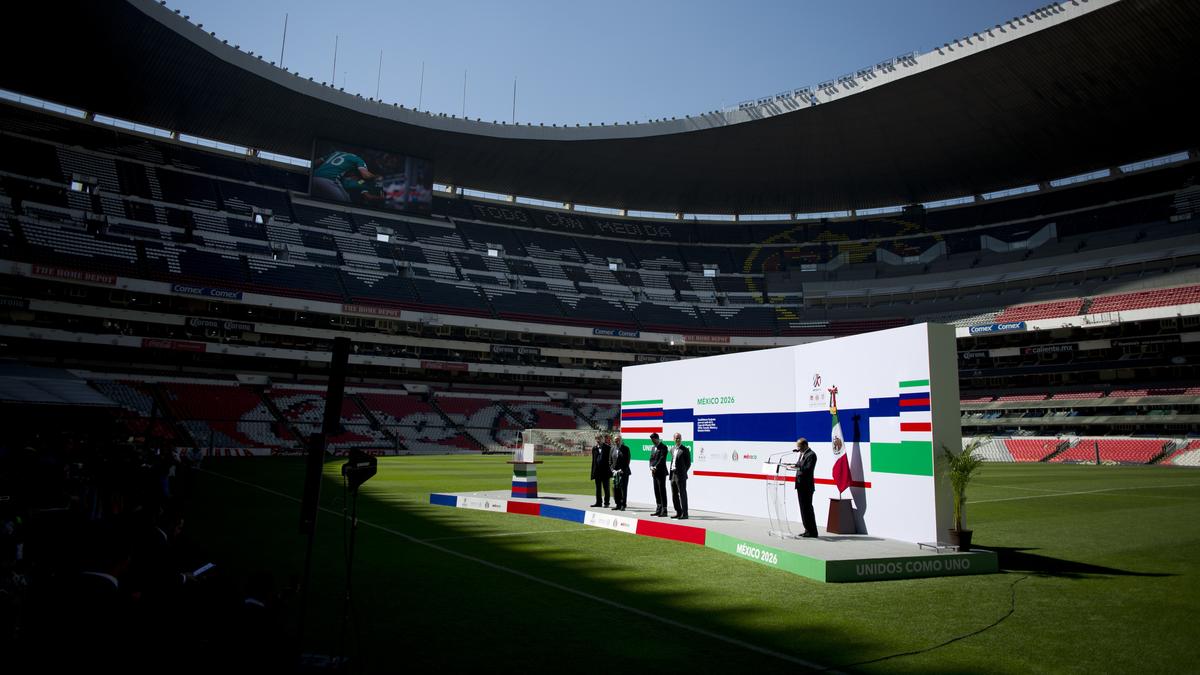
Demonstrators have successfully blocked several access roads to the stadium, impacting both local transit and the ability of individuals to reach the venue. The union’s choice of location is widely viewed by political analysts as a move to leverage the upcoming World Cup festivities. By creating visibility near one of the world’s most famous football stadiums, the CNTE ensures that their grievances are difficult for the government to ignore on an international stage.
The union’s current position is characterized by a refusal to retreat without specific, binding agreements. While the government has moved to offer additional concessions, the CNTE leadership has signaled that these offers have not yet met their requirements. The union has expressed that “the ball is in the government’s court,” suggesting that further movement depends entirely on official federal action rather than further union concessions.
How is the Mexico City government responding to the blockades?
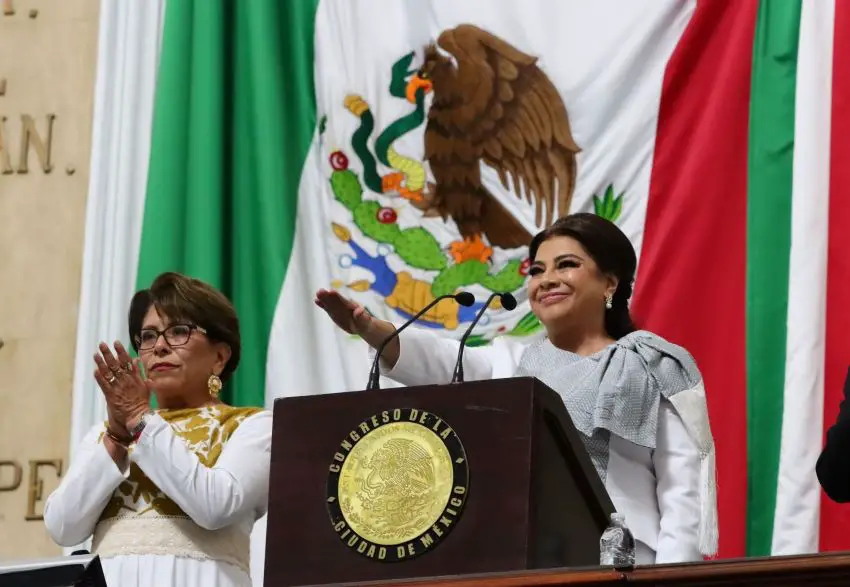
In response to the escalating protests and the resulting logistical challenges, Mexico City Mayor Clara Brugada has taken steps to mitigate the impact on the city’s operations. Brugada has suspended several scheduled public activities to avoid direct conflict with the marching demonstrators and to manage the security risks associated with large-scale urban blockades.
The suspension of these activities reflects the government’s attempt to maintain order while navigating the complexities of a major labor protest. Security forces have been deployed to manage traffic and monitor the movement of the protesters along Tlalpan, though the effectiveness of these measures remains limited by the sheer scale of the demonstration. Local authorities are working to provide updates on road closures and transit diversions to assist residents affected by the disruption.
The administration is currently balancing two competing priorities: maintaining public order and preventing a more violent confrontation with the union members. While the government has attempted to increase its offers to end the strike, the hardening stance of the CNTE has limited the immediate effectiveness of these diplomatic efforts. The presence of the marchers near the stadium also poses a logistical challenge for upcoming international sporting schedules, as organizers must account for potential disruptions to transport and security perimeters.
What is the status of negotiations between the CNTE and the government?
Negotiations between the CNTE and federal officials have reached a critical impasse. Although the government has reportedly increased its proposals to address the union’s grievances, the CNTE has rejected the current terms. This refusal comes just two days before scheduled events related to the World Cup, adding a layer of temporal pressure to the political standoff.
The core of the dispute involves long-standing demands regarding teacher benefits, educational funding, and administrative autonomy. The CNTE has historically been one of the most organized and resilient protest groups in Mexico, often using prolonged blockades to force the hand of successive administrations. The current movement is no different, utilizing the high-profile nature of the Azteca stadium to ensure their message reaches both domestic and international audiences.
The government’s strategy appears to be focused on offering incremental improvements to labor conditions in hopes of de-escalating the situation. However, the CNTE has indicated that they will not settle for minor adjustments. The union’s leadership has emphasized that they are prepared to continue their demonstrations until a comprehensive agreement is reached that addresses their core demands.
The following table summarizes the current state of the conflict based on reported developments:
| Stakeholder | Current Position | Primary Action |
|---|---|---|
| CNTE (Union) | Hardened stance; demands more concessions. | Marching on Tlalpan and blocking stadium access. |
| Federal Government | Offering increased terms to resolve the dispute. | Negotiating via official channels. |
| Mexico City Mayor | Focus on public safety and order. | Suspending public activities and managing transit. |
| Local Residents | Seeking alternative routes and updates. | Navigating major traffic disruptions. |
The broader impact of CNTE protests on Mexico’s international image
The timing of this protest is particularly sensitive given Mexico’s role in hosting major international sporting events. As the country prepares for the 2026 FIFA World Cup, the ability of the government to maintain urban stability and security is under intense scrutiny. Protests that target iconic venues like the Estadio Azteca can influence international perceptions of Mexico’s capacity to host large-scale, secure global events.
For the organizers of the World Cup and the various government agencies involved in the preparations, the CNTE’s ability to disrupt major transit corridors presents a significant logistical hurdle. Beyond the immediate traffic issues, the protests highlight the underlying social and labor tensions that continue to shape Mexican politics. The government must now manage these domestic pressures while simultaneously projecting an image of stability to the international community.
The impact of these demonstrations extends beyond the streets of Mexico City. The CNTE’s actions serve as a reminder of the power of organized labor in Mexico and their ability to leverage major national events to advance their agenda. As the standoff continues, the international community will be watching closely to see how the Mexican government resolves this conflict without compromising its commitment to hosting upcoming global tournaments.
The next scheduled checkpoint in this developing story will be the next round of official communications from the federal education ministry or the Mexico City Mayor’s office regarding the status of the negotiations and any further changes to public activity schedules.
Do you have information on the current traffic conditions or protest movements in Mexico City? Share your updates and join the conversation in the comments below.