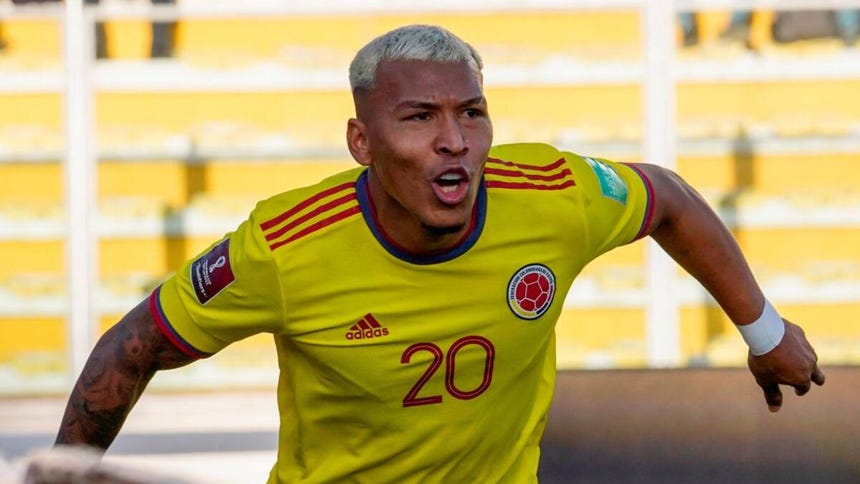
The road to the 2026 FIFA World Cup has always been fraught with tension for the Colombian national team, but the current atmosphere has shifted from sporting pressure to open warfare. Roger Martínez, the mercurial forward known as much for his clinical finishing as for his volatile temperament, has ignited a firestorm within the Colombian football community after being omitted from the preliminary squad list.
In a series of public outbursts, Martínez has directed sharp criticism toward head coach Néstor Lorenzo, questioning the criteria used for selection and suggesting that his exclusion is an affront to his contributions and current form. The dispute comes at a critical juncture as the Colombian Football Federation (FCF) begins narrowing its focus toward the final roster for the tournament, leaving fans and analysts divided over whether the coach’s discipline or the player’s talent should take precedence.
For Néstor Lorenzo, the situation is a test of the “group-first” philosophy he has implemented since taking the helm. Lorenzo has consistently prioritized tactical discipline and psychological stability over individual brilliance, a strategy that has seen Colombia climb the global rankings. However, the public nature of Martínez’s grievances threatens to disrupt the harmony of a locker room that has otherwise remained tight-knit during the qualification cycle.
The controversy centers on the revelation of a 55-man “prelista”—a preliminary long-list of candidates being monitored for the final World Cup squad. While not an official final cut, the omission of a veteran presence like Martínez has been interpreted by the player as a definitive signal that he is no longer part of Lorenzo’s tactical vision for 2026.
The Public Clash: Martínez vs. Lorenzo
Roger Martínez did not lean toward diplomatic silence following the leak of the preliminary squad. Instead, the forward used public platforms to express his frustration, effectively “exploding” over the decision. His criticisms focused on the perceived inconsistency of the selections, pointing to other players with similar or inferior statistical outputs who managed to secure a spot on the long-list.
Martínez’s frustration is rooted in a belief that his performance in club football—particularly his impact in the Argentine league—should have guaranteed him a place in the conversation. By pointing his finger directly at Néstor Lorenzo, Martínez has turned a sporting decision into a personal conflict, challenging the coach’s authority and the fairness of the selection process.
This clash is not an isolated incident in Martínez’s career, but the timing is particularly damaging. With the World Cup approaching, the national team typically enters a phase of absolute cohesion. A high-profile player publicly attacking the manager creates a narrative of instability that opponents can exploit and that can seep into the confidence of the remaining squad members.
The ‘Prelista’ and the Argentine Connection
A significant point of contention in this saga is the role of Colombian players competing in the Argentine Primera División. Argentina has long been a primary scouting ground for the Colombian national team, providing a high-intensity environment that prepares players for the rigors of international competition. Currently, several Colombian players in Argentina have managed to maintain their visibility with the national team, appearing on the preliminary list of 55 candidates.
The fact that other compatriots playing in the same league were included while Martínez was left out has added fuel to the player’s anger. For Martínez, this serves as evidence that his exclusion was not based on the level of competition he is facing, but rather a personal or systemic bias within the coaching staff.
From a tactical perspective, Lorenzo’s decision likely stems from the evolution of Colombia’s attacking play. The current system emphasizes high-pressing and defensive contributions from the forwards—areas where Martínez has historically been less consistent than the newer generation of wingers and strikers being integrated into the system. The “prelista” reflects a shift toward versatility and tactical adherence over the raw goal-scoring instinct that Martínez provides.
The Cost of Discipline vs. Talent
The conflict between Roger Martínez and Néstor Lorenzo highlights a classic dilemma in international football: the balance between maximizing talent and maintaining discipline. Martínez possesses a level of technical quality and “big-game” experience that is difficult to replace. However, the risk associated with his volatility is a known variable.
Néstor Lorenzo has built his tenure on the premise that no single player is bigger than the national team. By standing firm on the exclusion of a player who reacts with public hostility, Lorenzo is sending a clear message to the rest of the squad: technical ability will not shield a player from the consequences of poor discipline or a lack of alignment with the team’s values.
For the Colombian public, the reaction is split. One faction argues that the national team must be the sum of its best players, regardless of personality clashes, arguing that Martínez’s ability to change a game is too valuable to discard. Another faction supports Lorenzo, arguing that a toxic presence in the camp can derail an entire tournament, and that the integrity of the team’s culture is more important than any single goal-scorer.
Impact on the 2026 World Cup Aspirations
As Colombia prepares for the final stages of its World Cup journey, this internal friction serves as a cautionary tale. The psychological state of the squad is often as important as the physical preparation. While the “prelista” is merely a stepping stone to the final 26-man roster, the fallout from this dispute will likely haunt the team’s media cycle for weeks.
The exclusion of Martínez also opens the door for younger talents to step up. With the vacancy left by the veteran forward, Lorenzo has more room to experiment with emerging players who may be more tactically flexible and less prone to public outbursts. This transition could either lead to a more cohesive, modern attacking unit or leave Colombia lacking a “Plan B” when the structured system fails to break down a stubborn defense.
the situation places additional pressure on stars like Luis Díaz and the rest of the attacking core. With the narrative shifting toward internal drama, the players must work harder to maintain focus and ensure that the distractions surrounding the coaching staff and omitted players do not affect their on-field performance.
What Happens Next for the Selection Process?
The Colombian Football Federation is expected to remain silent on the matter, allowing Néstor Lorenzo to handle the disciplinary aspect internally. It is highly unlikely that Martínez will be reconsidered for the final squad given the nature of his public attacks on the manager. In the world of international football, attacking the coach publicly is often viewed as an “irreversible act” that terminates a player’s relationship with the national team for the duration of a tournament cycle.

The next critical checkpoint will be the announcement of the official squad for the upcoming friendly matches and the final World Cup roster. These lists will provide the definitive answer to whether Lorenzo’s commitment to discipline will completely override the allure of Martínez’s talent.
For Roger Martínez, the path back to the yellow jersey now requires more than just goals; it requires a public reconciliation and a demonstration of the maturity that Lorenzo demands from his leaders. Until then, he remains a talented outsider looking in on a dream that is slipping away.
We want to hear from you: Should Néstor Lorenzo prioritize tactical discipline over raw talent, or is omitting a player of Roger Martínez’s caliber a mistake for Colombia’s 2026 ambitions? Let us know in the comments below and share this story with other football fans.
Keep reading