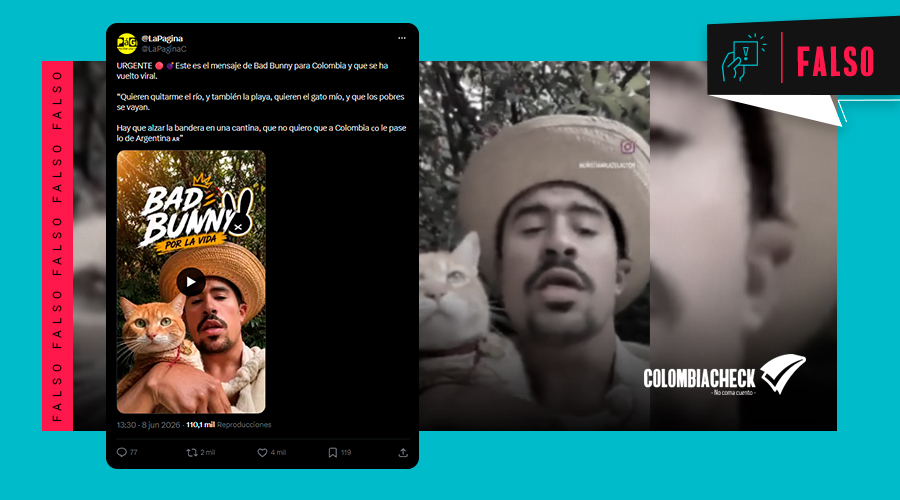
A viral video circulating on social media that appears to show Puerto Rican artist Bad Bunny criticizing Colombian lawyer Abelardo de la Espriella is a digital fabrication created using artificial intelligence filters. The footage, which has garnered significant engagement across platforms like TikTok and X, does not feature the singer, but rather an actor using a face-swapping digital tool to mimic the performer’s likeness.
The original content was produced by a Colombian content creator who utilized augmented reality technology to superimpose the visage of Bad Bunny onto his own physical performance. According to digital forensics experts and platform moderation guidelines, such tools—often referred to as “deepfakes” or AI-powered filters—have become increasingly sophisticated, allowing users to alter their appearance in real-time during video recording sessions. This incident serves as a prominent example of how synthetic media can be used to misrepresent public figures in the digital age, a trend that has prompted major platforms to update their synthetic media policies to require clearer disclosures on AI-generated content.
How the Digital Filter Was Identified
The verification of the video as a digital construct was confirmed through metadata analysis and visual inspection by observers familiar with the creator’s previous work. The technology employed is a common feature on platforms like TikTok, which provides users with various “face-swap” lenses. These tools track facial landmarks in real-time, mapping the source image’s features onto the user’s movements.
In this instance, the discrepancy between the audio and the synthetic visual overlay helped identify the manipulation. While the voice in the video may sound similar to the artist, the synchronization of the mouth movements—often referred to as “lip-syncing”—frequently reveals the artificial nature of the footage. Unlike professional deepfake technology that uses machine learning to synthesize voice, these social media filters primarily focus on visual aesthetics. The Federal Trade Commission has previously warned about the rising risks of AI-driven deception, emphasizing that consumers should remain skeptical of viral videos that depict public figures making controversial or uncharacteristic statements without corroboration from official news outlets.
The Impact of Synthetic Media on Public Discourse
The use of a digital filter to place a celebrity in a political or social conflict highlights the ongoing challenges regarding digital literacy. Because the video was shared widely, many viewers initially accepted the content as authentic, leading to a polarized reaction online. This phenomenon, often termed “misinformation by proxy,” occurs when users share content without verifying the source, thereby amplifying the reach of synthetic media.
Social media companies are under increasing pressure to label AI-generated content. Under current digital transparency standards, platforms are encouraged to implement “watermarking” or automated detection systems to alert users when a video has been modified. Despite these efforts, the speed at which such content spreads often outpaces the moderation systems designed to catch it. Experts in digital ethics suggest that the burden of verification remains with the user, particularly when content involves high-profile individuals or sensitive political topics.
Distinguishing Satire from Deception
While the creator of the video may have intended the clip to be satirical, the lack of a clear disclaimer led to significant confusion among the public. In the context of digital journalism, distinguishing between parody and malicious misinformation is critical. Parody is generally protected under free speech norms, provided the audience is aware that the content is not factual. However, when the lines between entertainment and reality are blurred by high-fidelity filters, the potential for reputational harm to the individuals depicted becomes a significant concern.
Legal professionals, including Abelardo de la Espriella, are often targets of online commentary, but the use of a major celebrity’s likeness to amplify that commentary crosses into the territory of unauthorized digital impersonation. As of this report, there have been no official legal filings or civil lawsuits reported regarding this specific instance of digital impersonation. The incident remains a case study in the necessity for improved digital verification tools for the average social media user.
Looking Ahead: Verification as a Standard
As AI tools become more accessible, the ability to discern fact from fiction will be a required skill for global internet users. Organizations such as the Nieman Foundation for Journalism emphasize that the first step in verifying any viral video is to perform a reverse image search and check for corroborating reports from established news agencies. If a video involving a global superstar like Bad Bunny making a controversial statement does not appear on major entertainment news platforms, it is highly likely that the content is unauthorized or synthetic.
Readers are encouraged to remain critical of viral content and to seek confirmation through official social media channels belonging to the public figures involved. For updates on how technology platforms are addressing the spread of synthetic media, users can monitor the policy updates provided by the Electronic Frontier Foundation, which tracks digital rights and the impact of emerging technologies on public discourse. Share your thoughts on how social media platforms should handle AI-generated impersonations in the comments section below.
Keep reading