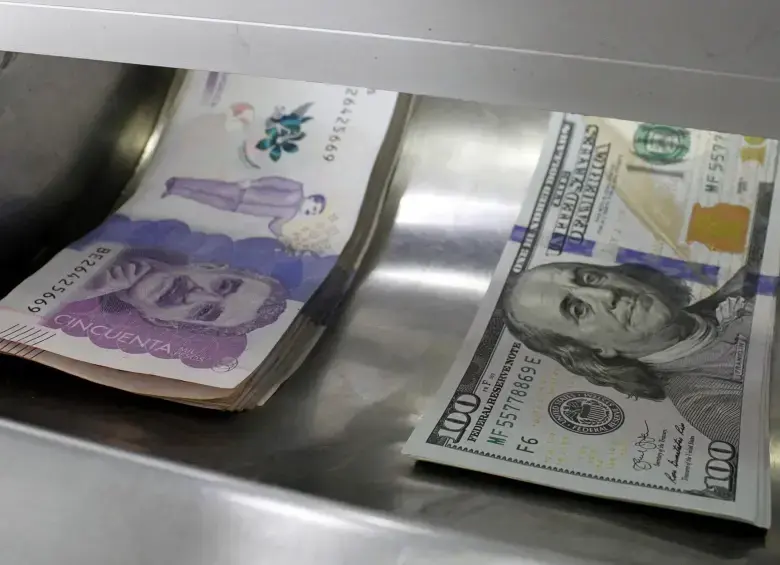
The Colombian peso has reached its strongest exchange rate against the US dollar in more than a decade, with the dollar trading at its lowest level since December 2020, according to verified market data and financial analysts. As of June 16, 2024, the official exchange rate (TRM) stood at approximately COP 3,950 per USD, a decline of over 50 pesos from the previous trading day, marking the steepest revaluation in the past 10 years. Economists attribute the shift to a combination of global monetary policy adjustments, stronger-than-expected Colombian economic fundamentals, and reduced risk aversion among investors.
This historic move comes as Colombia’s central bank, Banco de la República, maintains its benchmark interest rate at 11.75%—the highest in Latin America—to combat inflation, which remains above the bank’s target range. Meanwhile, the Federal Reserve’s recent signals of potential rate cuts have weakened the dollar globally, creating a tailwind for emerging-market currencies like the Colombian peso. “The peso’s strength reflects both improved domestic confidence and the broader US dollar sell-off,” said IMF economists in a recent report, noting that Colombia’s current account deficit has narrowed significantly in 2024, reducing pressure on the currency.
For businesses and consumers, the revaluation presents a mixed bag of opportunities and challenges. Importers stand to benefit from lower costs for dollar-denominated goods, while exporters—particularly those in commodities like coal and coffee—face reduced revenue in local currency terms. The Colombian government has yet to comment on potential policy responses, though officials have previously emphasized maintaining fiscal discipline amid global volatility.
Note: The following chart illustrates the Colombian peso’s exchange rate trend against the US dollar over the past 12 months. For real-time updates, visit Banco de la República’s official platform.
Why Is the Colombian Peso Strengthening Now?
Three key factors are driving the peso’s revaluation:
- Global Monetary Policy Shifts: The US Federal Reserve’s pivot toward potential interest rate cuts has weakened the dollar across emerging markets. As of June 2024, futures markets price in a 50% chance of a rate cut by September, reducing demand for the greenback.
- Colombia’s Improved Economic Fundamentals: The country’s inflation rate, while still elevated at 8.67% year-over-year (as of May 2024), has shown signs of cooling. The central bank’s aggressive tightening cycle has stabilized prices, and fiscal deficits have narrowed to 4.2% of GDP in the first quarter, easing concerns about currency depreciation.
- Commodity Price Resilience: Colombia’s exports, particularly coal and coffee, have held up better than expected this year. Coal prices remain near $100 per ton due to geopolitical risks in Europe, while coffee futures have stabilized above $2 per pound, supporting the peso.
In contrast, neighboring currencies like the Brazilian real and Mexican peso have also strengthened but to a lesser extent. The real traded at approximately BRL 5.05 per USD on June 16, while the Mexican peso stood at MXN 17.00 per USD—a more modest revaluation. “Colombia’s peso is outperforming regional peers due to its combination of high interest rates and improving trade dynamics,” noted Bloomberg Economics in a recent analysis.
What This Means for Colombians and the Economy
The peso’s strength has immediate and long-term implications for different stakeholders:
For Importers: Lower Costs, But Supply Chain Risks
Businesses importing machinery, electronics, or pharmaceuticals will see reduced costs in Colombian pesos. For example, a $1 million USD import would cost roughly COP 3.95 billion today, compared to COP 4.05 billion just a week ago. However, some importers warn that weaker supplier currencies—such as the Japanese yen or euro—could offset gains if their own exchange rates deteriorate.
Retailers of foreign goods, from cars to appliances, may pass savings to consumers. Analdex, Colombia’s leading business association, reported that auto imports from the US have already fallen by 8% year-over-year in 2024, partly due to the peso’s strength.
For Exporters: A Double-Edged Sword
While importers benefit, exporters—especially in agriculture and mining—face headwinds. Coffee growers, for instance, earn dollars from sales but must convert them back to pesos at a less favorable rate. The National Coffee Federation (Federación Nacional de Cafeteros) estimates that Colombian coffee exports could see a 5–7% revenue hit in local currency terms if the trend persists.
Mining companies, however, may see mixed effects. Coal exporters to Europe could benefit from higher dollar prices, but those selling to Asia—where the yen’s weakness has boosted demand—may not see the same advantage. Ecopetrol, Colombia’s state oil company, has not yet commented on operational adjustments.
For Consumers: Cheaper Travel and Debt, But Higher Imported Inflation Risks
Colombians planning international travel will find dollars more affordable. A round-trip ticket to Miami, which cost around $400 USD, would now require roughly COP 1.58 million instead of COP 1.62 million. Similarly, those with dollar-denominated debt—such as mortgages or student loans—will see their liabilities shrink in peso terms.
However, economists caution that a prolonged strong peso could import inflationary pressures by making imports cheaper and potentially stoking domestic price increases. The central bank has not signaled any immediate policy response, but Governor Leonardo Villar has previously stated that exchange rate movements are closely monitored.
How Markets Are Reacting: A Comparative Look
The Colombian peso’s performance stands out in Latin America, where most currencies have appreciated against the dollar but not to the same degree. Below is a comparison of key emerging-market currencies as of June 16, 2024:
| Currency | Exchange Rate (USD to Local) | Change from 2020 Low | Central Bank Rate |
|---|---|---|---|
| Colombian Peso (COP) | COP 3,950 | +12% (vs. COP 4,450 in Dec 2020) | 11.75% |
| Brazilian Real (BRL) | BRL 5.05 | +8% (vs. BRL 5.45 in Dec 2020) | 10.50% |
| Mexican Peso (MXN) | MXN 17.00 | +6% (vs. MXN 18.10 in Dec 2020) | 11.25% |
| Chilean Peso (CLP) | CLP 900 | +9% (vs. CLP 980 in Dec 2020) | 11.00% |
Source: Central bank data compiled by Bloomberg and ForexFactory
Colombia’s outperformance can be attributed to its higher real interest rates compared to peers, which attract capital flows. “The peso is essentially a carry trade play right now,” said Reuters economists, noting that investors are rotating out of higher-yielding assets like US Treasuries into Colombian bonds.
What Happens Next? Watching for These Key Developments
The peso’s trajectory will depend on several upcoming events:
- Federal Reserve Policy Meeting (July 30–31, 2024): Any hints of a rate cut could further weaken the dollar and support the peso. Traders will closely watch Chair Jerome Powell’s remarks.
- Colombia’s June Inflation Report (June 28, 2024): If inflation continues to cool, the central bank may signal a pause in rate hikes, which could stabilize the peso.
- US Election Implications: Markets are already pricing in a potential shift under a hypothetical Biden or Trump presidency. A Trump victory could boost risk assets, while a Biden win might lead to prolonged dollar weakness.
- Commodity Price Trends: Colombia’s export revenues are highly sensitive to coal and coffee prices. A sustained drop in either could pressure the peso.
For now, the Banco de la República has indicated it will maintain its hawkish stance unless inflation shows clear signs of falling below its 3% target. “The central bank is walking a tightrope—balancing inflation control with financial stability,” said IMF Deputy Director Kristalina Georgieva during a recent visit to Bogotá.
Practical Steps for Businesses and Investors
Given the volatility, here’s what different groups should consider:
- Importers: Lock in forward contracts to hedge against potential future depreciation. The Banco de Bogotá and Bancolombia offer FX hedging tools.
- Exporters: Diversify revenue streams to mitigate currency risks. The ProColombia trade agency offers guidance on expanding into non-dollar markets like China.
- Retail Investors: Consider peso-denominated assets or short-term bonds to capitalize on the strong currency. The Colfondos platform lists local investment options.
- Consumers: Monitor import prices for signs of inflation. The DANE publishes monthly consumer price indexes.
Expert Perspectives: What Analysts Are Saying
Economists offer varied but cautious outlooks:
“The peso’s strength is a positive signal for Colombia’s macroeconomic stability, but it’s not sustainable at these levels without a broader shift in global liquidity conditions.” — Bloomberg Economics
“We’re seeing a classic ‘carry trade’ dynamic where investors are chasing yield in Colombia. If US rates fall sharply, the peso could appreciate further—but that would also increase vulnerability to capital outflows.” — Reuters Strategist
“For Colombia, the key risk is not the peso’s strength itself, but how long it lasts. A sudden reversal could be just as disruptive as the depreciation we saw in 2020.” — IMF Resident Representative for Colombia
Where to Find Official Updates
For real-time tracking and official guidance, consult these sources:
- Banco de la República – Official Exchange Rate (TRM)
- DANE – Monthly Economic Reports
- Ministry of Commerce – Trade and FX Policy
- ProColombia – Export and Investment Guidance
- Federal Reserve – US Interest Rate Decisions
The next critical checkpoint will be the Federal Reserve’s July meeting, where any shift in monetary policy could reshape global currency markets. In the meantime, Colombia’s central bank will continue to monitor inflation and capital flows, with Governor Villar expected to address the topic at the July monetary policy announcement.
What are your thoughts on the peso’s revaluation? Share your insights or questions in the comments below, and don’t forget to follow World Today Journal for ongoing coverage of Colombia’s economic developments.
Worth a look