
The Unidad Nacional para la Gestión del Riesgo de Desastres (UNGRD) faces severe financial instability, mounting debts, and critical staff shortages as it attempts to respond to a major earthquake in Colombia, according to statements from its newly appointed director, David Tamayo, reported by Agencia Pi.
David Tamayo, a geologist with a master’s degree in disaster risk management who took over leadership of the disaster agency following the administration of former President Gustavo Petro, described the institution’s condition as critical. The unfolding crisis compounds challenges already facing the entity in the wake of a high-profile public corruption scandal during the Petro government that involved the diversion of public funds and led multiple former officials to face judicial proceedings, as noted by Agencia Pi.
As relief efforts continue following the seismic event that left more than 200 people dead, the newly installed leadership warns that the state’s primary disaster response mechanism lacks the fiscal capacity required to meet basic humanitarian needs.
Financial Constraints and International Aid
According to disclosures made by Tamayo, the agency currently holds just $30.000 millones in available funds dedicated to addressing the immediate consequences of the earthquake, a sum that administrators deem wholly inadequate for widespread relief operations (Agencia Pi).
“Estamos inquietos porque encontramos que la Unidad solo cuenta $30.000 millones para la atención de la emergencia por el terremoto. Estamos gestionando recursos adicionales de donaciones internacionales”, stated Tamayo regarding the tight fiscal margin, as reported by Agencia Pi.
A significant portion of these limited reserves must be channeled into providing rental subsidies for families displaced by the tremor, leaving fewer resources for other essential emergency services. Agency officials indicate they are actively pursuing additional funding streams, including international cooperation and foreign donations, to bridge the financial gap. Compounding these monetary shortages are contractual bottlenecks maintained through the Fiduprevisora, though Tamayo cautioned that resolving those administrative hurdles would still fail to generate substantial new relief funds due to pre-existing financial commitments.
Staff Shortages and Operational Strain
Beyond fiscal insolvency, the UNGRD struggles with a depleted workforce. Tamayo pointed out that numerous staffing contracts expired and could not be renewed, severely cutting the number of active personnel available during a national crisis.
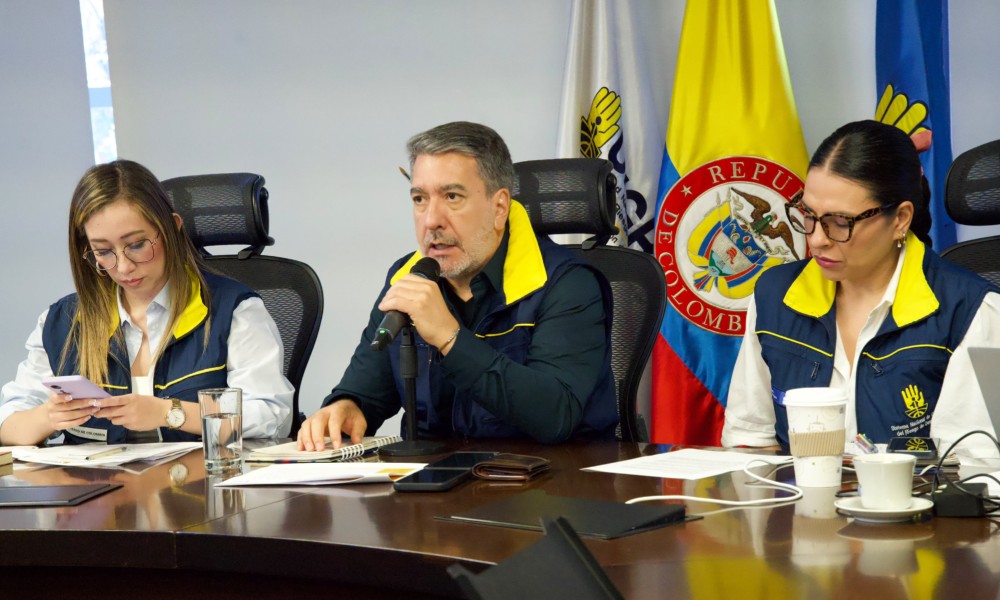
Remaining workers have been forced to extend their shifts and cover extra rotations without relief. “Les toca porque si se van a descansar, no hay quién los releve,” Tamayo explained, describing an environment where employees face demanding conditions, as documented by Agencia Pi.
The director characterized the institution’s overall standing as critical, noting that preparations are underway for a specialized shock plan designed to stabilize immediate disaster response operations. Nevertheless, institutional fragility extends far beyond recent changes in executive leadership.
Structural Challenges and Long-Term Viability
Tamayo emphasized that the administrative and financial troubles trace back to systemic flaws embedded within the legal framework governing disaster management since the passage of Ley 1523 de 2012.
“No es un tema fácil porque hay unos problemas estructurales muy complejos, que fueron heredados desde que la Ley 1523 se creó en el 2012, pero hay que mirar la manera para resolver esto y garantizar a la población colombiana apoyo y presencia institucional,” remarked Tamayo, according to Agencia Pi.
Furthermore, accumulated economic liabilities have outpaced the funding allocated through Colombia’s national general budget for operational expenses. This stark discrepancy between pending obligations and assigned revenues renders the current institutional model structurally unsustainable, placing the organization in a position of severe financial vulnerability.
As the UNGRD attempts to implement a relief strategy amid mounting scrutiny and limited reserves, further updates from the agency and congressional oversight committees are expected as administrators outline proposals to restructure the nation’s disaster response framework.
Related reading
- Oslo Office Hostage Ordeal: Police Hunt Suspect Over Alleged Financial Dispute
- Watch the First 5 Minutes of HBO’s Green Lanterns Series Revealing John Stewart’s Origin
- Apple Warns iPhone Users in 110 Countries of Mercenary Spyware Attacks (archynewsy.com)
- Government Warns Single-Use Grills Pose Significant Public Risk Amid Heatwave (world-today-news.com)