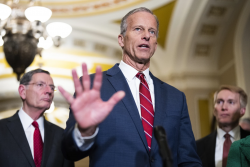
The persistent gridlock in Washington is hardly a new phenomenon, but the current state of legislative paralysis is prompting renewed scrutiny of the tools and procedures that govern how laws are made – or, increasingly, *not* made. While partisan divisions are often cited as the primary culprit, a deeper examination reveals a system increasingly hampered by the strategic utilize of procedural obstacles, most notably the filibuster in the Senate. The question isn’t simply whether Congress is functioning, but whether the very mechanisms designed for deliberation are now actively preventing governance.
The frustration is palpable. As of February 23, 2026, the 118th Congress, despite controlling the House with a narrow Republican majority, has struggled to deliver on key legislative priorities beyond the initial burst of activity surrounding the appropriations process. The source of this stagnation isn’t solely attributable to the slim Republican margin in the House, currently at 221-213, led by Speaker Mike Johnson, who assumed office in October 2023 according to his official website. The Senate, with its 60-vote threshold to overcome a filibuster, remains a significant bottleneck.
The Filibuster: A Historical Overview and Modern Impact
The filibuster, a tactic allowing a minority of senators to delay or block a vote on a bill, has a long and complex history. Originally conceived as a way to ensure thorough debate, it has evolved into a powerful tool for obstruction. While the traditional image of a senator talking for hours on end is largely a relic of the past – the modern filibuster often takes the form of a “silent filibuster” where simply signaling an intention to filibuster is enough to raise the vote threshold – its impact remains substantial.
Historically, the filibuster was used sparingly. Though, its use has increased dramatically in recent decades, particularly as the Senate has grow more closely divided. This escalation has led to a situation where even relatively popular legislation can be blocked by a determined minority. According to analysis by the Pew Research Center, the number of cloture motions – the procedure used to end a filibuster – has increased exponentially since the 1970s, demonstrating a growing reliance on the tactic. Pew Research Center provides a detailed historical overview of the filibuster’s evolution.
Speaker Johnson and the House Republican Challenges
While the Senate’s filibuster rules often take center stage in discussions about legislative gridlock, the challenges faced by Speaker Mike Johnson in the House of Representatives are also significant. As noted in his official biography, Johnson is the first Louisianan to hold the position of Speaker . He inherited a House Republican conference deeply fractured after the tumultuous ouster of Kevin McCarthy in October 2023. Maintaining party unity with such a narrow majority requires constant negotiation and compromise, often leading to concessions that dilute the impact of potential legislation.
The dynamic within the House Republican caucus is further complicated by the influence of the House Freedom Caucus and other conservative factions. These groups often prioritize ideological purity over pragmatic compromise, making it difficult to build the broad coalitions necessary to pass legislation. Johnson’s ability to navigate these internal divisions will be crucial in determining whether the House can effectively address the nation’s pressing challenges.
The Consequences of Legislative Inaction
The consequences of prolonged legislative inaction are far-reaching. Beyond the obvious inability to address critical issues such as economic inequality, climate change and healthcare access, the lack of progress erodes public trust in government. When citizens perceive that their elected officials are unable or unwilling to address their concerns, it can lead to disillusionment, cynicism, and decreased civic engagement.
legislative gridlock can have significant economic consequences. Uncertainty about future policy decisions can discourage investment, stifle innovation, and hinder economic growth. Businesses need a stable and predictable regulatory environment to thrive, and the constant threat of political obstruction creates an atmosphere of instability.
Potential Reforms and the Path Forward
The debate over the filibuster has intensified in recent years, with proponents arguing that it protects the rights of the minority and encourages compromise, while opponents contend that it has become an obstacle to effective governance. Several potential reforms have been proposed, ranging from eliminating the filibuster altogether to modifying its rules to make it more difficult to use.
One frequently discussed option is to return to a system of “talking filibusters,” requiring senators to physically hold the floor to delay a vote. This would raise the cost of obstruction and potentially discourage its use. Another proposal is to reduce the vote threshold required to invoke cloture from 60 to 51, making it easier for the majority to overcome a filibuster. However, any attempt to reform the filibuster is likely to face fierce opposition from Republicans, who view it as a crucial check on Democratic power.
Beyond the filibuster, other potential reforms could address the broader issue of legislative dysfunction. These include campaign finance reform, measures to reduce partisan gerrymandering, and efforts to promote greater transparency and accountability in government. Addressing these systemic issues would require a bipartisan commitment to strengthening the foundations of American democracy.
The Role of the Speaker
The Speaker of the House, currently Mike Johnson, plays a pivotal role in setting the legislative agenda and navigating the complex dynamics of the House. As outlined on the House website, the Speaker is responsible for leading the House Republican Conference and ensuring that the House operates effectively . Johnson’s success will depend on his ability to build consensus within his own party and to find common ground with Democrats on key issues.
Looking Ahead
The current state of legislative paralysis is unsustainable. Unless Congress can find a way to overcome the obstacles that are preventing it from functioning effectively, the nation will continue to face a growing backlog of unresolved challenges. The debate over the filibuster is likely to continue, and the outcome will have profound implications for the future of American governance. The next few months will be critical in determining whether Congress can break the cycle of gridlock and begin to address the pressing needs of the American people. The upcoming budget negotiations, scheduled to begin in the spring of 2026, will serve as a crucial test of Congress’s ability to compromise and deliver results.
The challenges are significant, but not insurmountable. A renewed commitment to bipartisanship, a willingness to reform outdated procedures, and a focus on the common decent are essential ingredients for restoring faith in government and ensuring a more prosperous future for all Americans.
Key Takeaways:
- The filibuster in the Senate remains a major obstacle to legislative progress.
- Speaker Mike Johnson faces significant challenges in leading a narrowly divided House Republican caucus.
- Legislative inaction erodes public trust and has negative economic consequences.
- Potential reforms to the filibuster and other systemic issues could help to restore effective governance.
What steps do you believe Congress should take to address the current state of legislative gridlock? Share your thoughts in the comments below.