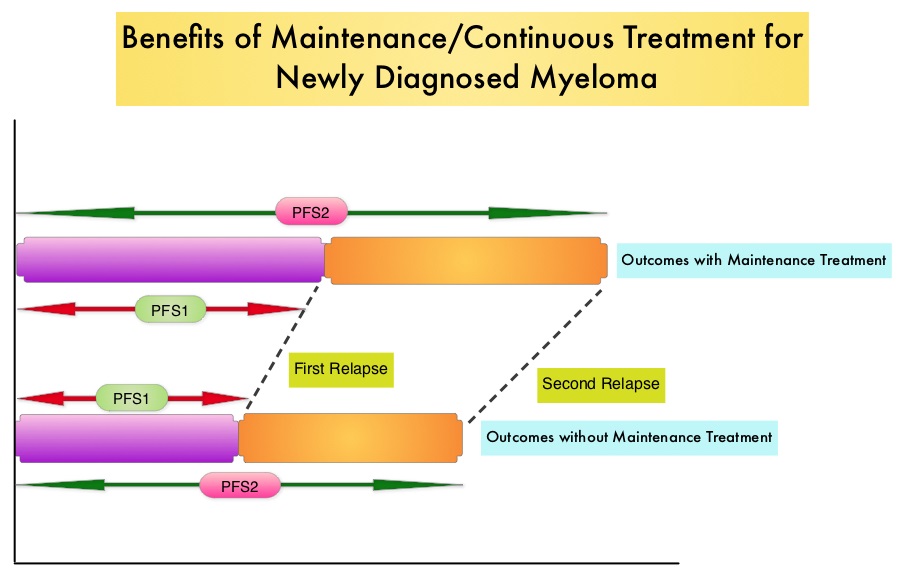
Maintenance therapy for multiple myeloma has evolved into a central component of long-term disease management, with clinical research increasingly focused on the comparative outcomes of continuous versus fixed-duration treatment strategies. For patients diagnosed with this plasma cell malignancy, the objective of maintenance is to sustain the response achieved following induction and consolidation therapy, thereby extending progression-free survival while balancing the impact of chronic medication on quality of life.
Multiple myeloma is characterized by the proliferation of abnormal plasma cells in the bone marrow, which can lead to bone lesions, anemia, and renal impairment. According to the National Cancer Institute, the standard of care often involves initial induction therapy followed by autologous stem-cell transplantation for eligible patients, after which maintenance therapy is administered to prevent or delay disease recurrence. The decision to pursue continuous therapy—typically involving lenalidomide—or a fixed-duration approach depends on individual patient risk profiles, treatment tolerance, and the depth of the initial response.
Clinical Considerations for Continuous Maintenance Therapy
Continuous maintenance therapy is generally defined as the administration of a therapeutic agent, such as an immunomodulatory drug, until the point of disease progression or the development of unacceptable toxicity. Clinical data indicates that this approach is designed to keep the tumor burden at the lowest possible level. The Multiple Myeloma Research Foundation notes that continuous lenalidomide maintenance has been shown to significantly improve progression-free survival in patients following stem-cell transplantation.
However, the strategy of continuous treatment requires ongoing monitoring for side effects, including neutropenia, fatigue, and the potential for secondary primary malignancies. Physicians must weigh the benefit of prolonged disease control against the cumulative impact of therapy. The choice of maintenance is highly individualized; patients with high-risk cytogenetics may have different management requirements compared to those with standard-risk disease. Clinical guidelines provided by the National Comprehensive Cancer Network (NCCN) emphasize that maintenance therapy should be discussed as part of a comprehensive long-term care plan, taking into account the patient’s performance status and goals of care.
Evaluating Fixed-Duration Treatment Strategies
Fixed-duration maintenance therapy involves administering treatment for a predetermined period, such as one or two years, rather than indefinitely. This strategy is often explored to reduce the cumulative exposure to drugs, potentially lowering the risk of long-term toxicities and improving patient quality of life. The clinical rationale behind fixed-duration therapy is that for certain patients, the risk of relapse may be sufficiently mitigated within a finite timeframe, allowing for a “treatment holiday” without compromising overall survival.
Recent clinical trials have sought to identify which patient populations might benefit from stopping maintenance therapy after a set period. Research published in journals such as the Lancet Oncology suggests that the depth of response, measured by minimal residual disease (MRD) negativity, may serve as a biomarker to guide the duration of maintenance therapy. Patients who achieve deep, sustained MRD-negative status may be candidates for a fixed-duration approach, whereas those with residual disease or high-risk features may require continued intervention.
Comparing Approaches: Quality of Life and Efficacy
The debate between continuous and fixed-duration maintenance is fundamentally a question of balancing the duration of remission against the burden of treatment. Continuous therapy offers the advantage of sustained surveillance and suppression of malignant cells, but it requires patients to maintain adherence to medication for an indefinite period. Conversely, fixed-duration therapy offers the psychological and physical benefits of concluding treatment, but it carries a higher theoretical risk of earlier relapse.
According to the American Society of Hematology, the field is moving toward a more personalized approach where the “one size fits all” model is replaced by risk-adapted maintenance. This involves assessing the patient’s molecular profile, the presence of specific genetic abnormalities, and their response to initial therapy to determine the optimal maintenance strategy. As new therapies, including monoclonal antibodies and bispecific T-cell engagers, enter the maintenance setting, the definition of “standard” maintenance is expected to shift further.
Future Directions in Myeloma Maintenance
The landscape of multiple myeloma maintenance is rapidly changing as investigators integrate newer agents into long-term care protocols. Clinical trials are currently assessing whether the addition of proteasome inhibitors or anti-CD38 monoclonal antibodies to standard lenalidomide maintenance can further improve outcomes. The U.S. National Library of Medicine maintains a comprehensive database of ongoing studies evaluating these combinations, which are critical for establishing the next generation of evidence-based care.
For patients and their families, staying informed about the latest trial results and discussing these options with a hematologist-oncologist is essential. Decisions regarding maintenance therapy are not static; they are reviewed at regular intervals based on clinical status and laboratory markers. The next major update regarding maintenance standards is expected following the upcoming American Society of Hematology (ASH) Annual Meeting, where investigators typically present data from phase 3 clinical trials evaluating long-term maintenance outcomes. Patients are encouraged to consult their care teams to determine the most appropriate strategy based on their specific health history and treatment response.
Worth a look