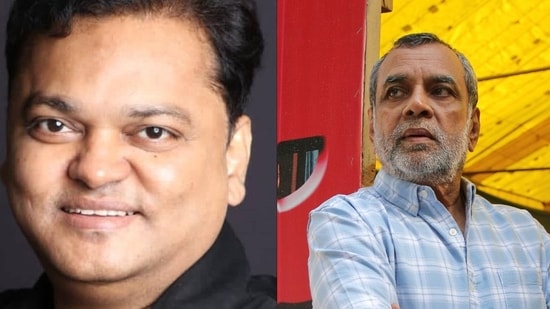
Film director Amit Rai has publicly challenged claims made by actor Paresh Rawal regarding the creative origins of the 2023 film OMG 2. In a recent series of interviews, Rai questioned the actor’s assertions that the project was primarily his concept, specifically asking “kis aadhaar pe?”—or “on what basis?”—Rawal has claimed sole credit for the film’s ideation.
The dispute centers on the development process of the sequel to the 2012 hit OMG – Oh My God!. While Rawal starred in the original film, he did not return for the second installment, which instead featured Akshay Kumar, Pankaj Tripathi, and Yami Gautam. Amit Rai, who wrote and directed the sequel, has maintained that the creative vision for the project was a collaborative process that evolved significantly during the writing phase, rather than a singular idea originating from the actor.
Creative Disagreements and Authorship Claims
The tension surfaced following comments made by Paresh Rawal in media appearances where the actor suggested that he had been instrumental in the genesis of the OMG 2 concept. Rai, in response, stated that while the franchise maintains a thematic connection to the original, the narrative arc of the second film was developed independently by his writing team. According to reports from The Indian Express, Rai emphasized that the process of conceptualizing a script involves extensive research and thematic development, which he claims were handled by his team during the film’s pre-production phase.

Rai’s public rebuttal serves as a clarification of the production history of the film, which was released on August 11, 2023, according to Box Office India records. The director’s stance highlights a common friction point in the film industry regarding “story credits” and the recognition of writers versus established stars who may have been involved in the early stages of a franchise’s life cycle.
Production Context and Franchise Evolution
OMG 2 was produced by Cape of Good Films and Viacom18 Studios, as noted in the official production credits listed by IMDb. The film addressed themes surrounding sex education in the Indian education system, a departure from the religious satire explored in the 2012 original. The shift in both cast and subject matter has been a primary point of discussion for critics and audiences alike.
Amit Rai has consistently maintained that the film’s success and its eventual reception by the Central Board of Film Certification (CBFC)—which granted the film an ‘A’ certificate with modifications—were the result of the creative team’s efforts to navigate complex social commentary. The director’s recent remarks suggest that he is seeking to protect the professional integrity of his writing process, ensuring that the labor of his core creative team is not overshadowed by external claims of authorship.
The Role of Creative Attribution
For observers of the Indian film industry, the spat underscores the importance of clear contractual and credit-based boundaries. In instances where a sequel diverges significantly from its predecessor, determining the “original idea” often leads to public disagreements between creative leads and former cast members who hold a strong association with the brand. As of now, Paresh Rawal has not issued a formal follow-up statement regarding the director’s specific challenge.
The discourse remains a matter of public record, with no further legal or guild-level disputes reported at this time. Readers interested in the official documentation regarding the film’s writing credits can refer to the Central Board of Film Certification filings for the project, which detail the registered credits for the screenplay and direction.
Future developments regarding this disagreement will likely depend on whether further interviews or official industry statements are released. For ongoing updates on this story and other developments in international cinema, please feel free to comment below or share this report with your network.
Related reading