
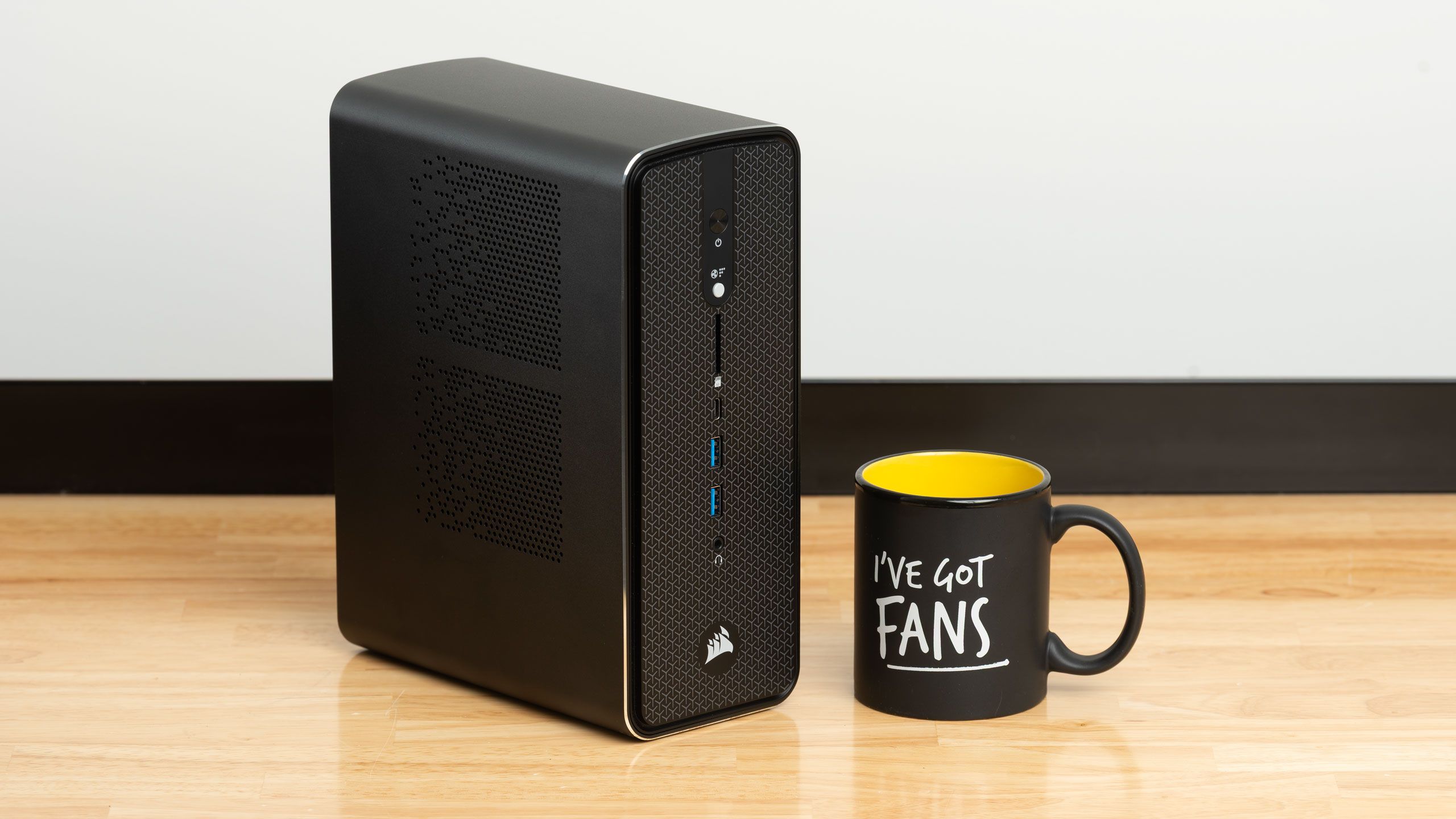
The cost of entry for high-end local artificial intelligence development is climbing. Reports indicate that Corsair has increased the pricing for its AI Workstation 300 mini PCs, with the flagship model powered by the AMD Ryzen AI Max+ 395 reportedly now sitting at $3,399. This represents a $400 increase over previous pricing from just a few months ago.
This price shift arrives during a period of significant volatility in the hardware market. The surge is largely attributed to spiraling costs for RAM and storage, driven by the global AI boom as data centers and professional developers scramble for the high-capacity memory required to run complex models.
For professionals and enthusiasts, the Corsair AI Workstation 300 price increase reflects a broader trend where the demand for “AI-ready” hardware is outpacing supply. While the price jump is steep, the machine remains a unique offering in the mini PC space, specifically designed to handle local Large Language Models (LLMs) and intensive creative workloads without relying exclusively on cloud computing.
Engineering a Local AI Powerhouse: The Specs
To understand why this workstation commands such a premium, one must look at the silicon. The top-tier configuration is built around the AMD Ryzen AI Max+ 395 processor, a chip that blends traditional CPU power with specialized AI acceleration. This processor features 16 cores and 32 threads, providing the raw compute necessary for multitasking and heavy software development via Origin PC.

Beyond the CPU, the workstation integrates an AMD XDNA 2 NPU (Neural Processing Unit) capable of delivering up to 50 TOPS (trillions of operations per second). This dedicated AI hardware allows the system to handle background AI tasks efficiently, freeing up the main processor and GPU for more demanding operations.
The most critical component for AI practitioners, however, is the memory architecture. The system utilizes 128GB of LPDDR5X-8000MT/s unified memory. In a traditional PC, system RAM and video RAM (VRAM) are separate; in this unified architecture, the integrated AMD Radeon 8060S GPU can access a massive pool of memory, providing up to 96GB of VRAM. This is a game-changer for running local LLMs, which often require vast amounts of VRAM to load model weights into memory for swift inference.
Hardware Configuration Breakdown
| Component | Specification |
|---|---|
| Processor | AMD Ryzen AI Max+ 395 (16C/32T) |
| AI Acceleration | AMD XDNA 2 NPU (Up to 50 TOPS) |
| Memory | 128GB LPDDR5X 8000 MT/s (Unified) |
| Graphics | AMD Radeon 8060S (Up to 96GB VRAM) |
| Storage | 1TB to 4TB PCIe NVMe SSD options |
| Operating System | Windows 11 Home |
Why Unified Memory Matters for AI Development
For the uninitiated, the distinction between standard RAM and VRAM is the primary bottleneck in AI development. Most consumer GPUs are limited to 8GB, 12GB, or 24GB of VRAM. If an AI model is larger than the available VRAM, the system must “swap” data to the slower system RAM, which causes performance to plummet.
By using a unified memory pool of 128GB, the Corsair AI Workstation 300 allows the Radeon 8060S to utilize up to 96GB for graphical and AI tasks. This enables developers to run much larger models locally—increasing privacy, reducing latency, and eliminating the recurring costs of cloud-based API calls.
This capability makes the machine an attractive option for those specializing in AI development, data science, and high-end creative tasks. However, as the “RAMpocalypse” continues to drive up the cost of high-speed LPDDR5X modules, manufacturers are forced to pass those costs on to the consumer.
Market Impact and the “AI Boom”
The price increase is not happening in a vacuum. The industry is seeing a massive shift toward “Edge AI”—the ability to run AI on local devices rather than in the cloud. As more companies move toward local LLMs for security and proprietary reasons, the demand for high-capacity, high-speed unified memory has spiked.
This demand creates a feedback loop: as more developers seek out hardware like the Strix Halo-based workstations, the cost of the underlying components rises, making the hardware even more expensive. For the average user, this means the barrier to entry for professional-grade local AI is becoming higher.
Stakeholders affected by this trend include:
- Independent Developers: Who may now find the upfront cost of local hardware prohibitive compared to monthly cloud subscriptions.
- Enterprise Teams: Who are investing in local workstations to ensure data sovereignty and security.
- Hardware Manufacturers: Who must balance the ability to meet demand with the rising costs of raw materials.
Key Takeaways for Potential Buyers
- Price Volatility: Be aware that high-end AI hardware prices may fluctuate based on global memory and storage trends.
- Local vs. Cloud: While the $3,399 price tag is high, it may be more cost-effective over several years than high-tier cloud GPU rentals for heavy users.
- Unified Memory Advantage: The 96GB VRAM capability is the primary selling point, making this suitable for large-scale local model inference.
- Form Factor: This provides workstation-class power in a mini PC footprint, ideal for space-constrained professional environments.
As Corsair and its partners continue to navigate the volatile components market, users should keep a close eye on official pricing updates and availability. While the Ryzen AI Max+ 395 model is currently the flagship, the evolving nature of AI hardware means new iterations or configurations could emerge as the industry stabilizes.
There are currently no announced dates for further price adjustments or new model releases for the AI Workstation 300 series. Interested buyers are encouraged to monitor official product pages for the most current pricing and configuration options.
Do you think the jump to $3,399 is justified for the ability to run local LLMs, or is the “AI tax” becoming too high? Share your thoughts in the comments below.