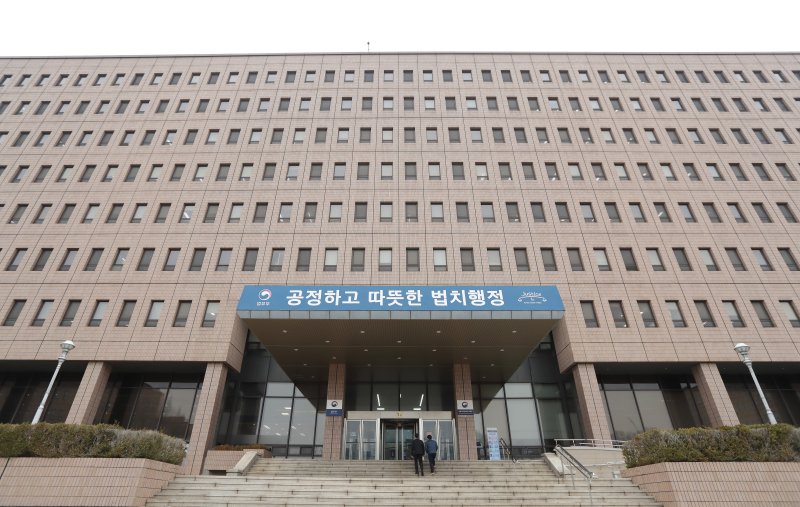
The South Korean government has achieved a landmark fiscal victory in its legal battle against the Swiss elevator manufacturer Schindler Holding AG, recovering the full amount of its legal expenditures following a decisive win in an Investor-State Dispute Settlement (ISDS) case. On April 15, 2026, the Ministry of Justice announced that it had received 9.6 billion KRW from Schindler to cover the costs incurred during the proceedings according to official government statements.
This recovery marks the largest sum ever recouped by the South Korean government in the history of its ISDS engagements. The financial restitution comes exactly one month after the Permanent Court of Arbitration (PCA) dismissed all claims brought by the Swiss firm, effectively shielding the state from a massive damages payout and validating the legality of South Korea’s regulatory actions.
For global markets and international investors, this outcome underscores a critical boundary in international investment law: the balance between investor protection and a sovereign state’s right to regulate for the public interest. By successfully defending its regulatory framework, South Korea has set a significant precedent for how domestic enforcement agencies—such as those overseeing fair trade and financial stability—can operate without fear of arbitrary international litigation.
Historic Recovery: South Korea Recoups 9.6 Billion Won in Schindler ISDS Case
The recovery of 9.6 billion KRW in legal fees is not merely a budgetary win but a symbolic one. In many ISDS cases, the winning party may not always recover the full extent of their legal costs, which can be astronomical given the complexity of international arbitration. The Ministry of Justice confirmed on April 15 that the full amount of the government’s litigation expenses was paid by Schindler Holding AG as reported by Nate News.
This victory concludes a stressful period of litigation that began in 2018, when Schindler Holding AG initiated the ISDS process against the Republic of Korea. The scale of the recovery highlights the high stakes of these disputes, where legal fees alone can reach billions of won, regardless of the final judgment on damages.
The PCA Ruling: A Total Dismissal of Claims
The financial recovery is the final chapter of a ruling delivered by the Permanent Court of Arbitration (PCA) in the early hours of March 14, 2026. At 2:03 AM Korea Standard Time, the arbitration tribunal announced that it had dismissed all of Schindler’s claims in their entirety as confirmed by Minister of Justice Jung Sung-ho.

The implications of this ruling were immediate and substantial. By dismissing the claims, the PCA ensured that the South Korean government would not have to pay the damages requested by Schindler, which were estimated to be between 320 billion KRW and 325 billion KRW per reports from MSN. The tribunal’s decision was clear: the South Korean government did not violate any international legal obligations in its dealings with the company.
Key Financial Breakdown of the Dispute
| Category | Amount/Status | Significance |
|---|---|---|
| Avoided Damages | Approx. 320–325 Billion KRW | Total dismissal of claims by PCA |
| Recovered Legal Costs | 9.6 Billion KRW | Largest recovery in Korean ISDS history |
| Ruling Date | March 14, 2026 | Final judgment by PCA tribunal |
| Recovery Date | April 15, 2026 | Full payment received by Ministry of Justice |
The Root of the Dispute: Regulatory Authority and International Law
The conflict centered on whether the actions of South Korean regulatory bodies were “arbitrary” or if they fell within the legitimate scope of state authority. Schindler had argued that it suffered losses due to the conduct of several government agencies, specifically the Fair Trade Commission (FTC), the Financial Services Commission (FSC), and the Financial Supervisory Service (FSS).
The arbitration tribunal, however, found that the measures taken by the FTC, FSC, and FSS were not arbitrary. Instead, the PCA ruled that these actions were carried out within the legal authority granted to these institutions, meaning they were compliant with both domestic law and international investment treaties.
This finding is crucial for the South Korean government. It validates the independence and legality of its regulatory agencies, signaling to other foreign investors that while their rights are protected under international law, the state retains the authority to enforce fair trade and financial regulations without those actions being automatically viewed as treaty violations.
Understanding ISDS and the Implications for Global Investors
For those unfamiliar with the mechanism, Investor-State Dispute Settlement (ISDS) is a provision in many international investment treaties that allows foreign investors to sue a host state for damages if they believe the state has breached the treaty—for example, through unfair treatment or expropriation of assets without compensation.
While ISDS is designed to protect investors from arbitrary state action, it has often been criticized for potentially “chilling” a government’s ability to pass laws in the public interest (such as environmental or health regulations) for fear of expensive lawsuits. The Schindler case serves as a counter-narrative, demonstrating that a state can successfully defend its regulatory prerogative when those actions are rooted in law and transparency.
The “complete victory” described by the Ministry of Justice emphasizes that the PCA did not locate any breach of international law, effectively closing the door on the claims that the South Korean government had acted unfairly toward the Swiss firm.
Key Takeaways from the Case
- Fiscal Precedent: The recovery of 9.6 billion KRW sets a high bar for the recovery of legal costs in future Korean ISDS cases.
- Regulatory Validation: The PCA’s ruling confirms that actions by the FTC, FSC, and FSS were legal and non-arbitrary.
- Risk Mitigation: South Korea successfully avoided a payout of over 320 billion KRW, preventing a significant drain on public funds.
- Legal Clarity: The case reinforces the principle that sovereign regulatory power, when exercised legally, is not a violation of international investment obligations.
As this matter concludes with the full recovery of costs, the South Korean government continues to monitor its international treaty obligations to ensure a stable environment for foreign direct investment while maintaining its regulatory integrity.
There are currently no further hearings or filings scheduled regarding this specific dispute, as the recovery of costs marks the final administrative step following the PCA’s ruling.
Do you believe ISDS mechanisms provide fair balance between corporate interests and sovereign rights? Share your thoughts in the comments below or share this analysis with your professional network.
Keep reading