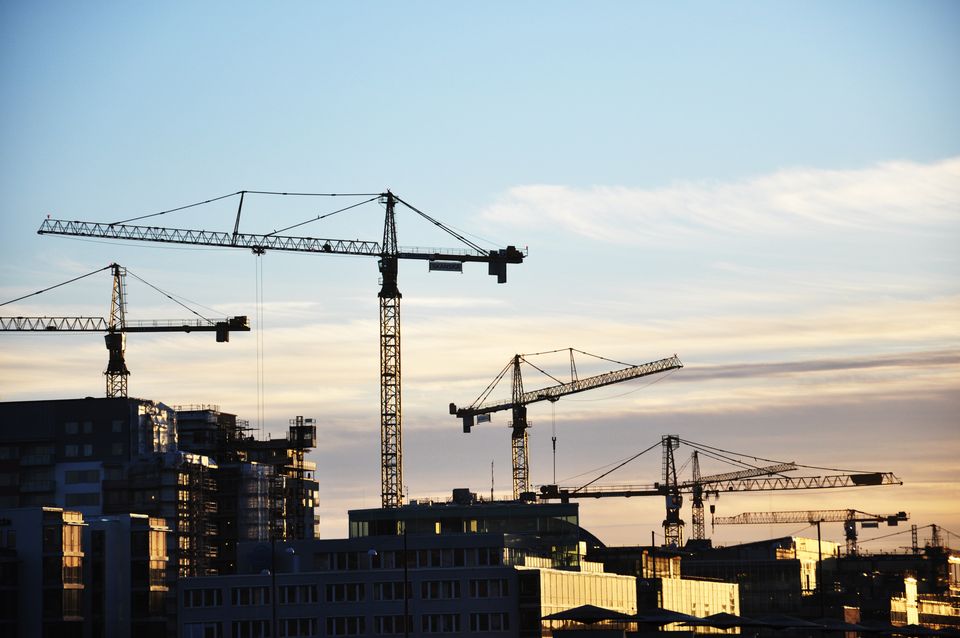
Sweden is currently grappling with a profound crisis in its construction sector, as a series of audits into large-scale infrastructure and residential projects have revealed systemic deficiencies that threaten both public safety and economic stability. Recent reports indicate a disturbing trend of critical errors in execution, leading to a surge in official interventions and warnings of a potential “system collapse” within the industry’s regulatory framework.
The scale of the dysfunction is evidenced by a stark statistic: 88 distinct work stages were ordered to be stopped during 2025 following rigorous authority inspections. These stoppages were not merely administrative delays but were triggered by “serious deficiencies” in construction quality, ranging from structural integrity flaws to failures in essential safety protocols. For a nation known for its stringent engineering standards and transparency, the breadth of these failures suggests a deep-seated erosion of oversight.
This volatility comes at a precarious time for the Nordic economy. As Sweden attempts to address its long-term housing shortage, the discovery that major projects are being built on a foundation of shortcuts and fraud creates a dangerous paradox: the urgency to build more is being undermined by the necessity to rebuild what was done incorrectly. The financial implications are staggering, as the cost of remediation often exceeds the original budget of the flawed work stages.
Industry insiders and labor representatives are now sounding the alarm, suggesting that the problem is not limited to a few “disappointing actors” but is instead a symptom of a broader systemic failure. The convergence of organized crime, labor exploitation, and inadequate municipal oversight has created a vacuum where quality is sacrificed for profit, leaving future residents and taxpayers to bear the risk.
The Anatomy of Failure: 88 Stopped Work Stages
The revelation that 88 work stages were halted in 2025 highlights a critical breakdown in the chain of command between developers, contractors, and inspectors. In the context of large-scale construction, a “work stage” (arbetsmoment) refers to a specific, critical phase of production—such as the pouring of a foundation slab, the installation of fire-stopping materials, or the reinforcement of load-bearing walls—that must be inspected and approved before the project can proceed.
When an authority stops a work stage, it typically means the work performed is so far below the legal safety or quality standard that continuing would either be illegal or physically dangerous. These interventions are often the result of “spot checks” or whistleblower tips, suggesting that the internal quality control mechanisms of the construction firms themselves have failed. The Swedish National Board of Housing, Building and Planning (Boverket) provides the overarching regulations for these processes, yet the frequency of these stoppages suggests a gap between regulation and enforcement.

The nature of these deficiencies is often hidden behind walls and concrete, making them “invisible” until an inspector identifies a discrepancy in the documentation or a physical flaw during a site visit. This “hidden fraud” is particularly insidious because it may not manifest as a failure until years after a building is occupied, potentially leading to catastrophic structural collapses or uncontrollable fires.
the increase in interventions reflects a more aggressive stance by regulatory bodies. For years, the industry operated on a high degree of trust, but the rise in reported errors has forced a shift toward a more adversarial, audit-heavy approach. While this identifies more problems, it also exposes just how widespread the negligence has become.
“System Collapse”: The Union’s Warning
The phrase “risk for system collapse” has become a rallying cry for labor organizations, most notably those representing construction workers. The warning stems from the belief that the industry’s traditional safeguards—collective bargaining, certified craftsmanship, and strict adherence to building codes—are being dismantled by a race to the bottom on pricing.
According to labor representatives, the “collapse” refers to a state where the standard for “acceptable work” is no longer defined by safety codes, but by the minimum amount of effort required to pass a cursory inspection. When a significant portion of the workforce is hired through unregulated subcontractors, the institutional knowledge of how to build safely is lost. This creates a cycle where inexperienced or unqualified workers are tasked with complex engineering feats, leading to the very deficiencies that trigger work stoppages.

The human cost of this systemic decay is significant. Workers operating in these environments often face diminished safety standards, as the same mindset that allows for structural fraud typically allows for the bypassing of occupational health and safety laws. The union’s alarm is therefore not only about the buildings themselves but about the degradation of the profession of construction.
From an economic perspective, a system collapse in construction would lead to a massive spike in insurance premiums and a withdrawal of private investment. If lenders and insurers can no longer trust that a project is being built to code, the cost of capital for new developments will rise, further exacerbating the housing crisis.
The Shadow Economy and the “Construction Mafia”
Central to the crisis is the infiltration of the Swedish construction sector by organized crime, often referred to locally as the “construction mafia” (byggmaffian). This shadow economy operates through a complex web of shell companies and multi-layered subcontracting, which serves to obscure the identity of the actual laborers and the flow of money.
The “mafia” model typically involves a legitimate prime contractor hiring a subcontractor, who then hires another, and so on. By the fourth or fifth layer, the company is often a “paper firm” with no real assets, used solely to avoid paying taxes, social security contributions, and fair wages. This financial fraud is almost always coupled with technical fraud; because these shell companies are focused on maximizing short-term profit through tax evasion, they have no incentive to invest in quality materials or skilled labor.
This infiltration has led to a record number of tips regarding construction crime. Whistleblowers have reported everything from the use of substandard concrete to the total absence of required fire-proofing in high-rise residential blocks. The “mafia” grip on the industry is reinforced by intimidation, making it tough for workers to report deficiencies without fearing for their livelihoods or safety.
The impact of this criminal element extends beyond the construction site. It distorts market competition, as honest firms that pay fair wages and use quality materials cannot compete with the artificially low bids of criminal enterprises. This forces legitimate companies to either exit the market or compromise their own standards to survive, further accelerating the industry’s decline.
Economic Fallout and the Path to Recovery
The economic ramifications of these failures are multifaceted. First, there is the direct cost of remediation. When 88 work stages are stopped, the cost is not just the price of the stop-work order, but the cost of demolishing completed (but flawed) work and rebuilding it from scratch. These costs are often passed on to the end consumer or the taxpayer, depending on whether the project is private or public.

Second, the crisis undermines the valuation of real estate. If a residential complex is found to have “serious deficiencies,” its market value plummets, and the legal battles between homeowners, developers, and insurance companies can last for decades. This creates a systemic risk for the banking sector, which holds the mortgages on these potentially flawed assets.
To combat this, experts suggest a three-pronged approach to recovery:
- Enhanced Transparency: Implementing digital “building passports” that track every material used and every worker involved in a specific work stage, making it impossible to hide the chain of subcontracting.
- Stricter Liability: Moving toward a model where prime contractors are held legally and financially responsible for the failures of their subcontractors, regardless of how many layers of separation exist.
- Increased Regulatory Funding: Expanding the capacity of municipal inspectors to conduct unannounced, comprehensive audits rather than relying on scheduled checks that allow contractors to “stage-manage” the site.
The path forward requires a fundamental shift in how Sweden views construction—moving away from seeing it as a commodity to be bought at the lowest price and returning to seeing it as a critical piece of public infrastructure that requires uncompromising oversight.
Key Takeaways for Stakeholders
- For Homebuyers: Exercise extreme caution with new developments. Request independent third-party inspections and verify the track record of the prime contractor.
- For Investors: Conduct deep due diligence on the subcontracting chains of your portfolios. “Low-cost” bids in the current climate are a primary red flag for future liability.
- For Policymakers: The “system collapse” warning indicates that current regulations are being bypassed. Legislative action to curb shell-company subcontracting is urgent.
The next critical checkpoint for the industry will be the release of the upcoming annual audit summaries from municipal building committees, expected in the next quarter, which will determine if the trend of work stoppages is accelerating or if the new oversight measures are beginning to take hold.
We invite our readers to share their perspectives on the balance between rapid urban development and safety standards in the comments below.
Worth a look