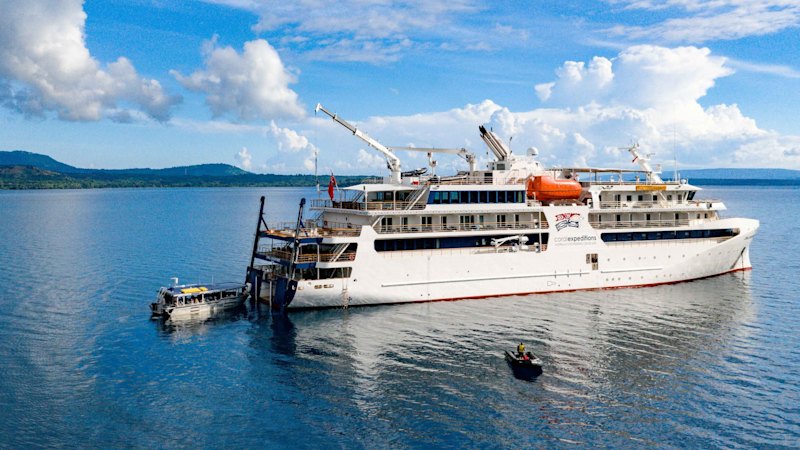
Coral expeditions Incident: A Deep dive into the PNG Grounding and Recent Safety Concerns
The recent grounding of the Coral Adventurer off the coast of Papua New Guinea (PNG) has brought renewed scrutiny to the expedition cruise industry and, specifically, the operations of Coral Expeditions. This incident, occurring shortly after a passenger fatality on a previous voyage, raises critical questions about safety protocols, operational procedures, and the overall risk management within this niche sector of travel.This article provides an in-depth analysis of the grounding, the subsequent examination, and the broader context of safety concerns surrounding Coral Expeditions, offering insights for travelers, industry professionals, and regulatory bodies. We will explore the immediate response, potential causes, and the long-term implications for the company and the expedition cruise market.
Immediate Response and Refloating Efforts
On December 29th, 2023, the Coral Adventurer, operated by NRMA-owned Coral Expeditions, ran aground near PNG. Initial reports indicate the vessel became grounded while navigating in the region. Coral Expeditions instantly engaged a towage provider to assist in refloating the ship, with efforts continuing into the following day. Crucially, as of the latest reports, there has been no reported water ingress, suggesting the hull integrity may not have been immediatly compromised.
Did You Know? Expedition cruises, while offering unique and immersive travel experiences, often operate in remote and challenging environments, increasing the potential for unforeseen incidents.
The Australian Maritime Safety Authority (AMSA) has initiated a thorough investigation, quarantining the ship’s voyage data recorder and collecting crucial data points including ship tracking facts, detailed weather reports, and extensive crew, operator, and maintenance records. This meticulous data gathering is standard procedure following such incidents, aiming to establish a clear understanding of the events leading up to the grounding. Coral Expeditions has proactively ended the affected tour, acknowledging the inability to deliver the expected experience to its passengers. All passengers are being flown out of PNG via charter flight, with the company confirming no injuries were sustained during the grounding itself.
The Shadow of Lizard Island: A previous Incident and AMSA Investigation
The grounding isn’t occurring in a vacuum. Just months prior, in October 2023, an 80-year-old passenger, Suzanne Rees, tragically died while hiking on Lizard Island during a Coral Expeditions tour. The circumstances surrounding her death have prompted a separate investigation by AMSA, focusing on headcount practices and staffing levels during shore excursions.
Pro Tip: when booking an expedition cruise, carefully review the operator’s safety record, emergency procedures, and the qualifications of their expedition staff. Don’t hesitate to ask detailed questions.
the incident unfolded when Ms. Rees separated from the group after experiencing illness. The ship departed the island, unaware of her absence, and only returned hours later upon realizing she was missing. This sequence of events has raised serious concerns about the effectiveness of passenger tracking and the responsiveness of the crew. The AMSA investigation is attempting to determine whether inadequate procedures contributed to the delay in discovering Ms. Rees’s disappearance and the subsequent tragic outcome. This investigation is particularly sensitive,as it touches upon essential aspects of passenger safety and the duty of care owed by cruise operators.
analyzing Potential Causes: Grounding and Operational Factors
Determining the precise cause of the Coral Adventurer grounding will require a detailed analysis of the collected data.Several factors could be at play:
* Navigational Error: Human error in navigation, potentially exacerbated by challenging weather conditions or reliance on outdated charts, is a primary consideration.
* chart inaccuracies: The accuracy of nautical charts in remote regions like PNG can be variable. Discrepancies between the charted depth and the actual seabed topography could have contributed to the grounding.
* Equipment Malfunction: A failure of navigational equipment, such as radar or sonar, could have impaired the ship’s ability to accurately assess its position and surroundings.
* Weather Conditions: Adverse weather conditions, including strong currents, reduced visibility, or unexpected swells, could have made navigation more challenging and increased the risk of grounding.
* Operational Procedures: A review of the ship’s operational procedures, including passage planning and bridge resource management, will be crucial to identify any systemic weaknesses.
The investigation will likely employ sophisticated modeling techniques to reconstruct the events leading up to the grounding, taking into account all available data. Understanding the interplay of these factors is essential for preventing similar incidents