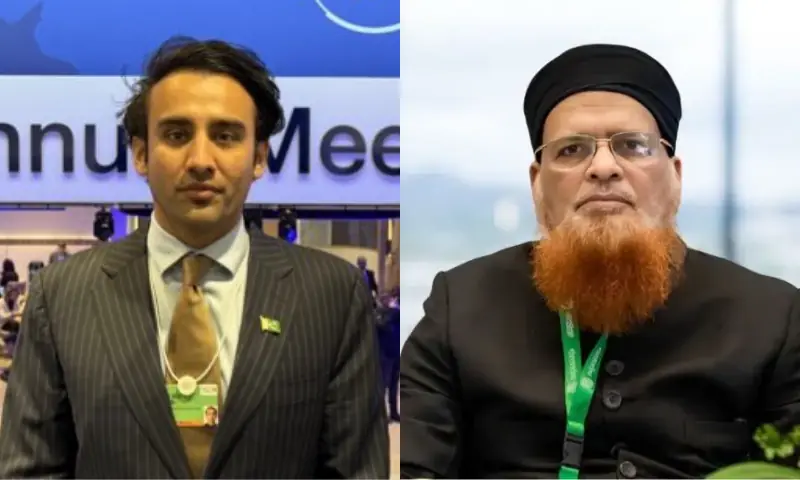
The chairman of Pakistan’s Virtual Assets Regulatory Authority (PVARA), Bilal bin Saqib, held a formal discussion with prominent religious scholar Mufti Taqi Usmani on Saturday to address the Shariah status of digital assets. The meeting follows a June 10 religious decree, or fatwa, issued by Darul Ifta at Jamia Darululoom in Karachi, which declared that the use of cryptocurrency for purchasing goods is “impermissible” under Islamic law.
While the PVARA is tasked with developing regulatory frameworks for virtual assets, the fatwa signed by Mufti Usmani and six other scholars, including a former judge of the Federal Shariat Court, characterizes cryptocurrency as “merely the recording of fictitious numbers in an account” rather than recognized wealth, or maal.
According to the decree, because digital tokens lack the status of wealth under Shariah, transactions involving them are considered invalid, preventing a buyer from claiming legal ownership of goods or services acquired through such means. The scholars explicitly stated that obtaining educational courses through cryptocurrency payments is not valid, citing various references from religious jurisprudence.
Regulatory Goals and Shariah Alignment
Following the meeting, Bilal bin Saqib stated on X that he and Mufti Usmani share a “fundamental objective: protecting Pakistanis from fraud, exploitation, and financial harm.” Saqib, who has been leading efforts to formalize the local crypto market since early 2025, emphasized that the current digital asset landscape is diverse.
“I shared with Mufti Usmani that blockchain, digital assets, stablecoins, and tokenised real-world assets represent a broad spectrum of technologies and use cases,” Saqib wrote. He contended that these technologies “merit careful technical assessment alongside rigorous Shariah examination, rather than being viewed through a single lens.”
The PVARA, an autonomous body governed by a board that includes the governor of the State Bank of Pakistan (SBP), the chairman of the Securities and Exchange Commission of Pakistan (SECP), and the chairman of the Federal Board of Revenue (FBR), is mandated to curb illicit finance while fostering innovation. Part of its strategy involves the use of regulatory sandboxes to test Shariah-compliant fintech solutions.
Pakistan’s Evolving Crypto Framework
The regulatory environment for digital assets in Pakistan has shifted significantly over the past two years. In April 2026, the SBP legalized the use of virtual assets through the enactment of the Virtual Assets Act 2026, which permits banks to open accounts for licensed virtual asset service providers. This legislative step was intended to bring order to a market where, according to government estimates, approximately 40 million Pakistanis were already engaged with digital assets through unregulated, informal platforms.
The government’s plan to integrate these assets includes the launch of a national stablecoin. As reported by Bloomberg, a stablecoin is a digital token whose value is linked to a physical currency, such as the U.S. dollar, intended to offer greater price stability than volatile cryptocurrencies like Bitcoin. The PVARA announced plans for this launch in December 2025 as part of a broader drive to formalize the digital economy.
However, the status of industry-led organizations remains in flux. While Saqib has served as the chief executive officer of the Pakistan Crypto Council (PCC), which was launched in March 2025, the body’s formal status and its relationship with the state-run PVARA have not been fully clarified in public records.
Future Engagement Between Scholars and Regulators
Saqib stated that he expects continued engagement between experts, regulators, and religious leaders to ensure the country’s approach is guided by both Islamic principles and a comprehensive understanding of emerging technologies.

Readers interested in the ongoing development of the Virtual Assets Act 2026 and related regulatory updates are encouraged to monitor official announcements from the State Bank of Pakistan and the PVARA for future developments.