Cuban President Miguel Díaz-Canel has publicly acknowledged that daily life in Cuba is painful due to an ongoing humanitarian crisis, marking a rare admission of the severity of conditions faced by citizens across the island. His comments, made during recent interviews with U.S.-based media outlets, reflect growing pressure on the Cuban government to address widespread shortages of food, medicine, and fuel that have intensified amid prolonged economic strain, and U.S. Sanctions.
In an interview with NBC News’ Meet the Press, Díaz-Canel stated that life in Cuba “hurts” because of the humanitarian situation, while simultaneously rejecting external pressure to step down as president. He emphasized that Cuban leaders derive their authority from the Cuban people, not from the United States, and affirmed his commitment to remain in office unless the Cuban populace determines he is no longer fit to serve. The remarks were part of a broader discussion about U.S.-Cuba relations, during which he accused Washington of maintaining a “hostile policy” toward Havana and lacking moral standing to demand concessions from the Cuban government.
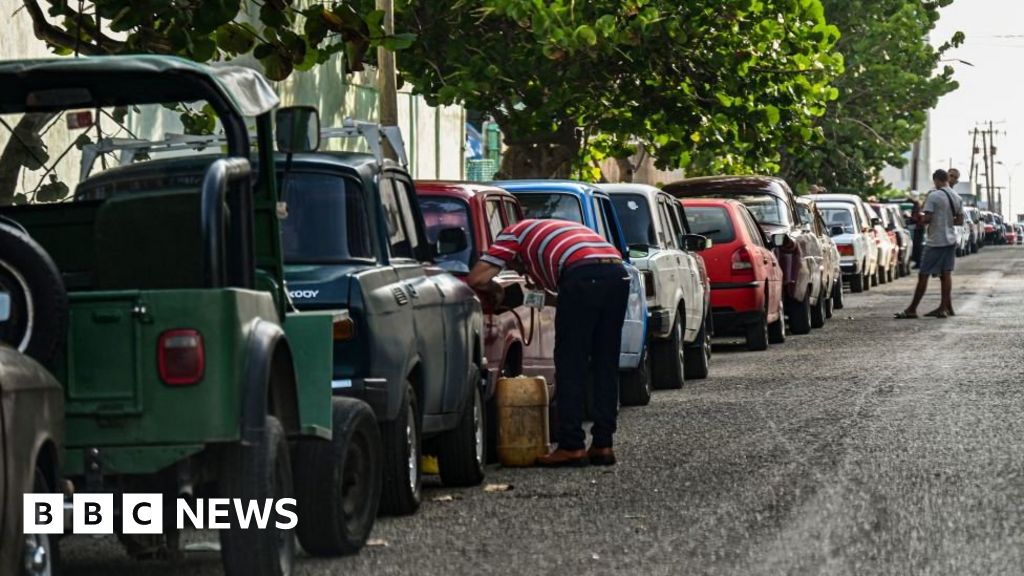
Díaz-Canel’s acknowledgment of hardship aligns with separate comments in which he admitted that Cuba lacks fuel for nearly all essential activities, though he claimed propaganda efforts remain exempt from such shortages. This contradiction has drawn criticism from independent Cuban outlets and international observers, who note that state-backed media and government events continue to operate normally while ordinary citizens struggle to access basic necessities.
The Cuban president similarly accused the United States of deliberately creating confusion around fuel supplies to sustain the economic blockade, a claim echoed by Cuba’s foreign minister in recent statements. According to Cuban officials, U.S. Actions are designed to exacerbate instability on the island and justify continued sanctions, despite ongoing diplomatic talks between the two nations that have so far yielded no concrete agreements on economic cooperation or migration.
Meanwhile, civil society groups and legal experts have argued that the U.S. Embargo and related sanctions violate international humanitarian law, including the Geneva Conventions, by restricting access to medicine and other essential goods. While the U.S. Government maintains that the sanctions target the Cuban military and security apparatus rather than the general population, humanitarian organizations report that the measures have had a disproportionate impact on civilians, particularly in access to healthcare and food security.
As of April 2026, no high-level meetings between U.S. And Cuban officials have resulted in binding agreements to ease restrictions or improve living conditions on the island. Díaz-Canel reiterated that any future changes must come from internal processes and the will of the Cuban people, not from foreign interference. He rejected suggestions that leadership change should be conditioned on U.S. Approval, insisting that sovereignty and self-determination remain central to Cuba’s political stance.
The situation remains fluid, with no announced date for further bilateral talks. Observers suggest that the next significant development will depend on whether the U.S. Administration adjusts its approach to engagement with Cuba or maintains its current policy framework. For updates on U.S.-Cuba relations and humanitarian conditions in Cuba, readers are encouraged to consult official statements from the U.S. State Department and the Cuban Ministry of Foreign Affairs.
We invite our global audience to share perspectives on this developing story in the comments section below and to help spread awareness by sharing this article across social platforms.
Keep reading