
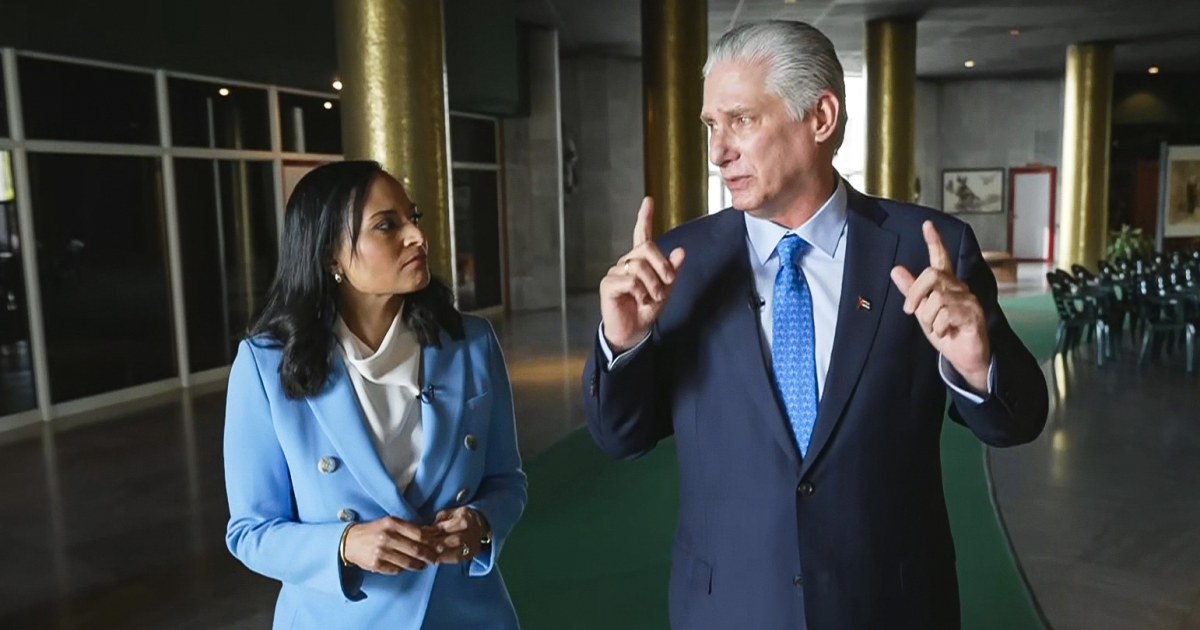
Cuban President Miguel Díaz-Canel has issued a stark warning regarding the possibility of military intervention by the United States, stating that Cuba is prepared to fight and that its citizens would be willing to die to defend the nation. The comments come amid a period of heightened tension and a concerted pressure campaign led by U.S. President Donald Trump against the communist government in Havana.
In a wide-ranging interview with NBC News’ “Meet the Press,” conducted in Havana, Díaz-Canel positioned Cuba as a sovereign state that will not be swayed by foreign demands or threats of force. While the Cuban leader emphasized a preference for diplomatic dialogue to avoid a regional crisis, he made it clear that the government’s resolve to maintain its current political structure is absolute.
The interview marks a significant moment in U.S.-Cuba relations, as it represents Díaz-Canel’s first American broadcast interview. Throughout the discussion, the president rejected the notion that the U.S. Government has any mandate over Cuba’s internal leadership or its constitutional order, signaling a hardening of the island’s stance in the face of increasing external pressure.
Defending National Sovereignty Against Military Aggression
Addressing the possibility of a U.S. Invasion, Díaz-Canel described such an action as “irrational” and warned that it would jeopardize the security of not only Cuba but also the United States and the broader region. He argued that there is no justification for the U.S. To launch military aggression against the island.
Despite the preference for peace, the Cuban president was explicit about the consequences of a military clash. “If that happens, there will be fighting, and there will be a struggle, and we will defend ourselves, and if we need to die, we’ll die, as as our national anthem says, ‘Dying for the homeland is to live,’” Díaz-Canel stated, as reported by NBC News.
This rhetoric underscores a commitment to national defense that mirrors the historical revolutionary stance of the Cuban state. By invoking the national anthem, Díaz-Canel is framing the defense of the current government as an existential struggle for the homeland, rather than a mere political dispute between two administrations.
Refusal to Step Down Amid U.S. Pressure
A central point of the interview involved the question of leadership stability. When asked by journalist Kristen Welker if he would be willing to step down if doing so would save Cuba, Díaz-Canel responded by questioning if the inquiry originated from the U.S. State Department.
Díaz-Canel firmly rejected the idea that his position is subject to American approval. “In Cuba, the people who are in leadership position are not elected by the U.S. Government, and they don’t have a mandate from the U.S. Government. We have a free sovereign state,” he told the network, according to AP News.
The president further argued that his leadership is derived from a mandate by the Cuban people rather than personal or party ambition. He stated that if the Cuban people determined he was unfit for office, he would respond to them, but he would not concede his position due to pressure from Washington.
Rejection of Political Concessions and Human Rights Demands
The interview also touched upon several key demands frequently raised by the U.S. Government and international human rights organizations. These include the release of political prisoners, the scheduling of multiparty elections, and the recognition of independent unions and a free press.
Díaz-Canel dismissed these demands, asserting that they are not subject to negotiation with the United States. He characterized these issues as being “extensively manipulated” and stated that they fall under Cuba’s own political system and constitutional order, which he maintains should be respected as part of the nation’s sovereignty.
This refusal to develop political concessions suggests a stalemate in diplomatic relations. By categorizing these demands as internal constitutional matters, the Cuban leadership is effectively closing the door on using these specific reforms as bargaining chips for the relief of U.S. Pressure or sanctions.
The Logic of Dialogue vs. Confrontation
While the tone of the interview was one of defiance, Díaz-Canel repeatedly stressed the “logic of dialogue.” He argued that engaging in discussions and debates to reach agreements is the only rational way to move the two nations away from the brink of confrontation.

The tension is heightened by the current geopolitical climate, specifically the “pressure campaign” orchestrated by the Trump administration. This strategy has typically involved a combination of economic sanctions and diplomatic isolation intended to force political change within the Cuban government.
For the global community, the rhetoric from Havana signals that the Cuban government views the current U.S. Approach as a threat to its survival, leading to a defensive posture that prioritizes regime stability and national sovereignty over diplomatic compromise.
Key Takeaways from the Díaz-Canel Interview
- Military Resolve: Cuba is prepared to defend itself against a U.S. Invasion, with the president stating they would “die” to protect the homeland.
- Leadership Stability: Miguel Díaz-Canel explicitly refused to step down, asserting that his mandate comes from the Cuban people, not the U.S. Government.
- No Political Concessions: The Cuban government will not negotiate on multiparty elections, the release of political prisoners, or free press guarantees, citing constitutional sovereignty.
- Call for Dialogue: Despite the defiance, Díaz-Canel maintains that dialogue is the only rational alternative to a costly and irrational military conflict.
As the United States continues its pressure campaign, the international community will be watching for any shift in the diplomatic rhetoric or the implementation of further sanctions. The next critical indicator of the relationship will be whether both nations move toward the “logic of dialogue” mentioned by Díaz-Canel or if the current path toward confrontation continues.
We invite our readers to share their perspectives on these developments in the comments section below. How should the international community navigate the tensions between the U.S. And Cuba?