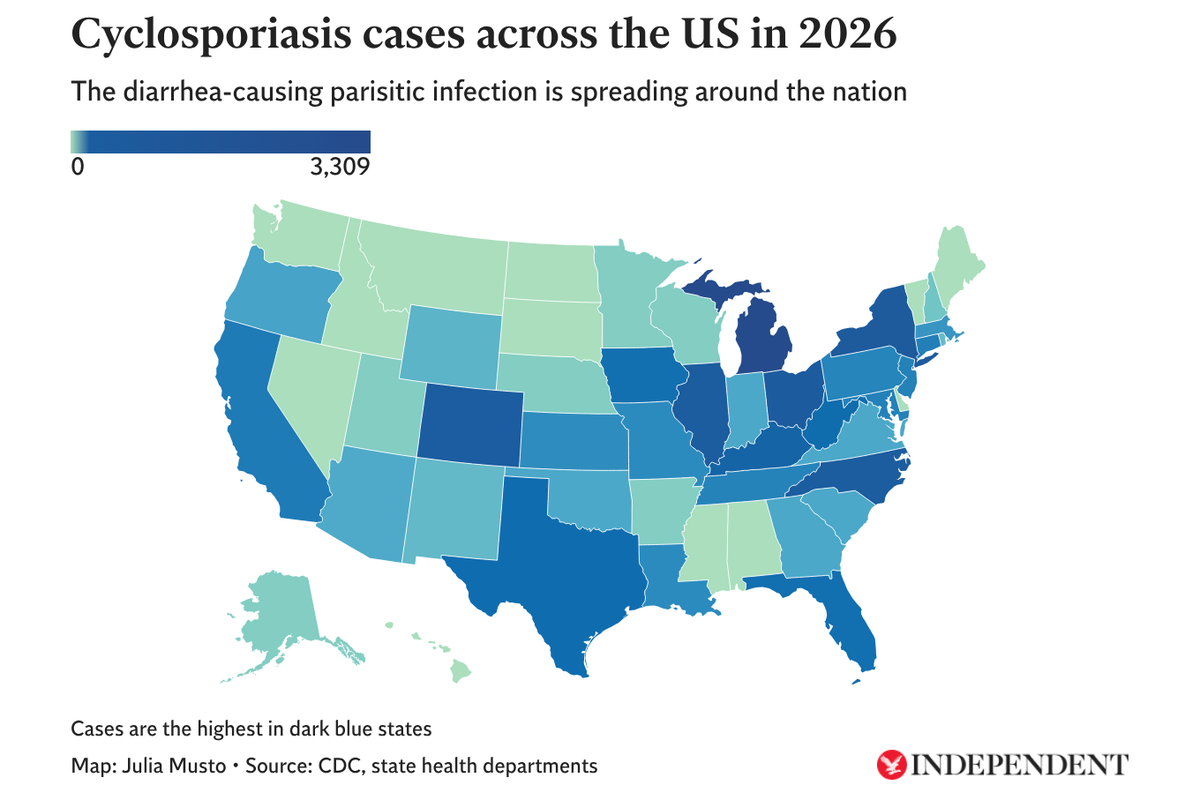
Public health officials are monitoring a rise in cyclosporiasis cases across the United States, with significant clusters reported in New York and Michigan as part of a broader, multi-state trend. Cyclosporiasis is an intestinal infection caused by the microscopic parasite Cyclospora cayetanensis, which is typically transmitted through the consumption of contaminated food or water. While annual seasonal increases are common, the current geographic spread has prompted ongoing investigations by state and federal health agencies to identify specific sources of infection.
According to the Centers for Disease Control and Prevention (CDC), cyclosporiasis remains a reportable condition, meaning healthcare providers are required to notify public health authorities when cases are identified. The infection is characterized by watery diarrhea, which can be severe and persistent, often accompanied by loss of appetite, weight loss, stomach cramps, bloating, increased gas, nausea, and fatigue. If left untreated, symptoms may last for weeks or even months, often appearing to improve before returning.
Tracking the Current Outbreak Patterns
Health departments in New York and Michigan have issued advisories following an uptick in confirmed reports. In New York, the State Department of Health tracks cases annually, noting that the parasite thrives in warmer climates and is frequently linked to imported produce, such as fresh berries, basil, cilantro, and lettuce. The New York State Department of Health emphasizes that transmission does not occur directly from person to person; rather, the parasite must be ingested via contaminated sources.
Michigan health officials have similarly alerted residents to remain vigilant regarding food safety practices. The infection, often referred to colloquially due to its primary gastrointestinal symptoms, requires laboratory testing for confirmation. Because symptoms can mimic other gastrointestinal illnesses, the Michigan Department of Health and Human Services (MDHHS) advises individuals experiencing persistent diarrhea—especially those with recent travel history to endemic regions or those who have consumed fresh produce—to consult a healthcare provider for specific diagnostic testing.
Understanding Transmission and Prevention
The Cyclospora parasite is distinct from other common foodborne pathogens like Salmonella or E. coli because it requires time—often days or weeks—to become infectious after being shed in human feces. This environmental maturation process means that the parasite cannot be transmitted directly from one person to another. Instead, it is usually contracted by eating food or drinking water that has been contaminated with the parasite.
The U.S. Food and Drug Administration (FDA) works alongside the CDC to trace potential outbreaks to specific farms or processing facilities. Because the parasite is difficult to remove from fresh produce, prevention focuses on rigorous washing and the implementation of food safety standards at the agricultural level. While washing produce is recommended, the FDA notes that it may not eliminate the parasite entirely if it has adhered to the surface or infiltrated the produce.
Clinical Management and Treatment
For patients diagnosed with cyclosporiasis, the standard course of treatment involves a specific combination of antibiotics, typically trimethoprim-sulfamethoxazole (TMP-SMX). According to clinical guidelines maintained by the CDC for healthcare professionals, patients who are allergic to sulfa drugs may require alternative treatment regimens, which should be determined by a physician based on individual medical history.
Public health experts stress that rehydration is a critical component of recovery, particularly for vulnerable populations such as the elderly or those with compromised immune systems. Because the infection can lead to significant fluid loss, maintaining electrolyte balance is essential while the antibiotic therapy takes effect. Patients are generally advised to follow up with their healthcare provider if symptoms do not improve within a few days of starting treatment.
Next Steps for Public Health Monitoring
The investigation into current case counts is ongoing. State health departments continue to aggregate data and coordinate with the CDC’s national surveillance program to detect potential clusters that could point to a common food source. These investigations are typically complex, requiring detailed interviews with patients about their dietary habits in the weeks preceding symptom onset.
Residents are encouraged to monitor updates from their local health departments for specific food recall notices or safety alerts. The next major update from federal agencies regarding national case totals is expected as part of the CDC’s seasonal surveillance reporting, which typically continues through the summer and early autumn months. For the latest guidance on food safety, citizens are directed to the official CDC food safety portal. Readers are encouraged to share this information with their communities to ensure awareness of proper produce handling and symptom recognition.