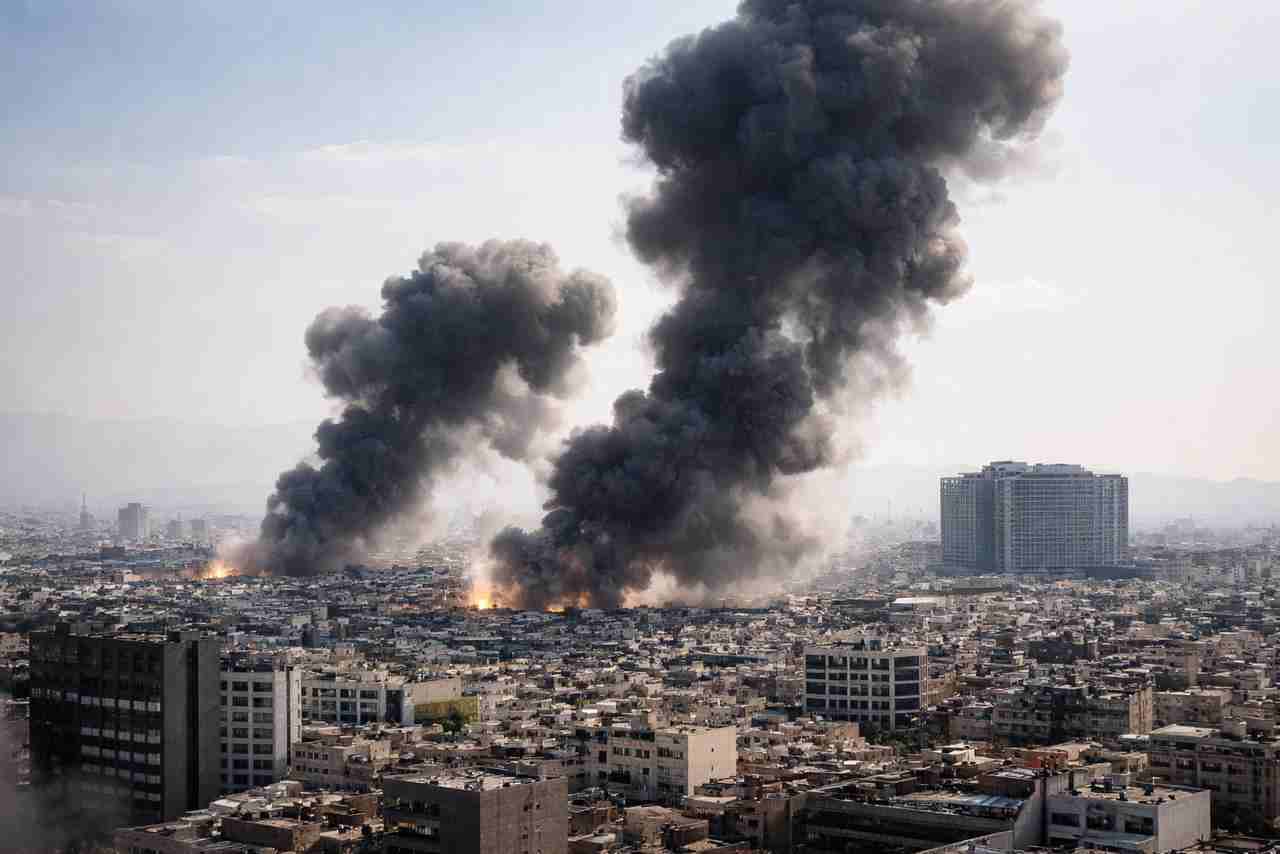
Sofia, Bulgaria – Concerns are mounting across Europe following recent escalations in regional tensions, prompting calls for a unified response to perceived threats. Former Italian Foreign Minister and current Senator Giulio Terzi di Sant’Agata has asserted that “Europe is under attack,” framing recent events not as isolated incidents but as a deliberate signal directed at the entire European community. This assessment comes amid heightened scrutiny of security vulnerabilities, particularly in the Eastern Mediterranean, and a growing debate over the need for a more robust and coordinated European defense strategy. The situation demands a careful examination of the geopolitical landscape and the implications for European security architecture.
Terzi’s warning centers on the strategic importance of safeguarding all member states, arguing that any perceived weakness or fragmented response to threats against one nation undermines the collective security of the Union. He specifically highlighted the situation surrounding Cyprus, emphasizing its critical role as a strategic hub in the Eastern Mediterranean, vital for energy routes, maritime traffic, and military positioning. The island nation’s vulnerability, he contends, is not merely a local concern but a test of the EU’s resolve and its ability to protect its borders. This perspective underscores a broader anxiety about external pressures and the potential for escalating conflicts within Europe’s periphery. The need for a shift from formal solidarity to concrete political action is paramount, according to Terzi, to deter further aggression and maintain stability.
Cyprus as a Focal Point: A Test of European Credibility
Cipro: the red line, a border that tests the credibility of the European Union.
The recent developments concerning Cyprus are increasingly viewed as a critical juncture for the European Union. Terzi di Sant’Agata’s analysis suggests that the situation represents a “credibility test” for the entire bloc. The principle of collective security dictates that Europe cannot afford to adopt a selective approach to security, differentiating between core and peripheral member states. In a rapidly evolving geopolitical environment, geographical distinctions are becoming increasingly irrelevant. The Eastern Mediterranean, in particular, has re-emerged as a crucial crossroads of global interests and regional tensions, making every point within the region strategically significant for the stability of the entire Union. This assessment aligns with broader concerns about the increasing complexity of security challenges facing Europe, including hybrid warfare, cyberattacks, and the proliferation of non-state actors.
While acknowledging the encouraging signs of unity demonstrated by several European nations during recent security discussions, Terzi emphasizes that mere declarations of support are insufficient. A cohesive and consistent stance is essential to establish a credible defense posture. This requires demonstrating an unwavering commitment to protecting every member state with equal determination, thereby bolstering the EU’s deterrent capabilities and projecting an image of a unified geopolitical actor. The challenge lies in translating political will into concrete actions and establishing a framework for collective defense that is both effective, and sustainable. The European Union’s ability to navigate these complexities will be crucial in shaping its future role on the global stage.
From Rhetoric to Action: Strengthening European Deterrence

European deterrence takes shape: from idea to concrete action for security.
The progress made by European institutions in addressing security concerns is a positive step, but the operational aspects remain a critical challenge. Effective unity necessitates the development of concrete tools, efficient coordination mechanisms, and a robust deterrent capacity. If Europe aspires to consolidate its position as a leading geopolitical actor, rather than remaining confined to the role of a large market, it must demonstrate through tangible actions that its internal cohesion can withstand direct and significant pressures on its borders. The mere articulation of principles, while important, is no longer sufficient to address the current challenges. This requires a fundamental reassessment of European security policies and a willingness to invest in the capabilities necessary to defend its interests.
Giulio Terzi di Sant’Agata, currently serving as President of the 4th Commission for European Union Policies in the Italian Senate, was appointed to that role on November 10, 2022 according to his Wikipedia profile. He was elected as a Senator for Fratelli d’Italia on October 13, 2022, representing the Lombardy constituency. His previous roles include serving as Italy’s Minister of Foreign Affairs from November 16, 2011, to March 26, 2013, under the Monti government, and as Italy’s Ambassador to the United States from October 1, 2009, to November 16, 2011. His extensive diplomatic experience informs his current assessment of the European security landscape. The assertion that “Europe is under attack” is not presented as an abstract alarm but as an inescapable reality demanding immediate and decisive action. Cyprus, serves as a crucial “red line” for the entire European Union. A unified and resolute response will significantly strengthen the EU’s international credibility, while hesitation or fragmentation could have dangerous consequences, undermining the foundations of European security and cohesion for the future.
The evolving geopolitical situation in the Mediterranean also necessitates a broader consideration of energy security. Cyprus’s strategic location makes it a key player in the Eastern Mediterranean gas pipeline projects, such as the EastMed pipeline, which aims to transport natural gas from Israeli and Cypriot waters to Europe. Reuters reported in June 2022 that the project faced uncertainty following a shift in US policy. Protecting these critical energy infrastructure assets is vital for ensuring Europe’s energy independence and resilience. The potential for disruptions to energy supplies adds another layer of complexity to the security challenges facing the region.
The Broader Context: Regional Instability and External Actors
The concerns raised by Terzi di Sant’Agata are not isolated to the situation in Cyprus. The broader Eastern Mediterranean region is characterized by a complex web of geopolitical rivalries and conflicts, involving actors such as Turkey, Greece, Israel, and Egypt. These tensions are exacerbated by ongoing conflicts in Syria and Libya, as well as the presence of non-state actors, including terrorist groups. The increasing involvement of external powers, such as Russia and China, further complicates the security landscape. Europe must navigate these challenges carefully, balancing its interests with the need to maintain stability and prevent further escalation. A comprehensive approach to security requires addressing the root causes of conflict, promoting dialogue and cooperation, and strengthening regional partnerships.
the rise of hybrid warfare tactics, including cyberattacks, disinformation campaigns, and economic coercion, poses a significant threat to European security. These tactics are often employed by state and non-state actors to undermine democratic institutions, sow discord, and destabilize societies. Europe must invest in its cybersecurity capabilities, strengthen its resilience to disinformation, and develop effective strategies to counter hybrid threats. This requires a coordinated effort involving governments, businesses, and civil society organizations.
The European Union’s commitment to multilateralism and international law remains a cornerstone of its foreign policy. However, the effectiveness of these principles is increasingly challenged by a changing global order. The rise of nationalism and populism in Europe and elsewhere has led to a questioning of the benefits of international cooperation. Europe must reaffirm its commitment to multilateralism and work with its allies to uphold the rules-based international order. This requires a willingness to engage in constructive dialogue, compromise, and collective action.
Looking ahead, the next key checkpoint will be the European Council meeting scheduled for March 21-22, 2024, where security issues are expected to be a central topic of discussion. The outcome of this meeting will provide further insight into the EU’s response to the evolving security challenges facing the continent. Readers are encouraged to share their perspectives and engage in constructive dialogue on these critical issues in the comments section below.
Related reading