The Anatomy of On-Court Outbursts in Tennis: A Deep Dive into Medvedev’s US Open Incident
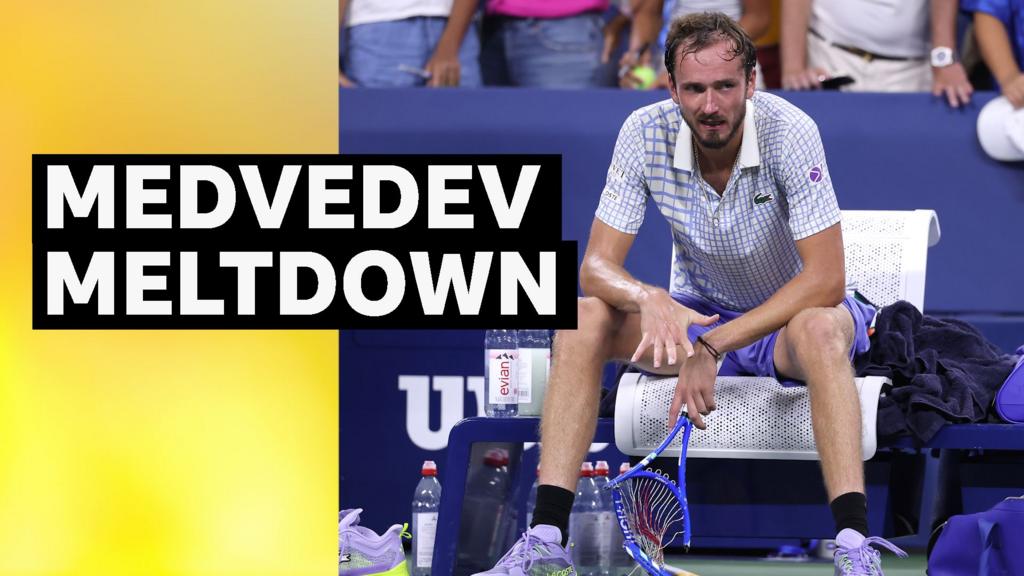
The image of Daniil Medvedev smashing his racquet after his US Open clash with Benjamin Bonzi, a match already marred by a disruptive court intrusion, quickly went viral. But this wasn’t simply a display of frustration; it was a culmination of factors common in the high-pressure world of professional tennis. This article dissects the incident, exploring the psychological triggers, the rules surrounding such outbursts, the impact on players and the sport, and how these moments are evolving in the modern game. We’ll go beyond the headline to understand the complex dynamics at play when a player reaches their breaking point.
Understanding the Pressure Cooker: Psychological Triggers
Professional tennis is a uniquely isolating and demanding sport. Players endure grueling travel schedules, intense physical exertion, and constant scrutiny. the stakes are incredibly high, with careers frequently enough defined by performance in major tournaments like the US Open.
Several psychological factors contribute to on-court outbursts:
* High Expectations: Players like Medvedev often carry the weight of national pride and personal ambition.
* Perfectionism: The pursuit of flawless performance can lead to intense self-criticism.
* Frustration tolerance: A low tolerance for perceived injustice or errors can quickly escalate.
* Momentum Shifts: Losing a crucial point, or a series of points, can trigger a cascade of negative emotions.
* external Factors: As seen in the Bonzi match, external disruptions – like a photographer entering the court - can be the final straw.
The bonzi-Medvedev Incident: A Case Study in Escalation
The delay caused by the photographer at match point was a significant catalyst. Umpire Greg Allensworth’s decision to allow a re-serve ignited Medvedev’s fury.This wasn’t just about losing a point; it was about a perceived injustice impacting the outcome of a crucial match. The six-minute and 24-second delay likely amplified Medvedev’s frustration, giving him time to dwell on the situation.
His racquet smash, while unacceptable, was a visible manifestation of this boiling point. It’s a primal reaction, a release of pent-up tension. While Medvedev ultimately fought back to force a fifth set, the initial disruption and the perceived unfairness clearly affected his performance.
Rules and Penalties: Navigating the code of Conduct
Tennis has a strict code of conduct governing player behavior. The International Tennis Federation (ITF) outlines penalties for various offenses, including:
* Verbal Abuse: Directed towards officials, opponents, or spectators.
* Visible Obscenity: Using offensive language.
* Abuse of Equipment: Racquet smashing falls into this category.
* Unsportsmanlike Conduct: Any behavior deemed detrimental to the sport.
Penalties typically escalate from warnings to point penalties, game penalties, and ultimately, disqualification. Medvedev received a warning for his racquet smash.The severity of the penalty depends on the nature of the offense and the umpire’s discretion.
| Offense | First Offense | Second Offense | Subsequent Offenses |
|---|---|---|---|
| Verbal Abuse | Warning | Point Penalty | Game Penalty/Default |
| abuse of Equipment | warning | Point Penalty | game Penalty/Default |
| Unsportsmanlike Conduct | Warning | Point Penalty | Game Penalty/Default |
the Evolution of On-Court
Related reading