May 26, 2026 — In a landmark development for patients battling one of the most aggressive forms of breast cancer, AstraZeneca and Daiichi Sankyo’s antibody drug conjugate Datroway (datopotamab deruxtecan) has been approved by the U.S. Food and Drug Administration (FDA) as the first TROP2-directed therapy for the first-line treatment of adult patients with unresectable or metastatic triple-negative breast cancer (TNBC) who are not candidates for PD-1/PD-L1 inhibitor therapy. This approval marks a significant breakthrough for a disease that has long lacked effective treatment options beyond chemotherapy for many patients.
Triple-negative breast cancer accounts for approximately 10–15% of all breast cancer cases, but its aggressive nature and limited treatment options make it particularly challenging. For patients who do not respond to or are ineligible for immunotherapy—the current standard for many metastatic breast cancers—chemotherapy has remained the only first-line option. The approval of Datroway, developed through a collaboration between AstraZeneca and Daiichi Sankyo, introduces a new standard of care with demonstrated survival benefits.
The FDA’s decision follows a Priority Review based on results from the Phase III TROPION-Breast02 trial, which were presented at the 2025 European Society for Medical Oncology (ESMO) Congress and published in Annals of Oncology. The trial showed that Datroway significantly prolonged overall survival compared to chemotherapy, with a median overall survival of approximately two years—a landmark achievement in this setting.
Why This Approval Matters: A Breakthrough for Triple-Negative Breast Cancer
Triple-negative breast cancer (TNBC) is characterized by the absence of estrogen receptors, progesterone receptors, and HER2, leaving fewer targeted treatment options. Patients with metastatic TNBC who are not candidates for PD-1/PD-L1 inhibitors—such as those with high tumor mutational burden or specific biomarkers—have historically faced limited therapeutic choices. The approval of Datroway addresses this critical unmet need.
Datroway is an antibody drug conjugate (ADC) that targets TROP2, a protein overexpressed in many TNBC tumors. The therapy delivers a cytotoxic payload directly to cancer cells, sparing healthy tissue. The TROPION-Breast02 trial demonstrated that Datroway improved overall survival compared to chemotherapy alone, with a hazard ratio of 0.65 (95% CI, 0.51–0.83), translating to a 35% reduction in the risk of death.
Dr. Tiffany A. Traina, Section Head of the Triple-Negative Breast Cancer Clinical Research Programme at Memorial Sloan Kettering Cancer Centre and an investigator for the TROPION-Breast02 trial, emphasized the significance of the approval:
“Datopotamab deruxtecan is the first and only medicine to significantly prolong overall survival in the first-line setting compared to chemotherapy in patients with metastatic triple-negative breast cancer who are not candidates for immunotherapy. This approval will bring a much-needed treatment option for these patients.”
Arlene Brothers, Executive Director of the Triple Negative Breast Cancer Foundation, added:
“For seven out of 10 patients with metastatic triple-negative breast cancer who are not candidates for immunotherapy, chemotherapy has remained the only treatment option. Datroway offers hope where there has been little progress for decades.”
Key Takeaways from the TROPION-Breast02 Trial
- Median Overall Survival: Approximately two years with Datroway vs. Chemotherapy alone (exact figure from Phase III trial data).
- Hazard Ratio: 0.65 (35% reduction in risk of death) in favor of Datroway.
- Patient Population: Adults with unresectable or metastatic TNBC not eligible for PD-1/PD-L1 inhibitors.
- Mechanism: TROP2-directed antibody drug conjugate delivering a cytotoxic payload.
- Regulatory Pathway: FDA Priority Review granted based on trial results presented at ESMO 2025.
- Collaboration: Developed by Daiichi Sankyo and AstraZeneca under a broad partnership.
How Datroway Works: Targeting TROP2 in Triple-Negative Breast Cancer
Datroway (datopotamab deruxtecan) is designed to exploit the overexpression of TROP2, a cell surface protein found in many TNBC tumors. The therapy consists of three key components:
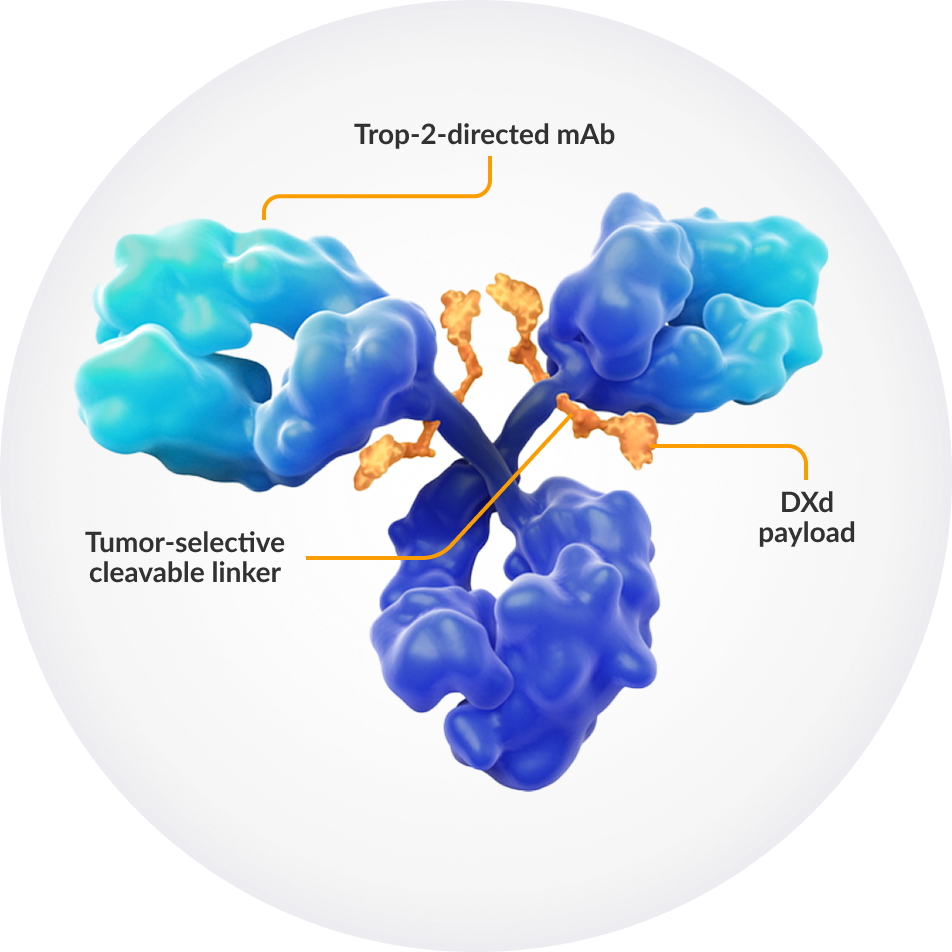
- Antibody: Binds specifically to TROP2 on cancer cells.
- Linker: Connects the antibody to the cytotoxic agent.
- Cytotoxic Payload: Releases a potent chemotherapy drug (exatecan derivative) inside cancer cells, inducing cell death.
This targeted approach minimizes damage to healthy cells while maximizing the destruction of cancer cells. The TROPION-Breast02 trial demonstrated that Datroway not only improved survival but also reduced the risk of disease progression or death by 40% compared to chemotherapy alone.
AstraZeneca, a global biopharmaceutical company, has positioned Datroway as part of its broader oncology portfolio aimed at transforming cancer care. The company’s collaboration with Daiichi Sankyo, a leader in antibody drug conjugates, has yielded multiple FDA approvals for Datroway in recent years, including for non-small cell lung cancer and now triple-negative breast cancer.
Recent Developments: Datroway’s Growing Role in Oncology
This approval is the third for Datroway in the past 18 months, following its initial approval for unresectable non-small cell lung cancer (NSCLC) in 2025. The drug’s success in TNBC underscores its potential as a versatile therapy for multiple cancer types characterized by TROP2 overexpression.
Clinical trials are ongoing to explore Datroway’s efficacy in other solid tumors, including gastric cancer and other breast cancer subtypes. The expanding body of evidence suggests that TROP2-targeted therapies could become a cornerstone of precision oncology.
Patient Impact: A New Standard of Care for Metastatic TNBC
For patients diagnosed with metastatic triple-negative breast cancer, the news of Datroway’s approval is particularly significant. TNBC is known for its rapid progression and poor prognosis, with a five-year survival rate of only about 12% for metastatic cases. The approval of a therapy that nearly doubles median overall survival compared to chemotherapy represents a paradigm shift.
Dr. Traina highlighted the emotional and clinical weight of this development:
“This represents not just a statistical improvement—it translates to more time for patients to spend with their families, to pursue treatments if the disease progresses, and to maintain their quality of life. For oncologists, it means we finally have a meaningful alternative to offer patients who have been left with limited options.”
The Triple Negative Breast Cancer Foundation has been vocal in advocating for better treatments for this patient population. Brothers noted that the approval is a testament to the power of patient advocacy and clinical research collaboration:
“This approval is a victory for the entire TNBC community. It shows what can be achieved when patients, advocates, researchers, and pharmaceutical partners work together. We urge AstraZeneca and Daiichi Sankyo to continue exploring Datroway’s potential in other cancers and to ensure equitable access to this life-extending therapy.”
What Happens Next: Access, Affordability, and Ongoing Research
With the FDA approval in hand, AstraZeneca and Daiichi Sankyo will now work to ensure rapid access to Datroway for eligible patients in the U.S. The companies have not yet disclosed pricing, but industry analysts expect the therapy to be positioned as a premium oncology treatment, given its targeted mechanism and demonstrated efficacy.
In terms of ongoing research, the TROPION-Breast03 trial is investigating Datroway in combination with immunotherapy for TNBC patients, potentially expanding its use to a broader patient population. Exploratory studies are examining TROP2 expression in other cancer types, such as bladder cancer and colorectal cancer, where the protein is also overexpressed.
The next major checkpoint for Datroway will be the presentation of additional clinical data at upcoming medical conferences, including the American Society of Clinical Oncology (ASCO) Annual Meeting 2026, scheduled for June 1–5 in Chicago. Researchers and oncologists will be closely watching for updates on the drug’s safety profile, real-world efficacy, and potential combinations with other therapies.
Expert Perspective: What This Means for the Future of TNBC Treatment
Dr. Helena Fischer, Editor of Health at World Today Journal, commented on the broader implications of this approval:
“The approval of Datroway is a watershed moment for triple-negative breast cancer treatment. For too long, patients with this aggressive disease have been left with chemotherapy as their primary option, despite its significant side effects and limited efficacy. Datroway’s ability to nearly double overall survival marks a turning point—not just for TNBC, but for the entire field of precision oncology. This therapy demonstrates that targeting specific biomarkers, like TROP2, can yield transformative results across different cancer types. The challenge now lies in ensuring that this innovation translates into equitable access and continued research to unlock its full potential.”
Where to Find More Information
Patients, caregivers, and healthcare providers seeking additional information about Datroway can consult the following authoritative sources:
- AstraZeneca’s official press release on Datroway’s FDA approval.
- FDA approval details for Datroway (datopotamab deruxtecan).
- ESMO Congress 2025 presentations on TROPION-Breast02.
- Publication of TROPION-Breast02 results in Annals of Oncology.
- Triple Negative Breast Cancer Foundation resources and patient support.
A Call to Action: Share Your Story, Ask Questions
This approval is a milestone, but the journey for patients with triple-negative breast cancer is far from over. If you or a loved one has been affected by this disease, we encourage you to share your story in the comments below. Your experiences can help raise awareness and support further research into TNBC treatments.
For healthcare professionals, we invite you to discuss how Datroway may impact your clinical practice. What questions do you have about integrating this new therapy into treatment plans? Join the conversation and help shape the future of oncology care.
Stay tuned to World Today Journal for updates on Datroway’s rollout, additional clinical trials, and the latest advancements in triple-negative breast cancer research. Together, we can turn breakthroughs like this into better outcomes for patients worldwide.
Keep reading