
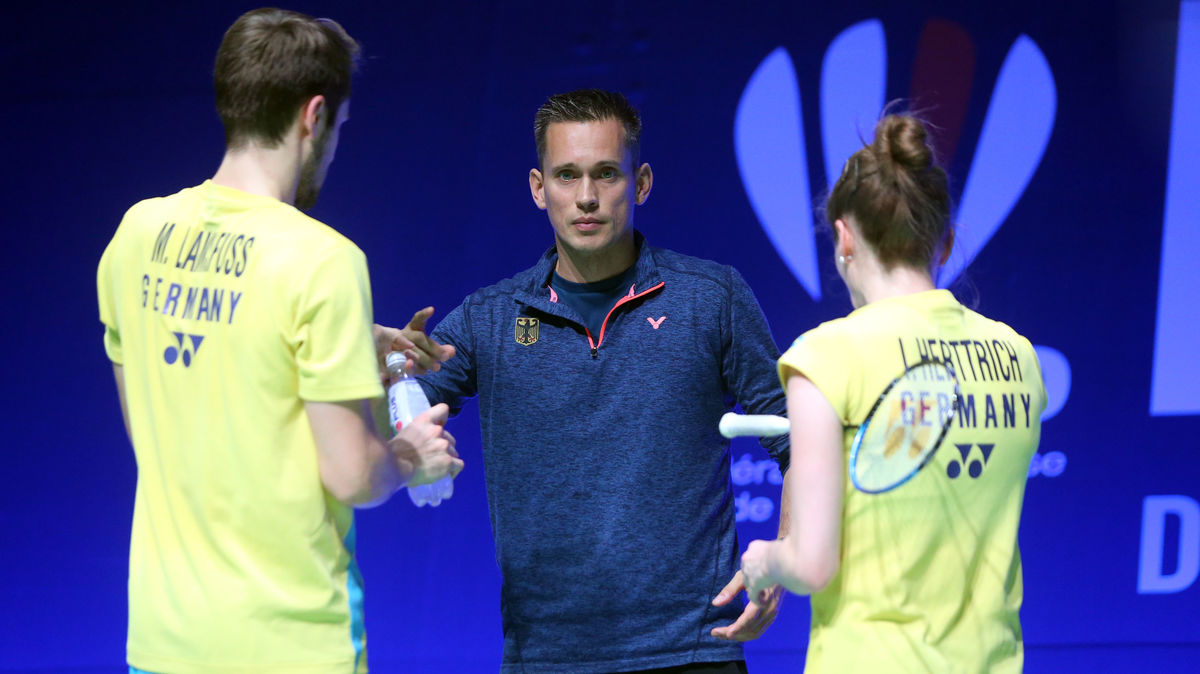
The German Badminton Association (Deutscher Badminton Verband, or DBV) continues to strengthen the professional standards of coaching across Germany through its targeted educational initiatives. As part of the B-Trainer-Leistungssport Ausbildung Nord (B-Trainer Competitive Sports Training North), the DBV is facilitating a practice-oriented training course designed to bridge the gap between theoretical knowledge and on-court application for coaches.
This initiative reflects the DBV’s broader commitment to a structured hierarchy of coaching qualifications. By focusing on “praxisnahen” (practice-oriented) learning, the association ensures that trainers are not only equipped with the certifications required by the German Olympic Sports Confederation (DOSB) but are too capable of implementing these strategies in real-world competitive environments.
For the global sporting community, these developments highlight the rigorous nature of German athletic certification. The transition from a C-license to a B-license represents a significant leap in responsibility, shifting the focus toward high-performance athletics and the systematic development of elite talent.
Understanding the DBV Coaching Hierarchy
To understand the significance of the B-Trainer training in the North region, one must appear at the comprehensive framework established by the Deutscher Badminton Verband. The association offers a tiered system of education and continuing professional development to ensure quality across all levels of the sport.
The current training pathways provided by the DBV include:
- Trainer A (Competitive Sports): The highest level of certification for elite performance coaching.
- Trainer B (Competitive Sports): Focused on high-level athletic development and competitive success.
- Trainer B (Grassroots/Breitensport): Aimed at broad participation and community-level coaching.
- Trainer C and Trainer Assistant (Trassi): The entry-level certifications providing the foundational knowledge required to begin coaching.
The distinction between these levels is not merely nominal. According to the Niedersächsischer Badminton-Verband (NBV), an “Ausbildung” (initial training) is a curricular process designed to prepare a candidate for a protected coaching activity, concluding with a formal license. In contrast, “Weiterbildung” (further education) is the organized resumption of learning to expand an existing qualification, such as moving from a C-license to a B-license.
The Role of Continuing Education and License Validity
A critical component of the DBV’s system is the requirement for ongoing certification. Licenses are not permanent; they must be renewed through documented “Fortbildung” (continuing education) to ensure that coaches stay current with evolving techniques and sports science.
The validity periods for these licenses are strictly regulated. Based on data from the Badminton-Verband Berlin-Brandenburg (BVBB), the durations are as follows:
| License Level | Validity Duration |
|---|---|
| DBV-Trainerassistent/-in | 4 Years |
| DOSB Trainer/-in C | 4 Years |
| DOSB Trainer/-in B | 3 Years |
| DOSB Trainer/-in A | 2 Years |
To extend these licenses, trainers must complete a minimum of 15 teaching units (LE), where one unit is defined as 45 minutes. This ensures that the “praxisorientierte” (practice-oriented) nature of the B-Trainer course in the North is not just a one-time event, but part of a lifelong learning cycle.
What Happens After a License Expires?
The system allows for a grace period known as the “Erhaltungszeitraum” (maintenance period). If a license expires, it does not vanish immediately but enters this period, allowing the coach time to complete the necessary continuing education requirements to regain full certification status.
The Impact of Digital Integration: WEBminton and Symposia
The DBV has modernized its approach to trainer education by integrating digital platforms. Starting in March 2021, the association launched “DBV-WEBminton,” utilizing the Racketmind platform and live sessions to disseminate knowledge more efficiently across different regions.
This digital shift is complemented by physical gatherings. The DBV has conducted trainer symposia since 2021, with recent events held in 2022, 2023 and March 2024. These symposia serve as a hub for networking and the exchange of best practices, mirroring the goals of the practice-oriented B-Trainer course in Neumünster by blending high-level theory with peer-to-peer practical application.
Why Practice-Oriented Training Matters
Badminton is characterized by its complexity, demanding a combination of technical precision, tactical intelligence, and athletic endurance. For a B-Trainer in competitive sports, the ability to translate a textbook strategy into a court-side instruction is the difference between a plateau and a breakthrough for an athlete.
By focusing on practice-oriented training, the DBV addresses the multifaceted requirements of the role. As noted by the BVBB, a trainer’s profile must encompass not only sport-specific components like technique and tactics but also competencies in sports science and didactics.
The B-Trainer-Leistungssport training in the North is designed to ensure that coaches can actively accompany athletes through their development and support their personal growth, moving beyond simple drill instruction to comprehensive athletic mentorship.
Key Takeaways for Aspiring Coaches
- Structured Path: Progression typically moves from Trainer Assistant $rightarrow$ C-Trainer $rightarrow$ B-Trainer $rightarrow$ A-Trainer.
- Mandatory Renewal: Licenses expire every 2 to 4 years depending on the level, requiring 15+ teaching units for extension.
- Hybrid Learning: The DBV utilizes both physical courses (like those in the North) and digital platforms (WEBminton) for education.
- Regulatory Oversight: Training content and duration are strictly prescribed by the DOSB and DBV.
For those seeking further information on current training offers, the DBV maintains a dedicated education portal and a newsletter to maintain trainers informed about upcoming deadlines and course availability.
The next scheduled updates regarding trainer symposia and the 2026 educational calendar are expected to be released via the official DBV communication channels. We encourage coaches and sports administrators to share this update and comment on the evolution of coaching standards in European racket sports.