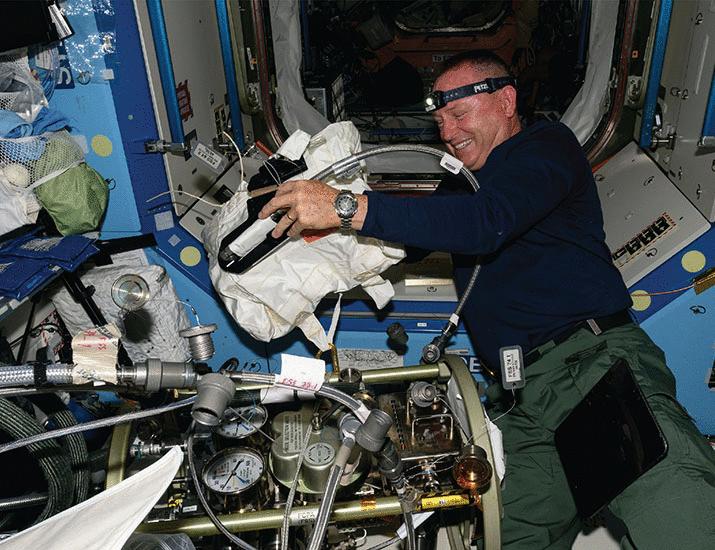
As humanity sets its sights on extended missions to the Moon and, eventually, Mars, a critical question looms large: how do we safeguard the health of astronauts during these unprecedented journeys? The challenges are immense, ranging from the physiological effects of prolonged exposure to cosmic radiation and microgravity to the psychological stresses of isolation and confinement. Medical preparedness for deep-space exploration is no longer a futuristic concern. it’s a present-day necessity, demanding innovative strategies and a renewed focus on the vital role of physicians in space travel. This growing field is drawing on advancements in artificial intelligence, virtual reality, and even genetic testing to address these complex health concerns, with potential benefits extending far beyond the cosmos and into everyday healthcare on Earth.
The necessitate for robust medical protocols in space isn’t new. Physicians have been integral to space programs almost from the beginning. According to a recent publication in The Lancet, 2025 marked 61 years since the first physician ventured into space, highlighting a long history of medical expertise supporting space exploration. The publication, titled “Physician-astronauts advancing deep space exploration” (TheLancet-D-25-05450), underscores how early space missions actively recruited doctors to serve as astronauts, recognizing their unique ability to maintain crew health and mission success during long-duration flights. Notably, both the longest single space missions undertaken by an American and a Canadian astronaut were completed by physicians.
The Unique Health Challenges of Deep Space
Deep space presents a unique constellation of health risks that terrestrial medicine is ill-equipped to handle without significant adaptation and innovation. Astronauts face heightened exposure to cosmic radiation, increasing their lifetime risk of cancer and cardiovascular diseases. The absence of gravity leads to bone density loss, vision impairments, and potential kidney problems. The psychological toll of prolonged isolation and confinement in a limited environment can lead to anxiety, depression, and other mental health challenges. These aren’t merely theoretical concerns; they are documented effects observed in astronauts during previous missions.
Dr. Farhan M. Asrar, physician, researcher, and Associate Dean at Toronto Metropolitan University’s (TMU) School of Medicine, has been at the forefront of researching these challenges. His recent article in Nature details cutting-edge research and technologies aimed at mitigating these risks. Asrar’s work highlights the potential of personalized medicine, tailored to individual genetic profiles, to enhance healthcare interventions during missions. This approach recognizes that astronauts will respond differently to the stresses of space, and treatment plans must be customized accordingly.
Leveraging Technology for Remote Healthcare
One of the most critical aspects of medical preparedness for deep space is the ability to provide healthcare remotely. With communication delays inherent in long-distance space travel, real-time consultation with Earth-based physicians may not always be feasible. Advancements in telemedicine and artificial intelligence (AI) are crucial. Asrar’s research emphasizes the importance of advanced remote healthcare, including telemedicine, for monitoring and supporting astronaut health. AI-driven diagnostic tools and decision-support systems can assist in real-time health assessments and emergency responses when immediate human expertise is unavailable.
The development of these technologies isn’t solely beneficial for space exploration. Telemedicine and AI-powered diagnostics have the potential to revolutionize healthcare access in remote and underserved communities on Earth. The innovations spurred by the demands of space travel can have a ripple effect, improving healthcare for populations facing similar challenges here at home. This synergy between space medicine and terrestrial healthcare is a key driver of research in this field.
The Role of Physician-Astronauts
The Lancet publication emphasizes the historical and continuing importance of physician-astronauts. The paper was co-authored with four experienced physician-astronauts, providing firsthand insights into the medical challenges of space travel: Dr. Andrew Morgan (NASA), Dr. Marco Sieber (European Space Agency), Dr. Carmen Possnig (European Space Agency), and Dr. Chiaki Mukai (Japan Aerospace Exploration Agency). Their contributions highlight the unique perspective and skillset that physicians bring to space missions. They are not only capable of providing medical care but also of conducting research and developing innovative solutions to the health challenges of space.
Dr. Mukai, a Japanese physician and astronaut, has flown on multiple Space Shuttle missions and is a strong advocate for the role of doctors in space. Dr. Morgan, a NASA astronaut and emergency physician, has spent significant time on the International Space Station, providing medical care to his crewmates and conducting research on the effects of spaceflight on the human body. These firsthand experiences are invaluable in shaping future medical protocols and technologies for deep-space missions.
Preparing for Lunar and Martian Missions
With the Artemis program aiming for crewed lunar missions by 2026 and aspirations for Mars expeditions thereafter, the urgency of addressing these medical challenges is increasing. The Artemis program, led by NASA, aims to establish a sustainable human presence on the Moon, serving as a stepping stone for future missions to Mars. These missions will require a comprehensive medical infrastructure, including advanced diagnostic tools, telemedicine capabilities, and a well-trained medical crew.
The challenges of a Mars mission are even greater, due to the longer travel time and increased distance from Earth. A round-trip mission to Mars could seize several years, requiring astronauts to be largely self-sufficient in terms of medical care. This necessitates the development of closed-loop life support systems, advanced medical technologies, and robust protocols for preventing and treating medical emergencies. The psychological challenges of such a long and isolated mission also require careful consideration and proactive mitigation strategies.
Looking Ahead: The Future of Space Medicine
The field of space medicine is rapidly evolving, driven by the demands of ambitious space exploration programs and the potential for groundbreaking discoveries. Ongoing research is focused on developing new technologies for radiation shielding, bone loss prevention, and mental health support. The use of virtual reality (VR) for training astronauts and providing psychological support is also being explored. Advancements in genetic testing may allow for the identification of astronauts who are predisposed to certain health risks, enabling personalized preventative measures.
The collaboration between space agencies, research institutions, and the medical community is essential for advancing this field. Sharing data, expertise, and resources will accelerate the development of innovative solutions to the health challenges of deep-space exploration. The benefits of this research will extend far beyond space travel, improving healthcare for all of humanity. The ongoing work of researchers like Dr. Asrar and the insights of physician-astronauts are paving the way for a future where humans can safely and sustainably explore the cosmos.
The next major milestone in this field will be the implementation of the medical protocols and technologies developed for the Artemis missions, beginning with the planned lunar landings in the coming years. These missions will provide valuable data and experience that will inform the planning of future Mars expeditions. Continued investment in space medicine research and development is crucial for ensuring the health and safety of astronauts and for unlocking the full potential of human space exploration.
What are your thoughts on the future of space medicine? Share your comments below, and let’s continue the conversation.
Related reading