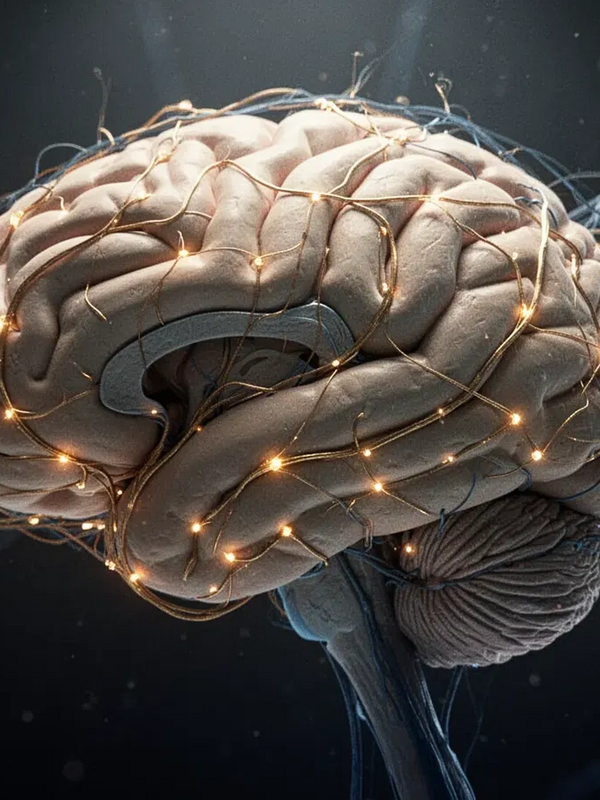
The Brain’s Quiet Center: New Research Illuminates the Default Mode Network
Our brains are never truly “off.” Even when we’re not actively engaged in a task, a complex network of brain regions remains active, a phenomenon neuroscientists call the default mode network (DMN). Recent studies are revealing the profound influence of this network – often described as the brain’s “resting state” – on a wide range of conditions, from the transformative changes of pregnancy to the challenges of attention-deficit/hyperactivity disorder (ADHS) and the complexities of chronic pain. This surge in research is prompting a paradigm shift in our understanding of brain function, suggesting the DMN isn’t simply background noise, but a crucial component of our identity, adaptability, and overall health.
For years, the DMN was largely overlooked, considered a sort of baseline activity while the brain prepared for more demanding tasks. Yet, increasingly sophisticated neuroimaging techniques are demonstrating its central role in self-reflection, social cognition, and even creativity. Researchers are now discovering that disruptions in DMN activity are linked to a variety of neurological and psychiatric conditions, opening up new avenues for diagnosis, and treatment. The Default Mode Network is a key area of focus for understanding the human brain and its complexities.
Pregnancy and the Rewiring of the Maternal Brain
The remarkable plasticity of the DMN is particularly evident during pregnancy. A study published in Nature Communications by researchers at the Amsterdam University Medical Center, led by Elseline Hoekzema, scanned the brains of 110 women, revealing significant changes in DMN activity across multiple pregnancies. The study found that the first pregnancy primarily alters the DMN regions responsible for self-reflection and social thinking. Subsequent pregnancies further refine this network, while simultaneously strengthening areas related to attention and sensory processing.
These neurological adaptations appear to prepare mothers biologically for the demands of multitasking and caring for multiple children. The researchers hypothesize that the enhanced attentional networks allow mothers to better manage the constant stream of stimuli and demands that approach with parenting. Importantly, these findings also offer potential insights into the early detection of postpartum depression, a condition affecting approximately 1 in 7 women after childbirth, according to the Centers for Disease Control and Prevention. By identifying changes in DMN activity, clinicians may be able to identify women at risk and intervene earlier.
ADHS: A Battle Within the Default Mode Network
For individuals with attention-deficit/hyperactivity disorder (ADHS), maintaining focus can be a daily struggle. New research from Bournemouth University suggests that this difficulty may stem from an overactive default mode network. A study involving 627 young adults revealed that individuals with ADHS exhibit an uninhibited activation of the DMN, leading to frequent mind-wandering and difficulty concentrating on tasks.
The study, as reported by ADxS.org, indicates that this internal “noise” isn’t simply a distraction, but rather an involuntary process. In some cases, individuals with ADHS even consciously activate their DMN as a form of internal stimulation. This suggests that ADHS isn’t solely a deficit in attention, but a constant competition between internal thoughts and external demands. Understanding this dynamic could lead to more targeted therapies aimed at regulating DMN activity and improving focus.
From Pain Biomarker to Open-Plan Office Dilemma
The clinical significance of the DMN extends beyond psychiatric conditions and into the realm of pain management. Researchers at Penn State College of Medicine are currently investigating how the DMN behaves in individuals with chronic pain, with funding from the National Institutes of Health (NIH). The goal is to identify a reliable biomarker – a measurable indicator – that can predict the transition from acute to chronic pain.
Identifying such a biomarker could revolutionize pain management, allowing for earlier intervention and potentially reducing reliance on opioid medications, a critical concern given the ongoing opioid crisis. Beyond clinical settings, research suggests that even our physical environment can impact DMN activity. Studies have shown that open-plan offices can suppress DMN activity, as the brain interprets the constant presence of colleagues as a form of social monitoring. This suppression can divert energy from creative thinking to vigilance and self-control, potentially hindering innovation and productivity.
A Paradigm Shift in Neuroscience
These recent findings represent a significant turning point in neuroscience. The DMN is no longer viewed as a passive background process, but as a highly active and dynamic control center. Its remarkable plasticity – its ability to adapt and change in response to experience – is demonstrated by the profound alterations observed during pregnancy.
However, dysregulation of the DMN can contribute to a wide range of problems, from ADHS to chronic pain. The ability to precisely measure and understand these imbalances is paving the way for personalized therapies in psychiatry and neurology. In the future, DMN patterns may serve as valuable biomarkers for identifying individuals at risk for conditions like postpartum depression. The implications extend beyond the clinic, influencing how we design our workspaces to foster creativity and mental well-being.
Key Takeaways
- The default mode network (DMN) is a crucial brain network active even during rest, playing a key role in self-reflection, social cognition, and creativity.
- Research shows significant changes in DMN activity during pregnancy, potentially preparing mothers for the cognitive demands of parenting and offering insights into postpartum depression.
- Individuals with ADHS may experience an overactive DMN, leading to difficulty focusing and a constant internal struggle between thoughts and external tasks.
- The DMN is being investigated as a potential biomarker for chronic pain, offering hope for earlier intervention and reduced reliance on opioids.
- Environmental factors, such as open-plan offices, can impact DMN activity, potentially hindering creativity and productivity.
The ongoing exploration of the default mode network remains one of the most dynamic and promising fields in brain research. As our understanding of this intricate network deepens, You can anticipate further breakthroughs in the diagnosis, treatment, and prevention of a wide range of neurological and psychiatric conditions. Researchers continue to investigate the complex interplay between the DMN and other brain networks, seeking to unravel the mysteries of consciousness, self-awareness, and the human experience.
Further research is expected to be presented at the upcoming Society for Neuroscience annual meeting in November 2026. We will continue to provide updates as new findings emerge. What are your thoughts on these recent discoveries? Share your comments below, and let’s continue the conversation.
Keep reading