The landscape of contemporary electronic composition is witnessing a significant milestone as the Deutsche Gesellschaft für Elektroakustische Musik (DEGEM) marks a distinct achievement in its archival history. The organization has reached its 25th CD publication, a curated collection titled SONIC PLANET
, which serves as a sonic map of current explorations in electroacoustic art.
This latest release arrives at a time of heightened experimentalism within the European avant-garde. The 2025 publication is not merely a compilation but a curated study of sound, overseen by a collective of experts including Lejla Bajrami, Teresa Carrasco, Michael Harenberg, Benoît Piccand, Tobias Rüetschi, Cathy van Eck, and Salomé Voegelin. The production and design were handled by Marc Behrens, with distribution managed through Edition DEGEM.
Parallel to these institutional milestones, the broader “New Music” scene continues to be documented by critics and curators like Dirk Wieschollek. Through his recurring features for neue musikzeitung (nmz), Wieschollek has turn into a primary voice in presenting new releases of contemporary music, often bridging the gap between academic rigor and the visceral experience of sound. His reviews frequently highlight the intersection of traditional instrumentation and electronic manipulation, a theme that resonates deeply with the current output of DEGEM.
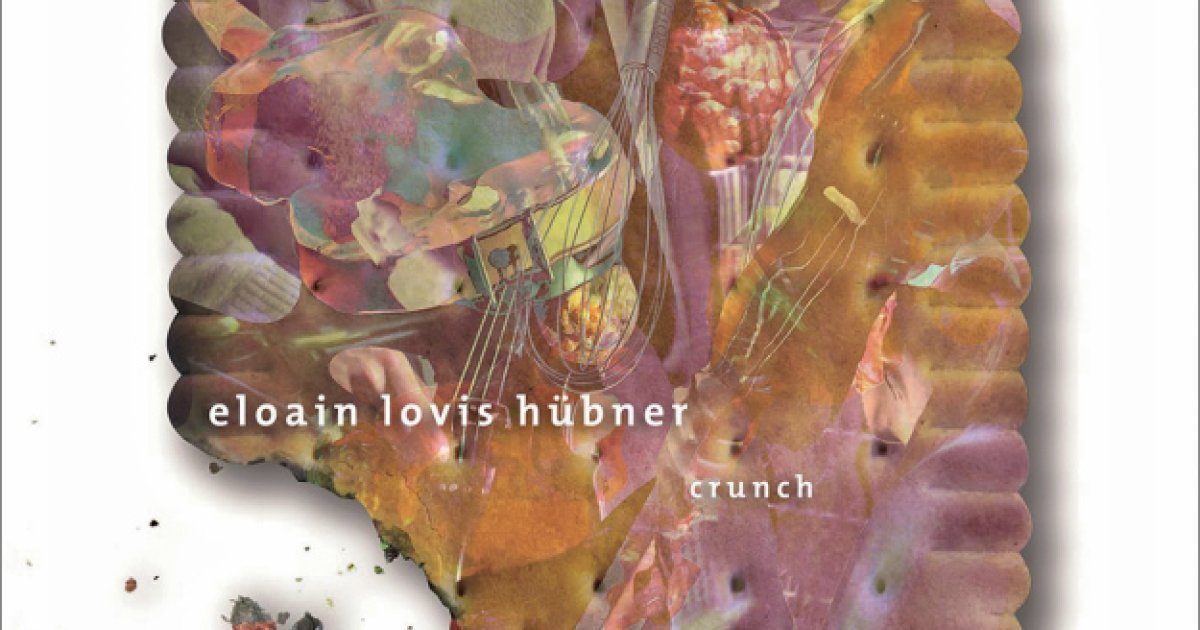
Among the most prominent figures emerging in this experimental sphere is composer Eloain Lovis Hübner. A specialist in analog sound research and spatial composition, Hübner has recently expanded his discography with the release of a portrait CD titled crunch
. Released on March 20, 2026, via the WERGO label, the album showcases Hübner’s fascination with the “crunch” of sound—exploring the boundaries between acoustic instruments and electronic distortion.
The Evolution of DEGEM: From Foundation to ‘Sonic Planet’
Founded on April 28, 1991, the Deutsche Gesellschaft für Elektroakustische Musik (DEGEM) has evolved from a small circle of enthusiasts into a non-profit association of approximately 250 members dedicated to the promotion of electroacoustic music and sound art according to the organization’s official records. The society’s mission is rooted in the belief that electronic music is not a static genre but a continuous process of research and discovery.
The release of the 25th CD, SONIC PLANET
, represents a culmination of decades of curation. Each DEGEM publication typically focuses on a specific thematic or aesthetic inquiry. For instance, the preceding 2024 release, HÖREN – in dieser Zeit
, curated by Johannes S. Sistermanns, explored the act of listening within the context of contemporary time. By contrast, SONIC PLANET
shifts the gaze outward, treating sound as a planetary or environmental phenomenon.
This trajectory reflects a broader shift in the “New Music” (Neue Musik) movement. While early electronic music often focused on the technical capabilities of the oscillator or the tape loop, modern composers are increasingly interested in “interwoven” sounds—where the distinction between a natural recording and a synthetic tone becomes blurred. This philosophy is central to the function presented by Dirk Wieschollek in his critical reviews, where he often analyzes how composers use “intelligent perspectives” to redefine the listener’s relationship with the environment.
Eloain Lovis Hübner and the ‘Crunch’ Aesthetic
The arrival of Eloain Lovis Hübner’s crunch
portrait CD in March 2026 provides a concrete example of the “interwoven” approach to modern composition. Hübner’s work is characterized by a deep engagement with the analog world, utilizing spatial and transdisciplinary methods to create immersive auditory experiences.
The crunch
album, released as part of the “Edition Zeitgenössische Musik” series, features a diverse array of performers, including the Arditti Quartet, Schallfeld Ensemble, and Spółdzielnia Muzyczna as detailed on the composer’s official site. The recordings include pieces such as crunch modes 1.0
and crunch modes 3.0
, as well as a series of works titled trauma und zwischenraum
(trauma and intermediate space).
Hübner’s “crunch modes” series is particularly notable for its experimental approach. These works are designed for larger ensembles combined with electronics, additional sound generators, and “sounding objects.” By incorporating improvisational elements and instrumental extensions, Hübner creates a sonic texture that feels both organic and industrial. This approach aligns with the current trend in electroacoustic music to move away from “clean” digital synthesis toward a more tactile, “crunchy” sound that acknowledges the physical properties of sound production.
Key Components of the ‘Crunch’ Series
- Instrumentation: A blend of bass flute, clarinet, soprano saxophone, percussion, piano, electric guitar, and strings.
- Electronic Integration: Use of live electronics and amplification to expand the acoustic footprint of the ensemble.
- Experimental Methods: The use of “prepared” instruments and sounding objects to generate non-traditional timbres.
- Spatial Research: A focus on how sound moves through a physical space, creating a three-dimensional listening experience.
The Role of Curation in Contemporary Music
In an era of digital saturation, the role of the curator—whether it is a collective like the one behind SONIC PLANET
or a critic like Dirk Wieschollek—has become essential. The sheer volume of available music makes the “curated CD” a vital tool for establishing a canon of contemporary electronic art.
Wieschollek’s work with neue musikzeitung serves as a critical filter. By grouping new releases under thematic headings—such as Natur und Artefakt
(Nature and Artifact) or Fluoreszierende Klangflächen
(Fluorescent Sound Surfaces)—he provides a framework for listeners to understand the intellectual intent behind the music. This method of “thematic presentation” mirrors the way DEGEM organizes its publications, ensuring that the music is not heard in isolation but as part of a larger aesthetic conversation.
The synergy between these different modes of presentation—the institutional archive of DEGEM, the critical analysis of Wieschollek, and the individual artistic vision of composers like Hübner—creates a robust ecosystem for electronic music. It allows the genre to evolve from a technical experiment into a sophisticated art form capable of expressing complex emotional and philosophical states, such as the “trauma” and “intermediate spaces” explored in Hübner’s latest work.
What Which means for the Future of Electroacoustic Art
The continued success of DEGEM’s publication series and the emergence of composers like Eloain Lovis Hübner suggest that the appetite for challenging, experimental music remains strong. However, the industry is also facing institutional challenges. The urgency of preserving these art forms is highlighted by recent efforts within the community, such as the open letter and petition launched on January 21, 2026, to preserve the “Sound Studies” degree program at the UdK in Berlin according to the DEGEM official homepage.
This struggle for academic and institutional recognition underscores the precarious nature of the avant-garde. While the 25th CD release is a cause for celebration, it also serves as a reminder that the infrastructure supporting electronic music—schools, galleries, and specialized labels—requires constant advocacy.
As we look toward the remainder of 2026, the focus of the electroacoustic community is shifting toward new horizons. DEGEM has already issued a call for works for its next project, DEGEM CD26: ZEITREISEN
(Time Travels), curated by Denise Ritter and Marcus Beuter. The society is preparing for its upcoming 2026 concert, scheduled for October 3, 2026.
For those interested in exploring these sounds, the works of Eloain Lovis Hübner and the curated collections of DEGEM offer a gateway into a world where music is not just heard, but experienced as a physical and spatial phenomenon. Whether through the “crunch” of an analog circuit or the “sonic planet” of a curated anthology, the evolution of electronic music continues to push the boundaries of what we define as sound.
Next Milestone: The DEGEM community is currently preparing for the 2026 concert on October 3, 2026, which will feature new works from the society’s members.
We invite our readers to share their thoughts on the evolution of electroacoustic music in the comments below. Which contemporary composers are currently shaping your listening experience?
Keep reading